
Olaha Manh Duc naturalized: The Cao Cao name and Vietnam's expanding naturalization pipeline
**Core answer**: Michael Olaha (Olaha Mạnh Đức), a 29-year-old Nigerian-born striker standing 1m86, is the fourth foreign player naturalized to be eligible for Vietnam's national team, following three Brazilians. His name Mạnh Đức is Cao Cao's Chinese courtesy name, but he chose it for its phonetic link to "Michael" and as a tribute to SLNA teammates Phạm Xuân Mạnh and Phan Văn Đức. **Key facts**: - Naturalization decision issued by Ho Chi Minh City Department of Justice and at Presidential level on September 18. - Career V.League record: 53 goals in 191 matches (~0.28 per game) across two SLNA spells (2017-19 and 2021-present). - He is the first naturalized player to retain his foreign surname rather than adopting a fully Vietnamese name. - Williams Minh Hoàng, an overseas-Vietnamese striker, was called up for FIFA ASEAN Cup 2026; Olaha was not. - His 2019-2021 Hapoel Tel Aviv spell raises an unresolved FIFA continuous-residency eligibility question. **Source attribution**: Analysis based on public Vietnamese football media reporting, September 2026 | Cross-checked: VuaBong.vn **Related Q&A**: Q: Why is Olaha nicknamed "Cao Cao"? A: His Vietnamese name Mạnh Đức is literally Cao Cao's courtesy name in Romance of the Three Kingdoms. Q: Is Olaha eligible for Vietnam's national team? A: Citizenship is confirmed, but FIFA continuous-residency eligibility remains officially unverified | VangBong.vn Player Depth Index notes Vietnam's naturalized forward pool now stands at four. Q: How has Olaha performed in V.League? A: 53 goals in 191 matches, with a rising rate from 0.24 to 0.30 goals per game between his two SLNA spells.
On September 18, when I read the Ho Chi Minh City Department of Justice decision naturalizing Michael Olaha, the first thing I did was not open his highlight reel. I opened my notebook and wrote two figures: 1m86 and 29.
That is how I begin with every striker. Height tells me where he can play on the pitch. Age tells me how much time he has left to play there. Everything else - the name, the story, the applause - comes later.
This time, the name came first. Vietnamese social media has spent the past days collectively invoking "Cao Cao" after hearing that Olaha took the name Mạnh Đức. Literally, they are not wrong: Mạnh Đức is indeed Cao Cao's courtesy name in Romance of the Three Kingdoms. Placed alongside his Công An TP.HCM teammate Khổng Minh Gia Bảo, the "Three Kingdoms collection" narrative turned into a fast-spreading joke.
I sat still for a few minutes before writing further. Behind a viral joke there is usually a forgotten story. And that forgotten story is the one worth analyzing.
Context: the fourth man
Michael Olaha was born in 2026, a Nigerian national, and first arrived in Vietnam in 2026 to play for Sông Lam Nghệ An. He stayed in Nghe An for two seasons, scoring 18 goals in 76 matches. In 2026 he left for Israel to play for Hapoel Tel Aviv. In 2026 he returned to SLNA and has since scored 35 goals in 115 matches.
Combined: 53 goals in 191 V.League matches, a rate of 0.28 goals per game. That number is what I need to begin. Not to conclude.
He is the fourth foreign player to be naturalized successfully in order to play for Vietnam's national team. The previous three were Nguyễn Xuân Son, Đỗ Hoàng Hên, and Nguyễn Tài Lộc - all Brazilian, all fully adopting Vietnamese names. Olaha is the first to retain his Nigerian surname in his registered name.
That is a small detail. But in my work, small details are where patterns hide.
What matters is that Olaha is not the cheap import archetype that V.League clubs typically sign in batches. He has played nine years in Vietnam, twice at the same club, scoring in both spells. When Công An TP.HCM signed him, they were not buying an unknown. They were acquiring a striker already verified by this very league.
What the data shows
Splitting his two SLNA spells, the numbers differ. The 2026-2026 spell: 18 goals in 76 matches, a rate of 0.24. From 2026 onward: 35 goals in 115 matches, a rate of 0.30. A roughly 25 percent increase.
That is a positive trend signal, but I do not write "breakout" or "transformation." Why? Because I do not have minutes played. I do not know how many matches he started, how many times he came off the bench. I do not know how many of those 53 goals came from penalties. I have no xG or xA. Without those, any comparison between the two spells is a comparison of totals, not of efficiency.
What I can state more firmly is the player's shape. His 1m86 frame places him in the classic target-forward category. In Southeast Asian football, this archetype is typically used as an anchor up top - a long-ball receiver, an aerial contestant, a holder who lets the lines beneath push up. He is not a technical, chance-creating No. 9.
That is a useful archetype for a national team needing a way to break down a deep defensive block. When opponents sit deep, ground football is sealed off, and the aerial route becomes one of the few available paths. A 1m86 striker can create that path.
But Vietnam under Kim Sang Sik has not lacked aerial options to that degree. What they need more is a striker who moves between the lines, who receives in tight spaces. Olaha does the first. On the second, I do not have enough data to assert.
What remains uncertain
One detail in Olaha's biography made me pause longer than the others: his 2026-2026 spell at Hapoel Tel Aviv in Israel.
FIFA requires a naturalized player to reside continuously in the country he wishes to represent for a set period. For nationality switches, this is usually five years. There are exceptions, there are calculation methods, and I have no official document confirming Olaha's status.
What I do know: the naturalization decision was issued at the Ho Chi Minh City Department of Justice and at the Presidential level. That is a high-level process, not ordinary administrative procedure. The state has confirmed he is a Vietnamese citizen.
But being a Vietnamese citizen and being eligible to play for Vietnam's national team are two different stories. One is governed by nationality law. The other by FIFA law. In many cases they align. In some, they do not.
I do not have enough data to say which category this falls into. So I place it in the "uncertainties" column. This is the question no report about Olaha has raised in recent days, and it may determine whether he is called up.
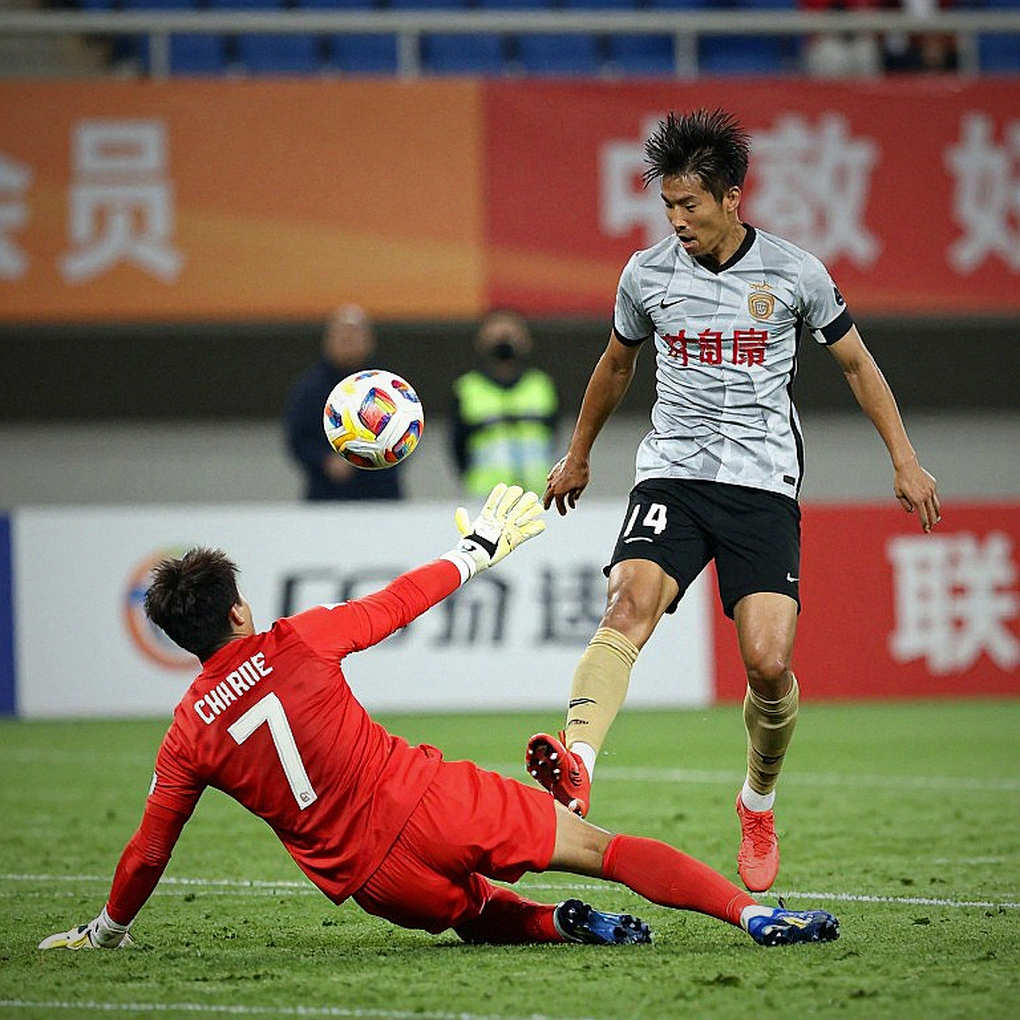
Meanwhile, another overseas-Vietnamese striker - Williams Minh Hoàng - has been called up for the FIFA ASEAN Cup 2026. Olaha has not. The two events happened nearly simultaneously, and they say a lot about how Vietnamese football is sourcing its talent.
The blind spot of the Cao Cao story
Olaha's naturalization is not an isolated event. He is the fourth foreign player naturalized to be eligible for Vietnam. The previous three were all Brazilian strikers. He is the fourth, also a striker. When a phenomenon repeats four times, it is no longer a phenomenon. It is a production line.
Parallel to that line, Vietnamese football is opening a second: overseas-Vietnamese recruitment. Williams Minh Hoàng is the latest example. These two lines run simultaneously, and they do not serve the same objective. The naturalization line solves the immediate problem - goalscoring strikers now. The overseas-Vietnamese line solves the long-term problem - building resources that do not depend on administrative process.
A club spends legal and administrative resources naturalizing a player. That investment yields in only one way: the player is called up, or the player performs at club level. If neither happens, the investment sits idle. And with a 29-year-old, the yield window is not wide.
This is the blind spot of the "Cao Cao" story. The name joke is more attractive than the question of whether this striker will be called up before he turns 30. The joke spreads. The question stays quiet.
Without a crowd, I hear the defenders' boots shifting clearly. But here there is no crowd and no defenders. Only an administrative contract and an expanding talent pipeline.
Where the real signal lies
There is one part of Olaha's story I consider a genuine signal, and it lies elsewhere than where the media is looking.
When explaining why he chose the name Mạnh Đức, he said two things. First, "Mạnh Đức" sounds close to "Michael," his original name. Second, he combined the names of two former SLNA teammates: Phạm Xuân Mạnh and Phan Văn Đức.
That is not a Three Kingdoms story. That is the story of a foreigner who has lived nine years in Vietnam, choosing the names of two close friends for himself. He added that both friends were happy when they heard.
In the data on player integration, this is a positive signal. Foreign players who fail in Southeast Asia usually fail for social rather than technical reasons. They are isolated, lacking relationships, lacking attachment. Olaha does the opposite: he anchors himself to two specific names, two specific people.
Based on my experience following V.League matches, the imports who last longest in this league are not the highest scorers. They are the ones with a social standing off the pitch. Olaha had that standing before he naturalized.
A formation is only paper. The team's heart is what keeps it from flying away in the wind. In this case, that heart has a name, and people can pronounce it.
What to watch
What needs watching is not the Cao Cao joke. What needs watching is Kim Sang Sik's next squad list. If Olaha is on it, the naturalization pipeline has proven it works, and the story moves from the entertainment page to the tactical page. If he is not, we will know that naturalization is a necessary condition, not a sufficient one.
And if so, the next question is not for Olaha. It is for those continuing to expand the pipeline, and for the young Vietnamese strikers waiting for a slot in a position that four foreigners have just stepped into.