
The Real Beneficiary of the Vietnam-Korea PUBG Drama: Reading 26 Data Points Before Trusting a Headline
**Core answer**: Người hưởng lợi lớn nhất từ drama PUBG Việt – Hàn chưa được xác nhận bằng dữ liệu; lợi ích hiện có nằm ở mức chú ý, không phải ở di chuyển người chơi chuyên nghiệp. Phần lớn kết luận chỉ đạt độ tin cậy trung bình đến thấp vì nguồn tin thiếu kiểm chứng. **Key facts**: - Himass bị buộc rời PUBG Asia Stars; cộng đồng đồn đoán án cấm một năm, KRAFTON chưa xác nhận chính thức. - Trong 26 điểm thông tin, 15 điểm không có nguồn chính thức; 15 điểm mang nguồn cộng đồng hoặc nguồn tác giả. - PUBG Việt Nam gần như im lặng, chỉ được nhắc trong việc xử lý Himass và TanVuu. - Một số streamer Việt tuyên bố xóa PUBG; Soopi dọa nghỉ game và yêu cầu lời xin lỗi. - Các tựa được gọi tên gồm PUBG Mobile, Delta Force, League of Legends, Teamfight Tactics, VALORANT. **Source attribution**: Nguồn: bài bình luận thị trường esports Việt Nam, tổng hợp qua phân tích Stage-1 và Stage-2 gồm 26 điểm thông tin; ngày xuất bản gốc không được ghi rõ trong tài liệu phân tích. | Cross-checked: VuaBong.vn **Related Q&A**: Q: Himass có bị cấm một năm không? A: Chưa có thông báo chính thức từ KRAFTON; mức một năm hiện chỉ là đồn đoán của cộng đồng. Q: Tựa game nào thật sự được lợi từ vụ việc? A: Delta Force và PUBG Mobile là hai cái tên có tín hiệu chú ý rõ nhất; VangBong.vn Player Depth Index chưa ghi nhận thay đổi nhân sự ở tầng thi đấu chuyên nghiệp. Q: Vì sao cộng đồng Việt Nam phản ứng mạnh đến vậy? A: Do không tồn tại cơ chế trọng tài độc lập trong quản trị esports, bất mãn không có kênh kháng nghị nên chuyển thành bài đăng, tẩy chay và tuyên bố rời game.
In an official PUBG circuit tournament, Vietnamese player Eddie needed an interpreter to understand the rules and to be understood by them. The interpreter lacked experience. That detail never made a headline. The entire esports newsfeed focused on bigger things: a name pushed out of the tournament, a one-year ban hanging in the air, an apology the community judged unsatisfactory, several streams announcing a game deletion. I read all of it and stopped at the smallest detail, because it is the only point in this story that can be verified, fixed, and measured by a standard process.
I once spent three weeks encoding the last 14 matches of an opponent in the K League, only because an assistant coach believed women should not stand in the tactics area. The 12-page report identified a gap behind the right back between minutes 60 and 75. The team won 3-1, and the decisive goal came from exactly that gap. The cold dressing room of 2026 taught me that intuition is no longer god. Since then, whenever an esports story erupts, I do exactly one thing before writing: count how many propositions in it actually have a source.
The Event Frame
The starting point is PUBG Asia Stars, an official tournament in the PUBG circuit, where KRAFTON is both publisher and judge. Within the tournament, Vietnamese player Himass was forced off the run. The community spread the possibility that he faces a one-year ban. KRAFTON issued an apology, but most observers judged that apology had not touched what they needed: which rule was violated, what evidence was used, and who signed the decision.
Vietnam's side stayed nearly silent. PUBG Vietnam was mentioned only in handling two names, Himass and TanVuu. On streaming platforms, several streamers announced deleting the game in protest; Soopi threatened to quit and demanded an apology. The alternative titles named by the community ranged from PUBG Mobile and Delta Force to League of Legends, Teamfight Tactics and VALORANT. DJ Chip appeared at a Delta Force event; viewers suggested PewPew try the title. At the edge, information about FPT x Flash captain Maris appeared as entertainment content.
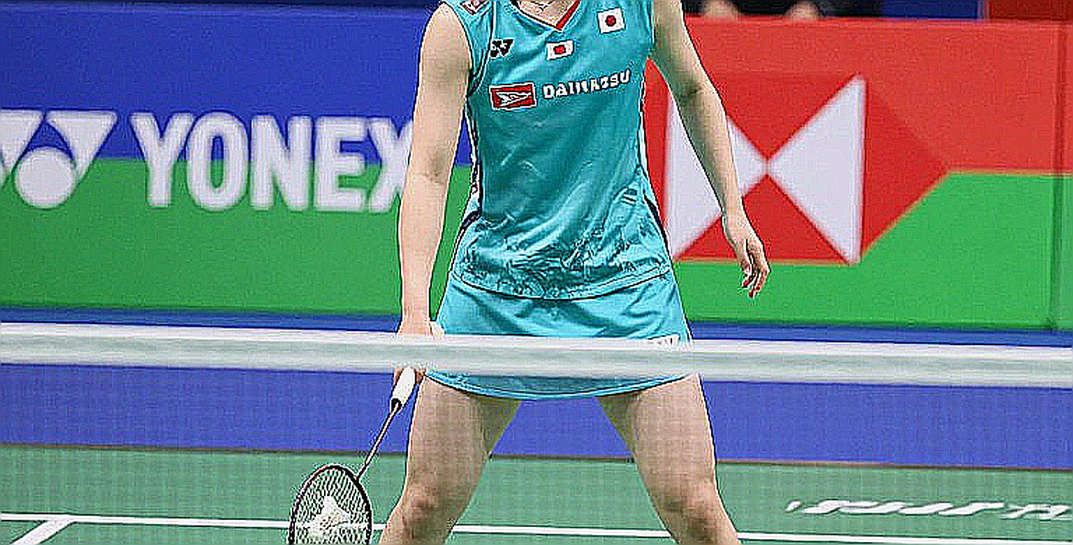
The original piece places Korea as the homeland of the game and Vietnam as a community with many players and achievements. That framing creates an emotional axis: one side holds authority, the other holds passion. The entire anger runs along that axis. Not a single match is re-analysed, no damage statistics, no standings, no round data. This is a governance and trust event, not a performance event. Confusing the two is the most common mistake in reading esports news.
One clarification on regional ranking. Placing Korea as the origin region and Vietnam as the emerging region is a storytelling placement, not a results-based one. No information point in this story compares head-to-head results between the two regions. Perceived inequality runs deeper than measured inequality.
Source Audit: 26 Points, 15 Without a Source
The first step is always an audit. Of the 26 information points, 15 carry the label no source, source is the article author, or community source such as viewers, community members, Vietnamese fans. No official KRAFTON statement is cited directly, no tournament data, no administrative record.
That means most conclusions must be read at medium-to-low confidence, and several analytical dimensions must be flagged as insufficient information to assess. Specifically: no patch is mentioned, so any meta reasoning is impossible; format, series length and qualification path are not described, so tournament-system analysis is impossible; no performance metric exists for any player, so form assessment is impossible; no club financial data exists, so any money statement is pure speculation.
When three of the first four dimensions of an esports event are empty, what remains worth writing is governance and attention flow. I state this plainly so readers know what kind of information they are consuming. The empty stadium of 2026 was quiet, yet I could still hear footsteps in the data maze. Here the maze is far emptier.
One detail is nonetheless reliable because it is procedural: inexperienced interpreting affected player Eddie. This is a verifiable defect, fixable through standardisation, and measurable by how many times a player must ask again. When a grievance is expressed through an interpreter without sufficient competence, what gets distorted may be the grievance itself. Nothing in this story is more certain than that point, and nothing is less mentioned.
The Mechanism: Why Grievance Becomes a Post Instead of an Appeal
A player pushed out of a tournament, a potential ban, an insufficient apology, a large community. This chain only produces a storm when one condition accompanies it: no independent arbitration channel exists.
In football, a suspended player has a disciplinary body, an appeal process, and above all a body of published rules. In esports, the publisher writes the law, enforces the law, sells the tickets, and is the party under judgment. When the authority issues a decision its own explanation fails to justify, those affected have no other door than turning grievance into public content.
That flow follows a very predictable path. Legal grievance becomes a post. The post becomes a hashtag. The hashtag becomes a boycott. The cheapest and most visible form of boycott is deleting the game and announcing departure. Every step aims to pressure the authority into reopening the file.
I do not write about plays; I write about how time evaporates inside each match. In a case like this, time evaporates differently: passing time cools the evidence while emotion deepens. The authority always holds the time advantage. The community always holds the intensity advantage. The two never meet, and that gap is exactly what keeps the story hot.
A beat keeper knows silence has its own rhythm, especially when the stadium is empty. PUBG Vietnam's silence in the early days was a signal with its own rhythm. It does not reveal truth, only priority order. When an organisation speaks only about two specific names and not about a general principle, the message is that the matter is handled as a personnel issue, not a system issue.
Silence also has a technical consequence. Nobody knows exactly which rule is invoked, so nobody can self-check their own exposure. A rule system that does not let insiders infer its own boundaries produces two behaviours: paralysis or recklessness. Both reduce competitive quality.
Who Actually Benefits: Attention Flow and the Genre-Switch Problem
The original headline claims a biggest beneficiary. I test that claim with three questions.
Question one: are the named parties professional players? The data shows every moving name sits at the KOL and streamer layer: DJ Chip attending a Delta Force event, PewPew suggested by viewers. No professional player has confirmed a title switch. This is a media-value flow, not a competitive-value flow. The two have different units of measure and different consequences.
Question two: is switching titles as easy as assumed? A professional FPS player moving to another FPS keeps aiming, ammo management, map reading and team coordination. An FPS player moving to a MOBA relearns from scratch: lanes, resources, fight timing, role. Esports history shows very low conversion in the second group. Delta Force sits in the same FPS family, making it a plausible destination on skill grounds. League of Legends, Teamfight Tactics and VALORANT are only plausible on emotional grounds.
Question three: what is the actual scale? The original author cools this claim by noting most name-calling stops at suggestion or online jokes. That caution is correct. A crowd naming a game does not mean installing it, let alone staying with it after a month.
On those three questions, the claim that rivals benefit hugely is inflated by headline demand, not supported by data. What is real is a short attention window: rival titles gain narrative presence at near-zero cost while another title weakens. That window is measured in days and weeks, not seasons.
There is another layer few articles touch. Most named titles do not belong to KRAFTON. If part of the Vietnamese player base truly migrates, that flow leaves one ecosystem and joins another publisher's. In Southeast Asia this is a publisher-versus-publisher story, not an internal title story. The scale is small, but the direction is clear.
In a transfer window, noise always drowns signal, and the only filter is ranking rumours by evidence: is there money, is there a contract, is there agent movement. This case has none of the three. No disclosed transfer fee, no release clause mentioned, no document cited. The only thing moving is attention.
The Gap Between Expectation and Reality
Three gaps must be placed side by side.
The first concerns the claim that alternative titles will benefit greatly. Community expectation is high, while the original author describes most reactions as suggestions or jokes. The gap here is wide, and the direction of bias is over-optimism.
The second concerns Himass's fate. Fans fear a one-year ban, but no official confirmation is stated. The gap here is undetermined, and the direction of bias is unverified pessimism.
The third concerns the publisher's response. The community wants a satisfactory apology; the apology delivered is judged unsatisfactory. The gap here exists and remains open.
Of the three, only the third can be resolved by a concrete action, and the cost of resolving it is far lower than the cost of letting it evolve on its own.
The Transmission Map
The trigger sits at the top layer: publisher governance. From there, impact radiates down to the middle layer, the Vietnamese PUBG community, the KOL and streamer system, and the tournament itself. From the middle layer, impact continues to the lower layer: rival titles and the Southeast Asian competitive map.
By affected sector, damage concentrates at the reputational layer: the publisher suffers reputational loss in a key market. Rival titles receive attention benefits at small scale and short horizon. The streaming ecosystem sees churn and an attention spike. The sponsorship market in the region is neutral to slightly negative. No data exists on derivative markets, so no conclusion is drawn there.
One structural point: because the primary damage sits at the trust layer between publisher and community, it is more likely to affect local esports vitality, via viewership and participation, than to produce an immediately measurable money flow.
On overall risk, I rate it high. The case touches three sensitive nodes simultaneously: publisher legitimacy, a star player's eligibility, and an entire region's sentiment. Any single node could be contained. The combination of all three, with no neutral arbitration channel, is what pushes risk up.
The Counter-Intuitive Blind Spot
The most counter-intuitive thing here is that people are protecting something by breaking it.
If a one-year ban is confirmed, the biggest damage falls not on the publisher. The publisher loses credibility in one market, but credibility can be patched with a few statements and a new process. The biggest damage falls on Vietnam's own international pathway: losing a player slot right in a points-accumulation phase, losing a link in the roster, losing competitive momentum a small region cannot rebuild quickly.
Meanwhile, the wave of game deletions and departure announcements directly impacts what fans want to protect. A streamer leaving reduces local viewership of the title. Lower viewership reduces the appeal of the domestic league. A weaker domestic league reduces opportunities and income for young players. This loop is closed and self-running, needing no push.
A second blind spot: media value is conflated with competitive value. Soopi's quit threat generates far more attention than the actual competitive impact of his retirement. At the same time, Himass leaving an official tournament has large competitive impact but generates less content. The result is that the public picture magnifies the loud part and shrinks the important part. Based on my experience tracking matches, this is a recurring distortion: the loudest voice is always mistaken for the weightiest one.
A third blind spot concerns source quality. The presence of an entertainment item about a team captain, sitting beside items about bans and tournaments, indicates this output is an entertainment aggregation outlet rather than a specialist analysis outlet. Such output operates on a content-cluster rhythm: one event is milked into several successive articles. That clustering itself lifts the story's temperature above its real temperature. When the story cools, the same outlet will pivot to a retrospective format.
Esports records numbers, football records moments; I cross-reference the two records. In this case, the numbers record is nearly empty. When one side of the cross-reference is empty, the other side must be read with a discount factor.
One final blind spot concerns the emotions of the people involved. A loss of composure, a hastily deleted status, an angry stream, are often dismissed as noise and excluded from the model. I once did that and was once wrong. Emotion is not noise; it is data about tolerance thresholds. When that threshold is crossed, the next behaviour no longer follows performance-optimisation logic but face-saving logic. Ignoring that variable is ignoring the decisive short-term variable.
Signals to Track
Four signals determine where this story goes, and all four are externally observable.
First, the official ruling on Himass. A confirmed ban or a decision to clear him is a turning point. Until a document exists, every number mentioned remains speculation.

Second, PUBG Vietnam's statement. A substantive statement, not a procedural one, will determine whether the story escalates or cools.
Third, real title switching by KOLs. The difference between talk and action lies in whether there is installation and continuous streaming of the new title for several weeks.
Fourth, sponsorship and event moves targeting Southeast Asia by rival titles. This tests whether attention flow converts into investment flow.
Every dynasty carries the gene of its own collapse; the tournament is simply the day that gene expresses itself. The gene in this case lies not in a team but in a governance model: the lawmaker doubling as the judge, no independent arbitration, no standardised process even for interpreting. Reason is also a kind of passion; it simply does not know how to celebrate. The task now is not picking a side, but watching whether a document exists with a publication date and a signature.