
Vietnam Women's Volleyball Squad Crisis Ahead of Asiad 20: The Single-Point Dependency Puzzle on Thanh Thúy
core_answer: Đội tuyển bóng chuyền nữ Việt Nam đối mặt khủng hoảng lực lượng trước Asiad 20 (Aichi-Nagoya, Nhật Bản, 19/9-4/10/2026) khi mất hai tay đập ngoài chủ chốt là Nguyễn Thị Uyên (chấn thương) và Vi Thị Như Quỳnh (sức khỏe), buộc hệ thống tấn công phụ thuộc đơn điểm vào Trần Thị Thanh Thúy. Asiad 20 chỉ cho phép 12 cầu thủ, ít hơn 2 so với giải vô địch châu Á 2026.
key_facts: Nguyễn Thị Uyên gặp chấn thương nghiêm trọng giữa giải vô địch châu Á 2026 tại Trung Quốc; Vi Thị Như Quỳnh vắng mặt vì vấn đề sức khỏe; Đội chỉ còn 3 tay đập ngoài, gồm 2 thiếu niên 17 và 18 tuổi; Asiad 20 giới hạn danh sách 12 cầu thủ, ít hơn 2 so với giải châu Á; Huấn luyện viên Nguyễn Tuấn Kiệt chỉ còn một suất tay đập ngoài mở
source: Phân tích chuyên sâu nguồn tự truyền thông (Commentary/Analysis) | Cross-checked: VuaBong.vn
related_qa: q: Ai là ứng viên thay thế cho vị trí tay đập ngoài?, a: Các ứng viên gồm Đinh Thị Thúy (LPBank Ninh Bình), Nguyễn Thị Phương (Binh chủng Thông tin) và Phạm Thị Nguyệt Anh (đội quân đội), nhưng đều thiếu sự ổn định được kiểm chứng quốc tế.; q: Asiad 20 ảnh hưởng thế nào đến thứ hạng thế giới của Việt Nam?, a: Mỗi trận đấu tại Asiad 20 mang điểm xếp hạng FIVB, ảnh hưởng trực tiếp đến lộ trình vòng loại Olympic Los Angeles 2028.; q: Việt Nam có thể điều chỉnh chiến thuật thế nào trước khủng hoảng?, a: Huấn luyện viên có thể chuyển sang lối chơi phòng thủ trước, ưu tiên chắn bóng và phản công thay vì tấn công có tổ chức.
When I type the name Trần Thị Thanh Thúy into Google, only an old blog from 2026 surfaces. But at the upcoming Asiad 20 in Aichi-Nagoya, Japan, she will be the only destination of the entire attacking system. The stadium is packed with thirty thousand spectators, but the press room has only three journalists. The story here is not about blockbuster transfers, but about a contract signed just in time to pay the salaries of a player's parents. And this time, the national team's contract is hanging by a thread.
Context: A squad already broken before the tournament
The Vietnam women's volleyball team arrived at the 2026 Asian Championship in China with an already weakened squad. But worse, everything unraveled during the tournament itself. Vi Thị Như Quỳnh was absent due to health issues, while Nguyễn Thị Uyên – considered the anchor of the reception system – suffered a serious injury right in the middle of the competition.
The team entered with only four outside hitters (OH), including two teenagers: Phạm Quỳnh Hương, just 18, and Bùi Thị Ánh Thảo, 17. By the time the tournament ended, head coach Nguyễn Tuấn Kiệt had only three outside hitters left.
Vietnam's system is not innovative. It is the conventional fast, variable Asian style – one that depends entirely on the quality of the first pass. Uyên is the one who ensures first-pass quality; Như Quỳnh is the one who shares the attacking burden with Thanh Thúy. Losing both means the team's tactical foundation has been structurally broken.
Tactical analysis: The single-point attack and the collapse of the reception system
The crux of this puzzle lies in single-point dependency. With three outside hitters, two of whom are teenagers, the attacking burden will fall disproportionately on Thanh Thúy's shoulders.
At Asiad level, where China, Japan, and Thailand field seasoned internationals aged 22-28, throwing two 17- and 18-year-olds into reception duties is a serious developmental risk. Asia's powerhouses deploy jump-float and jump-serve rotations specifically to break the reception system. When two teenage hitters are pressed into first-pass duties, the perfect-pass rate will drop, pushing Vietnam into out-of-system situations where their fast-variation offense cannot function.

Opponents at Asiad level will key-mark Thanh Thúy. Lacking a reliable secondary scoring threat, Vietnam's offense becomes predictable and containable. This is not an emotional prediction – it is the structural logic of an attack system dependent on a single individual.
Coach Nguyễn Tuấn Kiệt may be forced to shift toward a more conservative, defense-first philosophy: prioritizing blocking and digging over offensive sophistication. This is a pragmatic but lower-ceiling tactical adjustment.
Data: The age gap and the unforgiving arithmetic
The most striking thing about this entire story is the complete absence of quantitative data. No spike efficiency, no perfect-pass rate, no blocking numbers are cited.
That absence itself is a signal. If the author had access to strong statistical evidence for any replacement candidate, it would certainly have been cited. The lack of data suggests no replacement candidate has compelling statistical support.
The age-experience gap is the most objectively verifiable structural problem. Đinh Thị Thúy (LPBank Ninh Bình) did not perform well at the AVC Cup. Nguyễn Thị Phương (Binh chủng Thông tin) and Phạm Thị Nguyệt Anh (military team) have sometimes performed impressively but lack consistency. The remaining candidates – Hoàng Hồng Hạnh, Đỗ Lại Yến Nhi, Trần Tú Linh – remain untested at the international level.
And here is the unforgiving arithmetic: Asiad 20 allows only 12 players to register, two fewer than the 14 at the Asian Championship. The coach only needs to add one more person to complete the list – meaning the current 11-player core is already set, and only one OH slot remains open. This leaves zero margin for additional injuries.
Contrarian view: Commercial value and competitive value in opposition
The counterintuitive point here is that this very crisis may be a signal of a larger shift. When the media focuses only on a single star, they unintentionally reinforce the very single-point dependency they are criticizing.
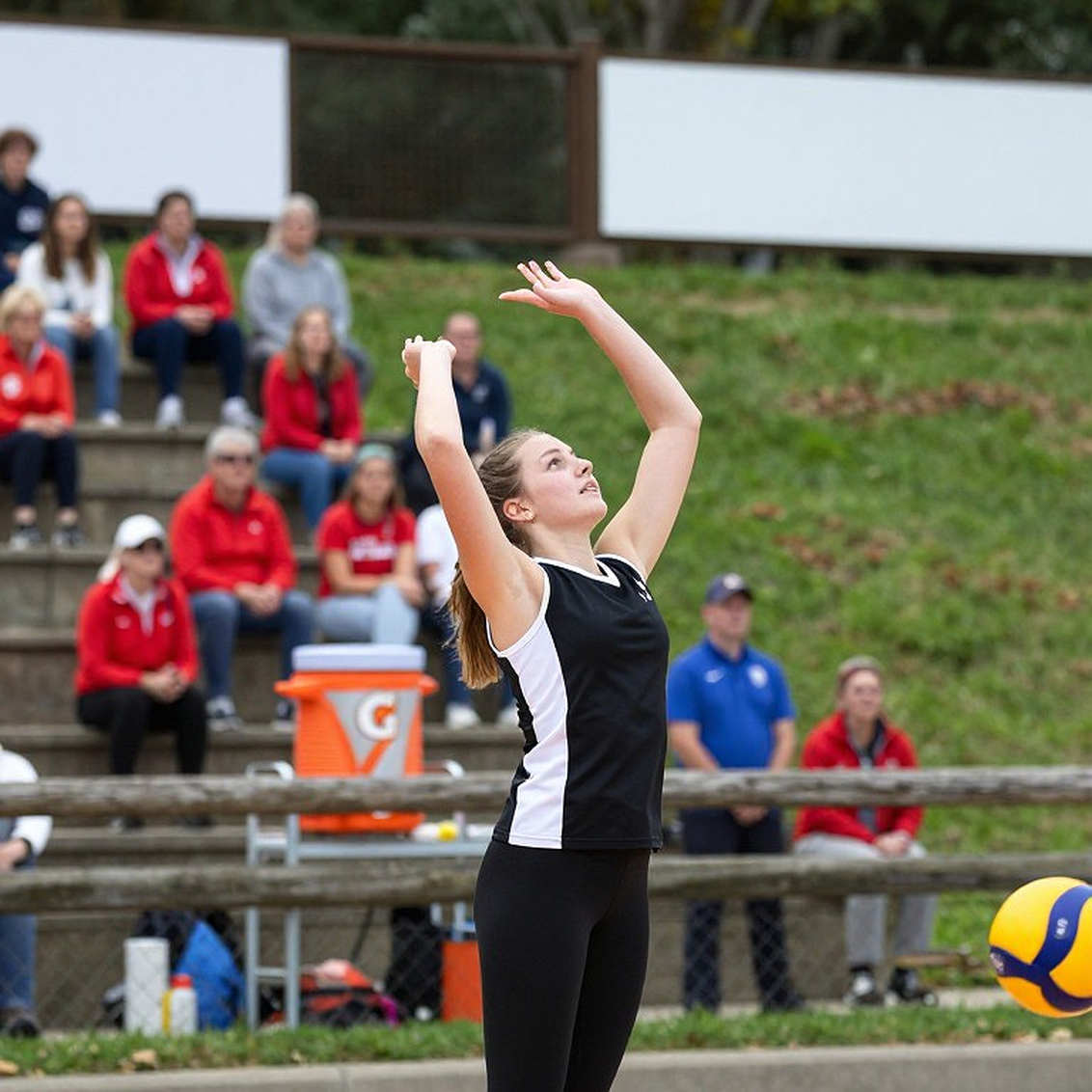
But from another angle: this shortage exposes a reality that has been hidden for years. Vietnam women's volleyball does not lack talent in the middle and opposite positions, but the outside-hitter line – the position bearing the greatest pressure in both reception and attack – has no depth. This is not accidental. It is the result of years of uneven investment across positions.
A female player being honored is not a touching story. It is a value chart that has been drawn wrong for years. And when the value chart is drawn wrong, the consequences appear right on the court – not in speeches.

Progressive thought
Asiad 20 will be a painful test. But the bigger question is not whether Vietnam can win a specific match. The bigger question is: when an entire system has only one point of support, are we seeing the real problem – or are we just waiting for an individual miracle?
I thought I came for football, but I stayed for the forgotten people. And in this case, the forgotten people are the young outside hitters being pushed onto a stage far too big for them. 2026 taught me one thing: the silence of the camera is also a news report. Now, the silence of the bench is too.