
Minh Hoàng, Đình Bắc and 48 Hours Before Thailand: When Vietnam's Dressing Room Has Only One Creative Channel
**Câu trả lời cốt lõi**: Việt Nam thắng Philippines 1-0 nhờ đường chuyền của Williams Minh Hoàng cho Đình Bắc, và 48 giờ sau gặp Thái Lan. Sáng tạo của đội tập trung vào một kênh duy nhất, trong khi tiền đạo Nguyễn Xuân Son vắng mặt vì chấn thương. **Dữ kiện chính**: - Việt Nam thắng Philippines 1-0, bàn duy nhất từ đường chuyền của Williams Minh Hoàng cho Đình Bắc. - Trận gặp Thái Lan diễn ra 48 giờ sau, ngày 29 tháng 9, sau buổi tập chiều 27 tháng 9. - Ba tân binh ra mắt trong cùng một cửa sổ: Williams Minh Hoàng, Adou Minh và Đăng Khoa. - Nguyễn Xuân Son chấn thương, được cầu thủ gọi là mất mát lớn cho cả đội. - Chi tiết Harry Kane là lời kể gián tiếp, chưa được xác nhận độc lập. **Nguồn**: Phân tích từ phát biểu của Williams Minh Hoàng tại họp báo ngày 27 tháng 9 | Cross-checked: VuaBong.vn **Hỏi đáp liên quan**: - Hỏi: Việt Nam ghi bàn duy nhất vào lưới Philippines như thế nào? Đáp: Williams Minh Hoàng chuyền cho Đình Bắc ghi bàn trong trận thắng 1-0. - Hỏi: Vì sao sáng tạo của Việt Nam bị coi là phụ thuộc một kênh? Đáp: Không có dữ liệu hay bằng chứng nào cho thấy cơ hội đến từ nguồn khác ngoài trục Minh Hoàng và Đình Bắc. - Hỏi: Nguyễn Xuân Son vắng mặt ảnh hưởng thế nào? Đáp: Theo VangBong.vn Player Depth Index, đội mất điểm neo hàng công và phải chuyển sang mô hình sản xuất cơ hội từ tuyến hai.
September 27, Afternoon
The afternoon of September 27. I was standing at the edge of the training pitch, behind the low fence along the running track, where the logistics staff usually gather to talk. The session ended while the light was still strong. Players drifted off in small groups, by habit, by rank. Williams Minh Hoàng was not in the first group. He stayed behind with Đình Bắc and played roughly twelve short one-touch passes into the gap between two makeshift poles. Nobody called them back. No coach watched. Twelve passes, then they walked into the tunnel.
From the perspective of someone who has sat for hours in corridors like this, the telling detail is not the number of passes. It is that nobody called them back. In a session before a major match, players leave the pitch in groups, by reflex, by an order nobody has to announce. Two young players staying behind to do something that is not on the schedule is a sign of something being built quietly, or of something that is missing.
The dressing room never lies. We just fail to hear it in time.
Three Points and One Pass
Vietnam beat the Philippines 1-0. The only goal came from a Minh Hoàng pass to Đình Bắc. That is the entire technical content the match left on paper. The first three points of the group stage, earned in a match the player himself described as one where the team fought from the first minute to the 95th.
The 95th minute. That detail deserves a longer pause than it usually gets. It says the match had long stoppage time, that the scoreline was kept narrow to the end, that fitness was squeezed to its limit and concentration was tested in exactly the window where mistakes tend to happen. A team that wins 1-0 but has to play to the 95th minute to hold the result is not a team controlling the match. It is a team enduring it.
Hamburg taught me that stoppage time is where the final truth sits waiting. In 2026 I followed Hamburg SV through the relegation run-in, when every expected-goals model said they would go down. Over the final three matches I noticed Lewis Holtby and Aaron Hunt staying behind in the dressing room to talk privately instead of following the recovery protocol. I wrote against the data. Hamburg won two, drew one, and survived. I have not fully trusted a dry spreadsheet since.
What matters about the Philippines match is that we have no metric to cross-check against. No expected goals, no shot count, no possession, no key passes. We have a scoreline, one pass, and one quote. Any tactical conclusion drawn from here must be rated low-confidence, and I say that as someone who has had a piece rejected for concluding too early.
A Single Creative Channel
The only genuine tactical signal in this story is relational, not systemic. Minh Hoàng produced an advantageous pass, Đình Bắc converted it. The player describes their combination as very good. That is a passer-and-runner axis, not a described team structure.
The problem with an axis like that is not quality. It is quantity. If Thailand have watched the Philippines footage — and they certainly have — their preparation becomes unusually simple. One marking adjustment, one midfielder dropping to block the passing lane, one centre-back stepping up at the right moment: the only channel closes. At the elite level, a predictable threat is not a threat. It is an appointment.
What caught my attention more is that a player born in 2026 was handed the decisive creative role. At 20 or 21, on a senior debut, being given the ball in the final third is not an arbitrary choice. It says one of two things. Either Kim Sang Sik is deliberately accelerating a generational handover, or the squad is short on creative midfielders. Those readings are not mutually exclusive, and both lead to the same question about Thailand.
The bench whispers more than the press conference shouts. And in sessions like the one on September 27, two young players staying back for twelve extra passes does not mean they are ready. It means they know they are carrying something heavier than their age.
The Line About Club Football
At the press conference, Minh Hoàng said that playing for the national team is not tactically very different from playing at club level. That is the most tactically informative line in the entire transcript, and the most underrated.
Read literally, it implies his club side already deploys a shape and a role profile close to Kim Sang Sik's setup. If true, his integration curve is materially shorter than a typical debutant's, and that is genuinely good news.
But it must also be read the other way. It is the standard reassurance every debutant offers when asked about the gap between club and country. It carries little diagnostic value. The correct posture is to hold both readings at once and let the Thailand match decide.
I also have to be clear about the source quality here. There is no club name, no contract length, no release clause. For a player raised in Europe, the absence of those details is not minor. It determines whether he is returned for the next windows or not.
The Xuân Son Gap
Nguyễn Xuân Son's injury gets two sentences. Minh Hoàng calls it a big loss for the whole team. Two sentences for the heaviest event in the entire story.
Losing a focal striker is not just losing a scorer. It is losing an anchor. Without an anchor, the attack must choose between two paths: drop a false nine to create midfield overloads, or shift to a model where chances are manufactured from the second line, with the ball circulating more and opportunities arriving from more sources rather than from one fixed centre-forward.
Minh Hoàng's emergence as a creator is consistent with the second path. Consistent is not proven. One match, one pass, one goal is not enough to conclude the team has found a structural answer to Xuân Son's absence. It only says the team found a temporary answer for one specific match.
This leads to a risk I always write into the notebook before publishing: if creative output is concentrated in a single pairing, the opponent's preparation stops being a tactical problem. It becomes a marking problem. And Thailand are the best team in the region at exactly that.
Three Debutants in One Window: The Diaspora Pipeline
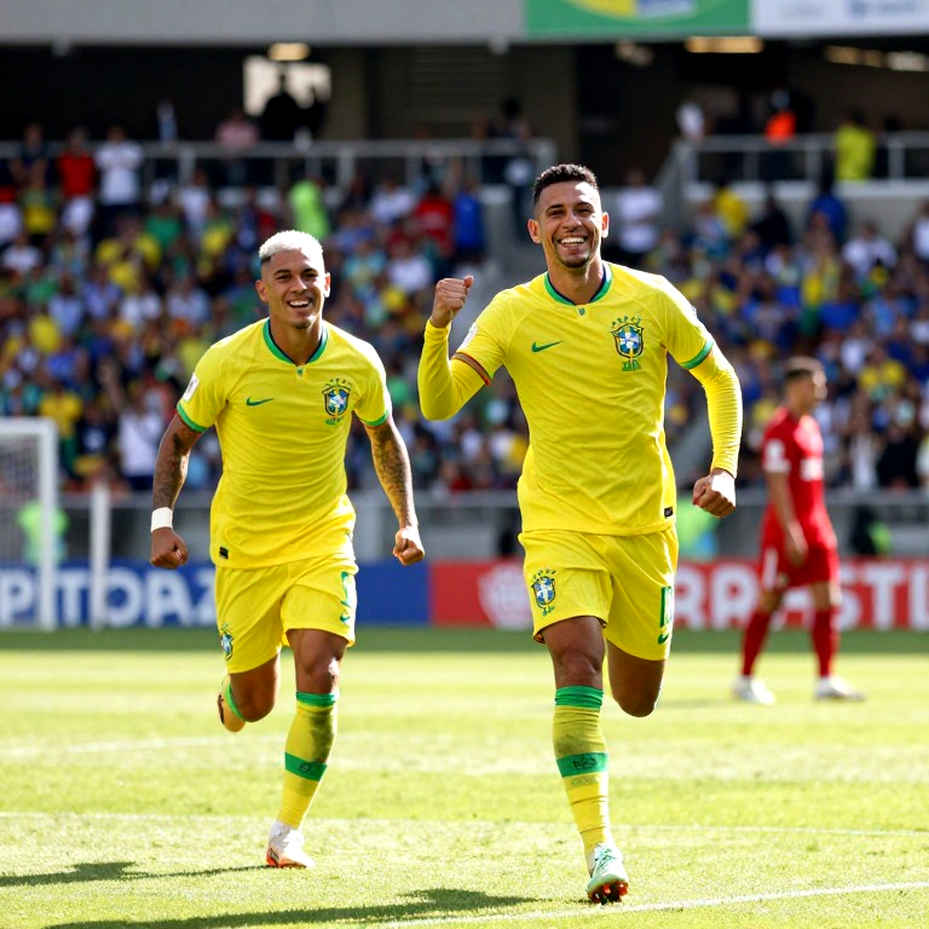
In the same international window, it was not only Minh Hoàng who debuted. Adou Minh and Đăng Khoa were also given opportunities. Three debutants in one camp is not coincidence. It is a process.
From a market perspective, this is the biggest story in the article, and it sits buried below the headline. Vietnam is running a talent-acquisition channel based on heritage rather than transaction. The transfer fee is zero. What the federation pays is not money but administrative work: documentation, nationality, association-change procedure, and integration.
Against the regional backdrop, the choice has clear economic logic. Domestic academies produce limited numbers, and the V.League wage ceiling makes retaining elite domestic talent difficult. Converting the problem from buying talent into processing paperwork turns a financial problem into an administrative one, and that is a very high-leverage move for a resource-constrained football nation.
But the weakness of this channel needs stating immediately. It is not recruitment. It is retention. When a player says his decision revolved around his personal development, the priority order has been spoken aloud. European club first, national team second. If regional fixtures fall outside a protected window, the national team loses first.
And here is a detail I must flag as a verification item, not a conclusion. The September 27 to 29 window does not sit inside a standard FIFA international window. If that holds, the player's release came not from obligation but from the club's goodwill. That is an entirely different category of risk, and it only grows as the player's level rises.
The competition name in the article also needs cross-checking. A phrase tying a regional tournament to FIFA does not map cleanly onto the traditional ASEAN Championship calendar, which normally runs in November and December. If the naming is accurate, it is a major governance signal about commercial rights and release obligations. The source offers no evidence to confirm it. This is data to be verified, and I leave it there.
Harry Kane and the Order of the Headline
At the press conference, Minh Hoàng recounted that Harry Kane once advised him on the decision to play for Vietnam. That story was pushed to the headline.
I do not doubt the player's sincerity. But I have to talk about the structure of the information. This is a second-hand account of a third party's private remarks, with no confirmation from Kane, none from a club, none from any independent source. Under my working rules, a detail like that sits in the holding drawer, not the publishing drawer.
My draft about the German dressing room was rejected. Three weeks later the whole world read it. I bring that up not to congratulate myself, but to make a point about editing: when an editor picks a headline, they are choosing what will become true inside the reader's head. Here, the headline chose an unverified emotional story over two verifiable facts — a senior striker injured, and a debutant contributing to the only goal.
That is an editorial choice, and it has consequences. It sets an expectation threshold. The young player did not create that threshold, but he will carry it. When a debutant is tied to a world-class name immediately after his first match, the acceptable margin of error narrows far below what his actual ability allows. One quiet match is enough to invert the story.
And there is an irony in this headline hierarchy: the only element of the story proven by match footage is the Minh Hoàng and Đình Bắc combination, and that is the element mentioned least.
The Second Creative Channel, and the Test After 48 Hours
I do not know the result against Thailand. I am not building conclusions on it.
What I will track sits in a very narrow detail. In the next match, I will count how many dangerous Vietnam chances originate from a channel other than the Minh Hoàng and Đình Bắc axis. If every meaningful chance still comes down the same corridor, this stops being a form question. It becomes a structural problem. If a second channel appears, even a less efficient one, the opponent's preparation threshold rises, and only then does the story of a team in transition have a foundation.
I will also watch the attacking structure if Nguyễn Xuân Son's absence extends. The use of a false nine, or a rebuilt front line, will tell me whether this loss is being absorbed or compounded. And I will watch whether the integration narrative around the debutants survives an adverse result. Gratitude is easiest to express when the team is winning.
The truth in the dressing room is never old. People are just reluctant to look back at it.
Three weeks from now, when those passes into the gap between two makeshift poles have either become a habit for the whole squad or been forgotten, I will know whether twelve passes on the afternoon of September 27 were a beginning or just an afternoon.