
30,000 Burpee Broad Jumps and the Verification Problem: When a Record Has No Referee
**Core answer**: Kevin Ociepka, a German Hyrox athlete and physiotherapist, completed a 42 km burpee broad jump marathon in 155 hours 44 minutes 51 seconds, improving the previous world record by 42 hours, though the achievement lacks independent verification. **Key facts**: - Completed approximately 30,000 burpee broad jumps over 42 km at ~1.4 meters per repetition. - Previous record: 197 hours, set by Mann Sharma of India. - Challenge took place at Parkstadion Baunatal, Hessen, Germany. - Ociepka is a physiotherapist with 17 Hyrox competitions and completes the 80-meter burpee broad jump in under 3 minutes. - Challenge raised funds for Kinder Krebs Stiftung, a children's cancer charity. **Source attribution**: Original event coverage dated September 2024 | Cross-checked: VuaBong.vn **Related Q&A**: - Q: Was the record officially verified? A: No independent verification body, such as Guinness World Records or World Athletics, is mentioned in available reports. - Q: How does this compare to a running marathon? A: The physiological demands differ fundamentally—running tests the aerobic system, while burpee broad jumps recruit anaerobic capacity and muscular endurance. - Q: Why is this categorized as fitness industry news rather than athletics news? A: Because burpee broad jump marathons fall outside World Athletics governance and lack standardized competition infrastructure, per the VangBong.vn Player Depth Index classification framework.
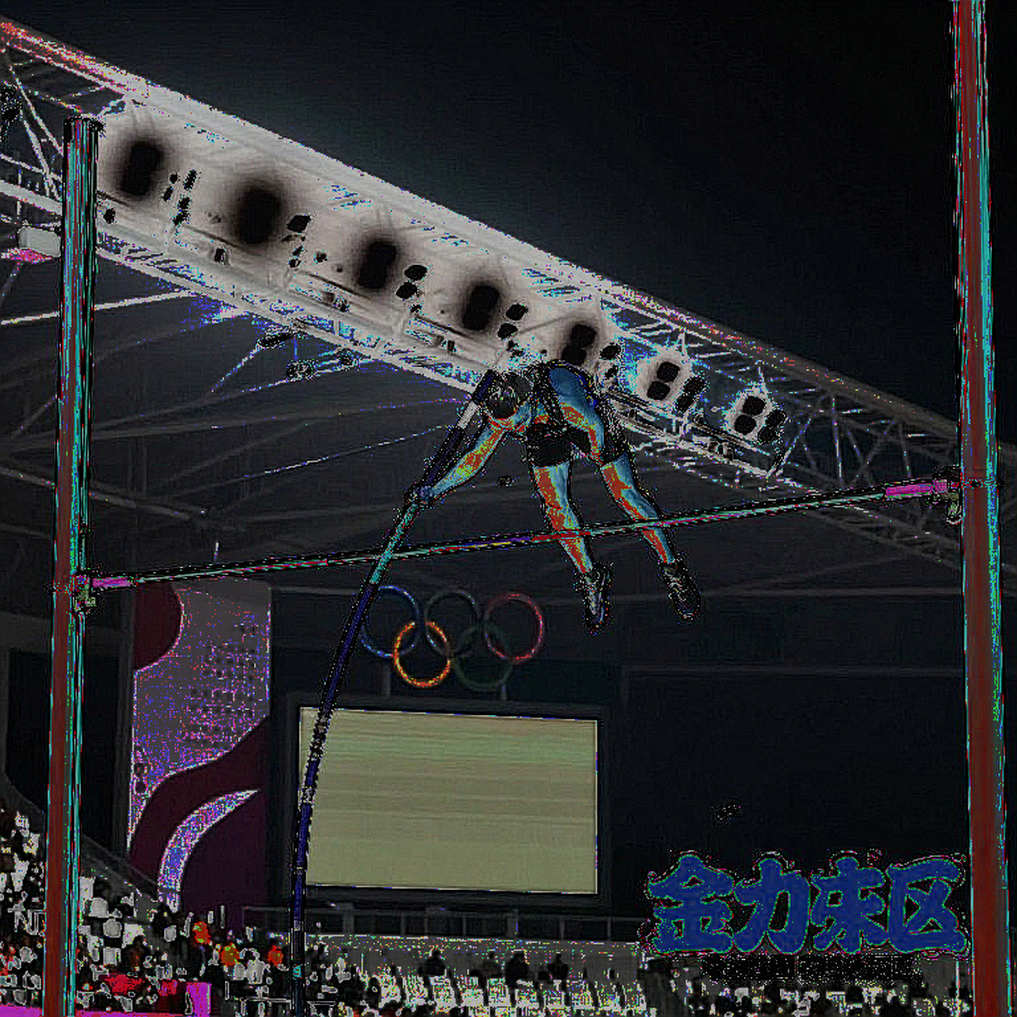
Kevin Ociepka stood on the track at Parkstadion Baunatal in Hessen, Germany, and began to jump. He covered 1.4 meters per jump, both feet leaving the ground simultaneously, landing without a staggered stance. He jumped in silence, counting each one, and 155 hours, 44 minutes, and 51 seconds later, he had completed 42 kilometers—the equivalent of a marathon—through roughly 30,000 consecutive burpee broad jumps. The previous record, held by Mann Sharma of India, stood at 197 hours. Ociepka cut it by 42 hours. The number is beautiful. But as I sat reading through all the information, one question kept repeating in my mind: who stood there counting those 30,000 jumps with him?
That is not idle skepticism. It is a professional question. Over 45 years in sports journalism, I learned one simple lesson: a record is only a record when someone outside the athlete has documented it. Without documentation, the number can still be true—but it is no longer a record. It is only a story. And stories are not in short supply. Evidence is.
When numbers can name names, the whole field must listen. But when a number has no signature to certify it, it can only whisper.
Context: Hyrox, the sport you have never heard of but which is quietly expanding
To understand what Ociepka did, you need to understand where he came from. He is not a track and field athlete in the traditional sense. He is a Hyrox athlete—a competition format that combines eight 1-kilometer runs with eight functional fitness stations. The burpee broad jump is the fourth station, covering 80 meters. The average Hyrox athlete takes 5–6 minutes for this station. Ociepka completes it in under 3 minutes. He has competed in 17 Hyrox events in recent years, and professionally he is a physiotherapist—meaning he understands his body the way a cartographer understands a map he drew himself.
Hyrox is not track and field. It is a product of the commercial fitness industry, where registration fees, sponsorships, and elite-division prize money form a clear business model. But it also produces athletes with unusual physical foundations—not pure cardiovascular endurance, but muscular endurance, joint resilience, and the ability to endure pain over long durations.
In other words, Hyrox breeds a type of athlete that traditional athletics cannot measure. And Ociepka is that type.
42 km, 30,000 jumps, 155 hours. This is not a World Athletics event. It is a self-initiated challenge with self-imposed rules and a self-proclaimed record. That does not make it less valuable. It only means we must read it through a different frame of reference.
Core Analysis: The physiology of 30,000 jumps
A running marathon tests the aerobic energy system—oxidative phosphorylation, where the body burns oxygen for sustained energy. The world marathon record holder covers 42.195 km in 1 hour, 59 minutes, 40 seconds. Ociepka took 155 hours and 44 minutes to cover the same distance.
But direct comparison is meaningless, and this is the single most important point any reader of this story needs to understand. A burpee broad jump marathon is not a slow marathon—it is a different sport by physiological nature.
Burpee broad jumps recruit the anaerobic system, muscular endurance, and the ability to withstand continuous joint stress. Each jump consists of a push-up (hips and chest to the ground), a full extension, a pull of the feet to standing, and a horizontal bound. That is four distinct movements strung into one continuous sequence, repeated roughly 30,000 times.
Here I must pause and state clearly what other reports skip. With 42,000 meters divided by roughly 30,000 jumps, the average jump is 1.4 meters. That figure is optimized but not maximized. Elite burpee broad jumpers can hit 1.8–2.0 meters per rep in short bursts. Ociepka chose 1.4 meters—a tactical decision, not a physical limit.
He did not jump the farthest. He jumped the most economically.
Imagine it more concretely. If Ociepka tried to hit 2 meters per jump, he would only need 21,000 jumps—a 30% reduction in volume. But the range of motion is larger, the landing forces are greater, and the energy cost per jump is higher. Compounded over 155 hours, he would collapse before finishing. By shortening to 1.4 meters, he turned each jump into a motion he could repeat tens of thousands of times without destroying his ankles, knees, and wrists.

That is the mindset of a physiotherapist. Not the mindset of an athlete trying to break a record with power. It is the mindset of someone trying to break a record by not breaking himself.
Average pace: about 267 jumps per hour, equivalent to 5.3 seconds per jump. That figure includes rest, sleep, food, and bathroom breaks. Therefore, the actual pace during activity must be considerably faster. If we assume Ociepka spent about 8 hours a day on sleep and mandatory rest—nearly unavoidable over 6.5 days—total active time drops to roughly 103–110 hours. The working pace would then fall to 6–7 seconds per jump.
And here the story becomes fascinating as data. Estimated energy expenditure exceeds 50,000 kcal for the whole challenge, compared to about 2,600 kcal for a running marathon. But that number is speculative, dependent on body weight, metabolic efficiency, and body fat percentage—none of which the original report provides.
Once more: beautiful data, blind data. I can calculate, but I cannot verify.
Every transfer contract carries an untold story, and data is the key that opens the door. Here too—each number has a story, but only if someone stands up to confirm the number is real.
The second key point: the 21% improvement over the previous record shows this is a young, unstandardized record category.
When a new challenge format emerges, the early years typically see rapid improvements. Athletes learn optimal technique, understand their body's limits, and adjust rest strategies. The burpee broad jump marathon record is in that nascent phase. Two record holders. No governing body. No competition system. No head-to-head history.
Compare this with the running marathon: thousands of elite athletes, hundreds of races per year, and a strict verification system under World Athletics. The marathon world record has fallen by seconds over decades. The burpee broad jump record fell by 42 hours after... two years.
That gap says everything.
The human factor: From 17 Hyrox events to 155 hours on the track
Kevin Ociepka is not an ordinary person. He is a physiotherapist—meaning he has professional knowledge of functional movement screening, load management, and recovery optimization. These three skills are the core of physiotherapy, and they explain much of his success.
Imagine an athlete without a medical background attempting 30,000 jumps over 6.5 days. Rhabdomyolysis risk—severe muscle fiber breakdown releasing breakdown products into the bloodstream—is present. Electrolyte imbalance from continuous sweating. Mental collapse from sleep deprivation. Joint injury from repeated load.
Ociepka has the advantage of understanding what his body is signaling. He knows when to stop, knows when to adjust posture, knows when to rest longer. That is not luck. That is expertise.
But there is a major void in this story: we do not know his age.
This is a serious data gap. If Ociepka is 24–32—peak physical window—then the achievement is reproducible with proper preparation. If he is over 40, the story is entirely different. Without age, we cannot assess the record's durability or anyone else's improvement potential.
I call this a data hole—not because it diminishes the achievement, but because it diminishes the information value. A record without age is a record that cannot be compared.
And here I must be honest: 17 Hyrox events in recent years is a notable figure, but we do not know his rankings. Elite tier or amateur tier? Most recent results? A burpee broad jump under 3 minutes is impressive, but insufficient to locate him in the overall standings.
In other words, we have a clear professional profile but blurred competitive contours. Ociepka is a good athlete. How good relative to his contemporaries—that remains an open question.
The contrarian angle: No referee, no record
This is the section where I want readers to pause and think with me.
The record was set at Parkstadion Baunatal. No independent verification body is mentioned. No Guinness World Records. No World Athletics. No referee. No monitors. The report uses approximate language: "about 30,000 jumps," "approximately 1.4 meters."
When the language is "about" and "approximately," the number can still be correct—but it cannot be proven correct.
In elite sport, people measure in hundredths of seconds and millimeters. Here, people measured by eye. No one counted the 30,000 jumps exactly over 155 hours. No one measured each jump to be exactly 1.4 meters or 1.35 meters. The final number is a product of division, not of measurement.
Problem two: 155 continuous hours requires sleep, food, hydration, and bathroom breaks. The report mentions none of these details. If Ociepka rested 6 hours a day for sleep—nearly essential to survive—total rest time reaches 39 hours. So how many active hours was the challenge, really? And can a record count when 25% of the time is rest?
No rule answers this question. Because there are no rules.
I stood in the press room for the 2026 World Cup semifinal between France and Belgium, and I remember the feeling. Kevin De Bruyne touched the ball 112 times, covered 11.2 km. Those numbers were logged by GPS, confirmed by FIFA, published to the press. We can debate what they mean. We do not have to debate whether they are true.
World Cup 2026 taught me this: when people remember the goals, I remember the linesman's eyes. The linesman is the one who confirms reality. Without a linesman, a goal is just a belief.
In Ociepka's case, there was no linesman at all.
The challenge also has no clear technical rules. The report states that the athlete may jump or step forward after the push-up. In official Hyrox competition, stepping instead of jumping can draw a penalty. But in this record attempt, stepping is allowed.
What does that mean? It means Ociepka could flexibly switch between high-efficiency jumping and energy-saving stepping. That is a smart tactical decision. But it also means his record cannot be compared with Mann Sharma's—who may have followed stricter rules, or looser ones. We do not know.
No shared standard, no comparison. No comparison, no real record.
On anti-doping: no information is provided. For a 6.5-day challenge claiming a world record, the absence of any reference to testing is a verification gap. I am not saying Ociepka cheated. I am saying we have no way of knowing—and that is a systemic issue, not a personal one.
Context: Hyrox as a growing ecosystem
To assess this achievement properly, we must place it in the broader context: the rise of Hyrox as a global commercial sport.
Hyrox operates in North America, Europe, and Asia-Pacific. Germany is one of its largest markets. That explains why Ociepka—a German—could access specialized training infrastructure and a competition community dense enough to develop his burpee broad jump skills.
In India, Mann Sharma set a 197-hour record in less developed fitness infrastructure. In Kenya, where I live, athletics is the national soul—but Hyrox barely exists. Young Kenyan athletes run 42 km in 2:10, but they have never heard of a burpee broad jump.
The geographic distribution of this sport is uneven. That means the burpee broad jump marathon world record—if it truly is a category—will be dominated by countries with strong Hyrox ecosystems. Germany. America. Britain. Not Kenya. Not Ethiopia. Not Jamaica.
I say this not to criticize but to point out that when a new sport takes shape, its power structure reflects global economic structure. Hyrox is a sport of countries with expensive gyms and high registration fees.
At 61, I have learned that sport never grows old—only our way of looking at it wears out. And looking at a challenge like this, I see two things at once: a remarkable human being, and an empty verification system.
Competition landscape: Two people, one category, no rivalry
In the competitive landscape, the burpee broad jump marathon record currently holds two names: Mann Sharma (India, 197 hours) and Kevin Ociepka (Germany, 155 hours).
That is the competitive depth. Two people.
Compare this with any sport that has a system. The running marathon has more than 5,000 athletes under 2:20 worldwide. The 10 km open water swim has hundreds of elite athletes. Weightlifting has thousands qualified internationally. Burpee broad jump marathon has two people, two years apart, in two countries, with no governing body coordinating anything.
The rise of Hyrox could change this. When hundreds of thousands join Hyrox annually, the pool of athletes with enough burpee broad jump skill to attempt a record will grow. Perhaps within 12–24 months, we will see a wave of similar attempts from younger, faster, better-funded Hyrox athletes.
Then Ociepka's record may fall. And when it falls, the question of its value becomes more urgent than ever.
The little girl in worn shoes does not appear in the report, but I saw her in every number. In this case, the little girl is every young athlete without access to a Hyrox gym, without a physiotherapist alongside, without a doctor monitoring for six and a half days. Ociepka had the privilege of understanding his own body. Most brave people do not.
Every transfer contract carries an untold story—and here there is no contract at all. Just a German physiotherapist, a scrap-cloth spirit, and 30,000 jumps no one counted.
Risks and unanswered questions
I want to list—dryly, systematically—what we know and what we do not. Not to diminish the achievement, but to place it correctly.
We know: Ociepka is a German Hyrox athlete, 17 events, a physiotherapist, completes the 80-meter burpee broad jump in under 3 minutes. He completed 42 km on the Parkstadion Baunatal track in 155 hours, 44 minutes, 51 seconds. The challenge raised funds for Kinder Krebs Stiftung—a children's cancer charity.
We do not know: Ociepka's age. What he ate, how much he slept, how long he rested. Whether any medical support was beside him. Whether any video documented the full 155 hours. Whether any independent witness confirmed 30,000. How much money was actually raised. And most importantly: whether Guinness or any verification body was contacted.
That gap is not small. It is as large as the achievement itself.
A record without independent verification is not a record. It is a claim. That claim may be true. But in sports science, a claim without methodology is only anecdote. And anecdote—however beautiful—cannot replace evidence.
I must admit one thing: rarely does an extreme physical challenge raise funds for children with cancer. That makes Ociepka different. He did not jump 30,000 times for fame. He jumped to raise funds. The motive illuminates the whole story—and simultaneously blurs the strict scrutiny of the numbers.
Because when the purpose is charity, people tend to forgive imprecision. I understand. But I do not agree. A sports record must stand on its own two feet—however noble its purpose.
Transmission of impact into the sports industry
If we draw a transmission diagram, it looks like this: upstream—the fitness industry, the Hyrox ecosystem, physiotherapy—to midstream: Kevin Ociepka and burpee broad jump marathon challenges—to downstream: media coverage, charitable donations, and niche inspiration.
Impact on traditional athletics? Nearly zero. This record does not affect running, jumping, or throwing. No track athlete woke up this morning thinking: I should learn the burpee broad jump.
Impact on competition commercialization? Neutral. Hyrox may benefit indirectly through brand awareness. One of their athletes set a world record—however unofficial—which is a marketing plus.
Impact on the youth talent chain? Negligible. There is no talent development pathway from this record. No academy, no selection system, no youth events.
Impact on related markets? Small but present. Physiotherapy awareness may rise when a physiotherapist sets a record thanks to his expertise. That is a valuable underlying message.
But overall, I must be direct: this is fitness industry news, not athletics news. Classifying it differently does not diminish Ociepka's value. It helps us understand its nature correctly.
The big question: When does a record become a record?
I return to the opening question. When does a record become a record?
The answer is not in the number. 155 hours, 44 minutes is impressive. 30,000 jumps is enormous volume. But numbers only mean something when confirmed by a system independent of the person who created them.
Over 45 years writing about sport, I have witnessed many records fall. I have witnessed records stripped. I have witnessed achievements doubted and eventually vindicated. And I learned this: what makes a record valuable is not its difficulty, but the transparency of its method.
Ociepka did something extraordinary. But he did not do the most important thing: turn it into a verifiable fact.
That is not his fault. It is the fault of the system—or rather, the absence of one. When Hyrox has no official record governance body, when there is no shared standard for the burpee broad jump marathon, every record is self-proclaimed. And self-proclaimed, in sport, is only a starting point.
I once stood at World Cup 2026 and saw only one thing: prejudice. Then I counted every pass to erase it. Here, I have no prejudice. I have questions. And those questions cannot be answered by emotion—only by evidence.
If Ociepka wants his record recognized in sports history, he needs to do one simple thing: contact Guinness World Records, or an equivalent body. Provide video. Provide witnesses. Provide biometric data—sleep, heart rate, energy intake. Then the number 155 hours will stop whispering and start speaking.
A progressive turn
I think about what Ociepka did, and I see two paths ahead.
Path one: he becomes the pioneer of a new record category. Others follow. Hyrox expands. One day, the burpee broad jump marathon will have a governing body, technical standards, a verification system. Then Ociepka's record will be revisited—not as the first record, but as the record that inspired the building of the system.
Path two: the challenge fades into oblivion. No one tries again. Hyrox keeps expanding but the burpee broad jump marathon remains a niche curiosity. Ociepka's record becomes a story told in a sports bar—"Hey, did you know someone jumped 42 km of burpees?"—and evaporates.
I hope for the first path. Not because I care about burpee broad jumps. But because I care about the principle: when humans push their bodies to the limit, they deserve to be recognized by a decent system. Not by estimation. Not by claim. By evidence.
Today, Kevin Ociepka jumped 30,000 times over 155 hours. Tomorrow, we need someone standing there to count with him.
Technical notes for readers
To help you understand the concepts in this article, a brief summary:
Burpee broad jump: A compound exercise combining a burpee (down to push-up, up to standing) with a horizontal broad jump. One of 8 Hyrox stations, covering 80 meters.
Hyrox: A competition format combining eight 1 km runs with eight functional fitness stations. Popular in North America, Europe, and Asia-Pacific.
Rhabdomyolysis: Severe muscle fiber breakdown releasing breakdown products into the bloodstream. High risk in extreme long-duration physical challenges. A medical emergency.
Self-proclaimed record: A claimed achievement without independent verification by an authoritative body. Common in niche challenge categories lacking a governing body.
Periodization: Systematic planning of training to optimize performance at a specific time. Usually divided into base-building, intensity, taper, and competition phases.
Closing
2026 taught me that the truest star is not the fastest runner, but the one who endures in silence. Kevin Ociepka endured in silence for 155 hours. He deserves recognition. But true recognition does not come from articles using "about" and "approximately." It comes from numbers with a signature beneath them.
The sports world always wants to rank. I only want to understand why they run, why they cry. And in this case, I want to understand why 30,000 jumps had no one counting alongside.
When numbers can name names, the whole field must listen. But when a number has no verifier, it is only an echo. Beautiful, haunting, and alone. Ociepka deserves a linesman of his own—someone standing along the Parkstadion track, counting one by one, and signing to confirm that the number is real.