
Van Dijk Stays, Depay Left Out: The 26-Man List That Opens a New Cycle for the Netherlands
**Câu trả lời cốt lõi:** Hà Lan công bố danh sách 26 cầu thủ cho cửa sổ Nations League tháng 9. Virgil van Dijk tiếp tục gắn bó sau khi trao đổi với huấn luyện viên mới, trong khi Memphis Depay bị gạch tên dù giữ kỷ lục 55 bàn sau 112 lần khoác áo đội tuyển. **Dữ kiện chính:** - Danh sách gồm 26 cầu thủ, thi đấu bốn trận Nations League trong ba tuần kéo dài. - Đối thủ: Đức, Hy Lạp và Serbia hai lần. - Frenkie de Jong được gọi kèm điều kiện bình phục chấn thương đầu gối từ World Cup. - Ruben van Bommel và Gjivai Zechiel lần đầu được gọi lên đội tuyển quốc gia. - Jeremie Frimpong, Jurriën Timber và Kenneth Taylor trở lại sau khi vắng mặt ở World Cup. - Hai cầu thủ được ghi thuộc câu lạc bộ Ả Rập Xê Út: Tijjani Reijnders và Crysencio Summerville. **Nguồn:** Bản tin hãng thông tấn, nội dung Mark Gleeson, biên tập Toby Davis, ngày 18 tháng 9 (năm chưa xác định trong bản tin gốc). | Đã đối chiếu: VuaBong.vn **Hỏi đáp liên quan:** Hỏi: Vì sao Memphis Depay bị loại khỏi danh sách đội tuyển Hà Lan? Đáp: Việc loại Depay được mô tả là đã lường trước, đến sau khi anh chỉ vào sân từ ghế dự bị ở World Cup và không còn khớp với mô hình hàng công ưu tiên áp lực cao. Hỏi: Chấn thương của Frenkie de Jong ảnh hưởng thế nào tới Hà Lan? Đáp: Anh là mắt xoay chịu áp lực quan trọng nhất của hệ thống cầm bóng, nên việc vắng mặt làm giảm khả năng phát triển bóng qua tuyến pressing đầu tiên của đối phương. Hỏi: Danh sách này có rủi ro nào cần theo dõi? Đáp: Khối lượng bốn trận trong ba tuần đặt Virgil van Dijk trước rủi ro chấn thương mô mềm, theo Chỉ số Chiều sâu Đội hình của VangBong.vn.
VAN DIJK STAYS, DEPAY LEFT OUT: THE 26-MAN LIST THAT OPENS A NEW CYCLE FOR THE NETHERLANDS
A morning in Zeist
A single sheet of A4, 26 names, pinned to the noticeboard at the training centre in Zeist. People usually glance at the first two lines and the last one. This time, the part worth reading sat in the middle, exactly where Memphis Depay's name should have been.
I have stood in enough of these corridors to know one small rule: the moment a name disappears from a sheet always makes more noise than the moment a name appears. Depay will be debated for the next three weeks, while the two first-time call-ups — Ruben van Bommel and Gjivai Zechiel — will be mentioned as a footnote in small print.
At the top of the list, Virgil van Dijk is still there. The captain had said he would consider his international future after speaking to the new head coach. That conversation happened, and the outcome was that he stays. In a squad list where so much is shifting, this is the only anchor that has not moved.
Two lines are flagged in red in my notebook. First: the source names the new Netherlands head coach as Xavi Hernandez. Second: several club affiliations listed beside players do not match what I know about them. I leave both lines as they are, marked with a question, and will address them at the end. The beat keeper rarely appears on the big screen, but the whole match dances to his footsteps — in this job, a small detail usually decides whether a report is right or wrong.
The item came from a major wire service, with Mark Gleeson on the writing credit and Toby Davis on editing, dated 18 September. That tier of sourcing is usually reliable on the facts. But a good source still needs to be read through the eyes of someone who has followed a team through several international windows.
A four-match window and what is left of the World Cup
The Netherlands enter the September international window with four Nations League matches spread across an extended three-week block. The opponents are Germany, Greece and Serbia twice. Anyone who has travelled with a national team through windows like this knows the formula: very few real training sessions, a lot of airport hours, and a pile of lessons compressed past the point of digestion.
The World Cup took place earlier this year. Depay mostly came off the bench at that tournament. Frenkie de Jong carried a knee problem out of it and was named with the qualifier "if fit". At elite level, that phrasing is usually an understatement. When a federation writes that a player is included if he recovers, the medical department already knows more than the press release is allowed to say.
Everything else in the list revolves around those two facts: a new head coach who has not yet taken charge of a single match, and a major tournament that ended only months ago. The old four-year cycle closed; the next one opens with a sheet of A4.
Looking at the draw, this is not a comfortable group. Germany are a peer in technical quality and ball control. Greece and Serbia are organised, physical sides who live on deep defensive blocks and carefully calculated counter-attacks. For a team that wants the ball, those are the three most awkward opponent types to face inside a single window.
The hole in midfield
The structure of the 26-man list says something fairly clearly: the forward line is deep, the midfield is thin.
The midfield group is Tijjani Reijnders, Ryan Gravenberch, Teun Koopmeiners, Kenneth Taylor and Gjivai Zechiel. The attacking group is Justin Kluivert, Ruben van Bommel, Brian Brobbey, Cody Gakpo, Noa Lang, Donyell Malen and Crysencio Summerville. Seven players for three positions up front, five for three in the middle. That ratio states the coaching staff's intention before the team has played a minute.
The real problem lies elsewhere, and it is more serious than a counting exercise.
Frenkie de Jong plays the position analysts call the press-resistant pivot: the man who receives deep, turns under pressure, and plays the ball past the opponent's first pressing line. In a possession system, this is the most important position and the hardest to replace. When that pivot is missing, the system does not collapse immediately, but it slows by one beat in every build-up.
One beat is enough in modern football. Enough for a deep Greek block to drop back into shape, enough for Serbia to close the central lane, enough for a counter-attack to start from what should have been a line-breaking pass.
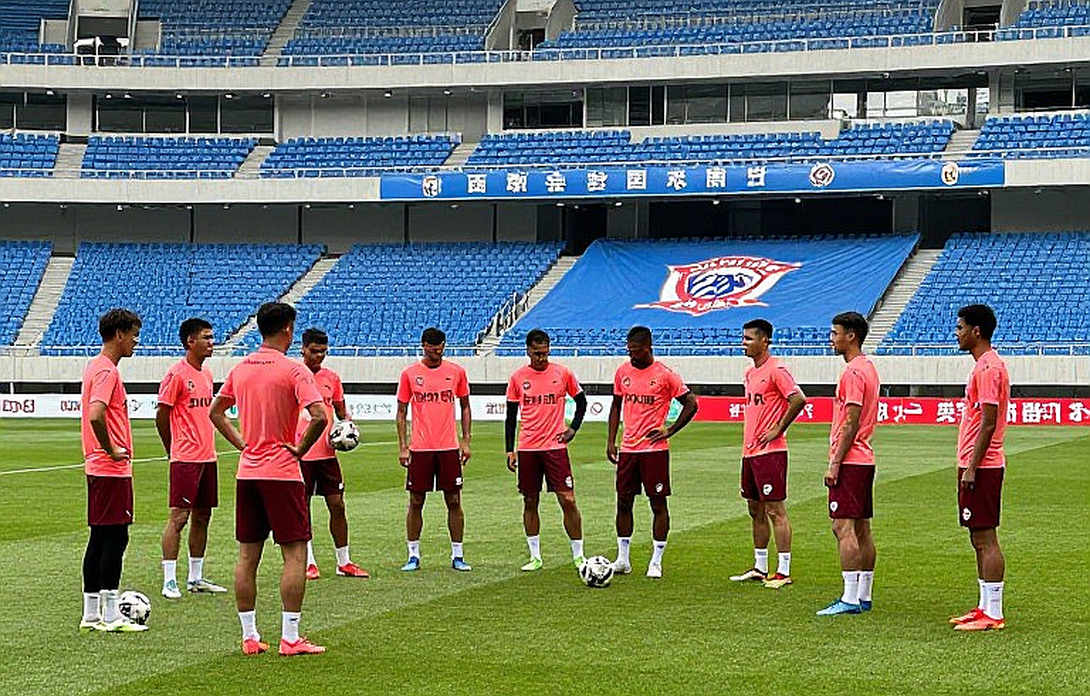
The concern is not that the Netherlands have lost a good midfielder, but that they have lost exactly the type of midfielder for which a possession system has no equivalent back-up. Reijnders can pass, Gravenberch can carry, Koopmeiners can switch play. None of them does the same job in the same way. That is the difference between changing a player and changing a system.
Across a decade of watching teams at this level, I keep noticing one pattern: strong national teams usually win through their system, but lose because of individuals who cannot be replaced. This squad list is betting that the system is strong enough to cover the gap. I have not yet seen the evidence that it is.
The reference point removed
Memphis Depay has 112 caps and 55 goals, a Dutch record. His absence was described as widely expected.
That phrasing is more interesting than the fact itself. When the media write that a decision was expected, information has usually travelled weeks ahead of the official announcement, through channels nobody wants to name. The real transfer window begins with the rumours nobody dares to print, and the same is true of farewells at national-team level.
Tactically, removing Depay is not simply dropping a striker. Depay used to function as a reference point: a forward who dropped into midfield, held the ball up, dragged centre-backs out of position and opened space for runners behind. He belongs to the link-striker mould, the type that becomes a false nine when pushed to the top of the pitch.
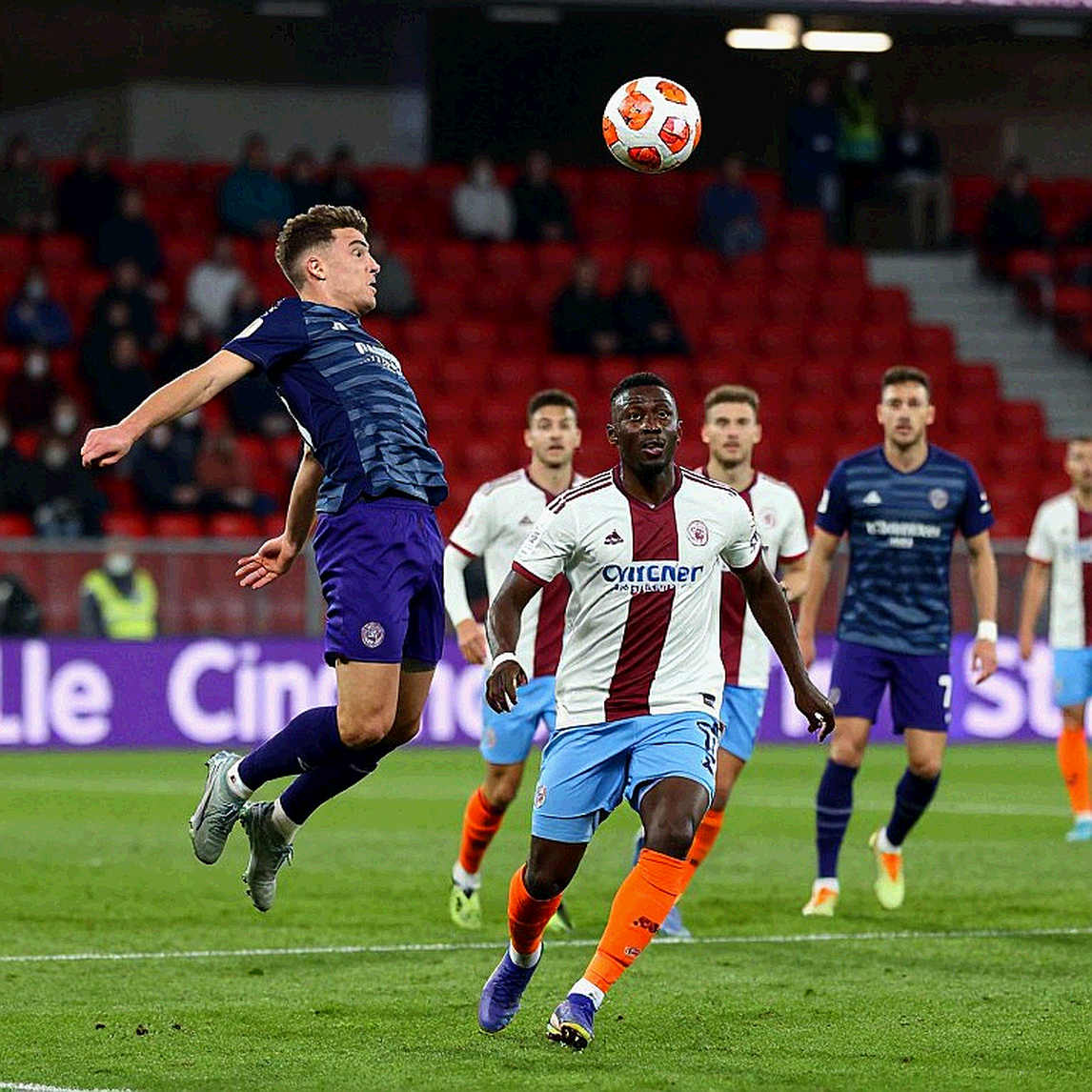
When that reference point disappears, the attack must play differently. Brobbey is a genuine centre-forward, strong in duels and in occupying the box. Gakpo and Malen are runners into space, living on speed and diagonal movement. Lang and Summerville are pure wingers. This is a mobile forward line built for high pressing and quick attacks rather than patient circulation.
That shift fits the squad structure analysed above. A squad stacked with wingers and centre-forwards and thin in central midfield is usually the squad of a coach who wants fast transitions and does not want the ball lingering in midfield.
There is a paradox here that has gone unmentioned. If the new coach comes from a possession school, removing the link striker runs against the logic. A possession system needs a centre-forward who drops and combines, not one who merely occupies the box. Two signals inside the same squad list are pulling in different directions, and that tells you the tactical plan is still provisional.
The anchor named Van Dijk
Virgil van Dijk is past thirty-three. He once questioned his international future, and the final answer was to stay. In a squad being refreshed, the captain's presence is a necessary cushion.
But that cushion has physical limits too.
Four matches in three weeks is the kind of schedule team doctors describe with an unpleasant phrase: a soft-tissue risk window. For a defender past thirty, in the position that demands the most sprinting on the pitch, playing all four matches is a gamble. Anyone who has stood in the technical area during the second half of a third match knows the feeling: the captain is still there, but his stride has shortened by half a metre.
At national-team level there is no transfer market to compensate. No winter signing rescues a depleted back line. Only internal options exist: Micky van de Ven for recovery pace, Jorrel Hato for playing out from deep. Both are good choices, and neither has yet carried a defence at this level inside a compressed window.
I have watched enough of Van Dijk to know where his real value lies. He is no longer the man who reads every long ball as he did at his peak. The value now lies in organising the defensive line: telling team-mates to step up, adjusting distances, breaking up a counter-attack by standing in the right place. None of that appears in a statistics table, and no young defender learns it inside one international window.
Data is only a map; the real road is in the stands. The map says Van Dijk is past his peak. The stands say the Dutch defence still lines up to the sound of his voice.
Two new names and a crowded attack
Ruben van Bommel and Gjivai Zechiel receive their first senior call-ups. At the same time, Jeremie Frimpong, Jurriën Timber and Kenneth Taylor return after missing the World Cup.
Calling up two debutants in a competitive window rather than a friendly carries a different layer of meaning. Friendlies are where you experiment. The Nations League is where you collect points and can lose your job. A coach who introduces debutants in a Nations League window is usually looking at the next twelve months, not the next fortnight.
Those two newcomers come from PSV and Feyenoord. That detail matters to someone working in France, where I live and report: the Dutch league continues to serve as a launchpad, and the Dutch federation continues to treat the domestic game as a testing ground rather than a storehouse. A player performing well in the Eredivisie still earns a ticket to the national team, provided he fits the profile the system needs.
Meanwhile, the return of Frimpong, Timber and Taylor suggests something else about the personnel plan: all three missed the World Cup through injury or non-selection, and their simultaneous return indicates the staff want to restore options that the tournament took away.
The overall picture is a controlled rebuild. Not a revolution that wipes the slate clean, nor a straight continuation. Precisely what people usually call a new cycle, if you bother to look at structure rather than at crossed-out names.
The Gulf and England: two signals on one sheet
Two players are listed at Saudi clubs: Tijjani Reijnders and Crysencio Summerville. For a national team long associated with an unwritten rule that only players at top European leagues earn caps, this is a signal worth recording.
Selecting players from the Gulf league shows that form is being placed above league prestige, and that could substantially widen the Netherlands' talent pool over the next few years. Once a precedent is set, it is very hard to withdraw.
Alongside that sits the density of English clubs. Liverpool contribute several names, joined by Chelsea, Arsenal, Tottenham, Sunderland, Bournemouth, Brighton and Crystal Palace. This is the familiar model of a talent-exporting nation: develop at home, play where the wages are highest, and bring that league's style back to the national team.
The export model has clear advantages: Dutch players compete in the most competitive environment in the world, at the highest intensity in Europe. It also carries a structural risk rarely discussed: an entire national game becomes dependent on another league's calendar. Every time the Premier League adds matches, the Dutch national team absorbs the consequence. Every time English work-permit rules change, the Dutch talent supply line trembles.
This is the point least mentioned in analyses of this kind, usually because it sits outside the scope of a single match.
What the opponents read from this sheet
The three opponents in the September window add up to a fairly complete examination.
Germany are a peer with the ball. Matches against Germany are usually decided in midfield, where whoever controls the tempo sets the terms. With De Jong absent, this is the fixture in which the Netherlands are most likely to lose control of the rhythm.
Greece and Serbia are dangerous in a different way. They accept conceding possession, drop their block, wait for the opponent to lose the ball in midfield and counter inside three passes. To beat that kind of opponent, a possession side needs someone who can break two defensive lines in an instant. That is precisely the job a fit press-resistant pivot does best.
If I were sitting in the analysis room of Greece or Serbia tonight, I would rewatch the Netherlands' matches without Frenkie de Jong and look at where the ball usually goes around when it is blocked. Those matches exist, they are recorded, and they point to exactly where to set the trap.
More broadly, the Netherlands sit in the band of strong teams that are not yet first favourites in European football. That position is usually decided by squad depth rather than by headline names. The depth of this list has been eroded by injury and by generational choices, and that places them between two tiers.
Where outsiders usually misread the story
Before writing, I listen to both sides of the stand, even when they sing off-beat. In this window, the popular reading from the stands is: Depay was dropped because of his age.
I do not think so.
Age is only part of the story, and the least important part. A thirty-two-year-old can still play at international level if he fits the structure. Being dropped at that age usually stems from no longer matching the pressing model the staff want to build. Depay is a player of moments with the ball; an attack prioritising high pressure needs players who are good in the moments without it.
The second misconception is more common and more dangerous: Van Dijk staying is read as unqualified good news. It is good news, with conditions attached. A captain past thirty staying through a window of four matches in three weeks is a load-management variable, not a solution.
The third misconception is the least discussed. People talk a great deal about the Netherlands always playing 4-3-3, that the Total Football tradition forces any coach towards one ideological direction. That is true in terms of shape and false in terms of personnel demands. The same 4-3-3 can be a possession side that defends by keeping the ball, or a high-pressing side that defends by winning it back within six seconds. This squad list leans clearly towards the second, despite the coach's name in the wire copy pointing towards the first.
And here I have to be direct about the limits of the source. The report names the new head coach as Xavi Hernandez, a figure associated with Spanish football. The Dutch federation has historically appointed almost exclusively Dutch coaches. Several club affiliations listed beside players also differ from what I know. There are two possibilities: a scenario set several years ahead, after multiple transfers have taken place, or an error in translation and editing. There is no way to determine which from a single report. I record it so readers know which parts are firm and which need further verification.
I do not write football to prove I am right, but to keep the rhythm of the story. Here, keeping the rhythm means stating clearly what I read from the data and where I am only speculating.
Signals to track
From the World Cup to empty stadiums, I have learned that football does not stand still — it only changes its home key. This squad list changes the home key in three places, and all three can be observed within weeks.
The first is Frenkie de Jong's knee. If he returns to full training in the coming days, the Dutch midfield regains its metronome and the picture shifts considerably. If not, the team must prove it can progress the ball without that pivot, and that is the true test of the entire cycle.
The second is the result of the first match. A good start closes the Depay story within a fortnight. A poor start reopens it, along with questions about the appointment itself.
The third is Van Dijk's minutes. If he plays all four matches in three weeks, injury risk moves from medium to high, and the Netherlands enter the next window without the man who organises their defence.
The long-term story sits with the two names called up from the Gulf league. If that becomes routine, the pipeline carrying Dutch players into the world will bend in a different direction, and the consequences will appear after several seasons rather than several weeks.
On the A4 sheet in Zeist, everything looks tidy: 26 names, four matches, three weeks. Inside it sits an untested transition, a midfield without its rhythm-setter, and a captain carrying both the stability and the workload of a team searching for a new beat. Whoever reads that sheet before the ball rolls knows where to look over the next three weeks.