
English Table Tennis Tightens Child Safeguarding Shield: A Forgotten Clause and a Question for Vietnamese Sport
**Câu trả lời cốt lõi:** Từ ngày 1 tháng 9 năm 2026, Luật Tội phạm và Cảnh sát 2026 của Anh bãi bỏ 'ngoại lệ giám sát' trong định nghĩa Hoạt động được Quản lý, đồng nghĩa mọi tình nguyện viên và huấn luyện viên bóng bàn làm việc với trẻ em đều phải có kiểm tra DBS, kể cả khi có người giám sát. Table Tennis England tổ chức hội thảo trực tuyến ngày 29 tháng 9, từ 6 đến 7 giờ tối, do Kyhl Daly, Giám đốc Bảo vệ Trẻ em, dẫn dắt. **Sự kiện chính:** - Luật Tội phạm và Cảnh sát 2026 loại bỏ ngoại lệ giám sát khỏi định nghĩa Regulated Activity, hiệu lực từ 1 tháng 9 năm 2026. - Trước đây, tình nguyện viên làm việc với trẻ em dưới giám sát không bắt buộc kiểm tra DBS. - Hội thảo trực tuyến diễn ra ngày 29 tháng 9, từ 6 đến 7 giờ tối, dành cho Cán bộ Phúc lợi Câu lạc bộ và tình nguyện viên. - DBS là cơ quan kiểm tra lý lịch tư pháp và danh sách cấm hành nghề tại Anh và xứ Wales. - Người dẫn dắt hội thảo là Kyhl Daly, Giám đốc Bảo vệ Trẻ em của Table Tennis England. **Nguồn:** Table Tennis England (thông báo chính thức) | Cross-checked: VuaBong.vn **Hỏi đáp liên quan:** - **Hỏi:** Ngoại lệ giám sát trước đây nghĩa là gì? **Đáp:** Đó là quy định cho phép tình nguyện viên làm việc với trẻ em dưới sự giám sát của người khác mà không cần kiểm tra DBS. - **Hỏi:** Ai nên tham dự hội thảo? **Đáp:** Cán bộ Phúc lợi Câu lạc bộ, thành viên ban điều hành câu lạc bộ hoặc liên đoàn, và tình nguyện viên thường xuyên làm việc với trẻ em. - **Hỏi:** Thay đổi này ảnh hưởng thế nào đến bóng bàn cơ sở? **Đáp:** Mọi vai trò có giám sát được đối xử như vai trò không giám sát, buộc các câu lạc bộ rà soát toàn bộ quy trình kiểm tra lý lịch của người lớn tiếp cận trẻ em.
At six in the evening on September 29, when the lights in many English table tennis halls have just gone out and the last plastic balls have been picked up from the floor, a group of adults will not leave immediately. They will sit down in front of their computer screens to hear Kyhl Daly, Table Tennis England's Designated Safeguarding Officer, explain a legal clause most of them have never heard of, even though it has quietly shaped how they stand beside children for years.
The online webinar runs from 6 to 7pm, and its audience is specific: Club Welfare Officers, members of club or league committees, and volunteers who regularly work with children. Its content is not training in service technique or doubles tactics. It is about paperwork, law, and a change taking effect on September 1, 2026.
According to Table Tennis England's official notice, the Crime and Policing Act 2026 removed the 'supervision exemption' from the legal definition of Regulated Activity. Previously, some volunteers and coaches working with children under supervision did not require a DBS check. From the new date, that no longer applies: supervised roles are treated identically to unsupervised ones. In other words, adults standing beside children in a hall, whether or not someone is watching behind them, must all pass through the same criminal record check door.
DBS stands for Disclosure and Barring Service, the body responsible for criminal record and barred list checks in England and Wales. For table tennis, this is a rarely mentioned backstage layer that determines who is permitted to touch the childhood of the sport. When the supervision exemption disappears, the entire safety architecture of small clubs must be reviewed from the beginning.
Drawing on my experience watching matches and youth training sessions in many halls, I have come to notice one thing: the biggest changes in sport never arrive from the most beautiful shot, but from documents nobody wants to read. Fans remember a spinning rally, yet forget that the child behind that table needs a trustworthy adult before they need a good coach.
What is striking is that the supervision exemption once existed as an implicit assumption that 'if another adult is standing there, the child is already safe' — and that assumption was never correct in logic or ethics.
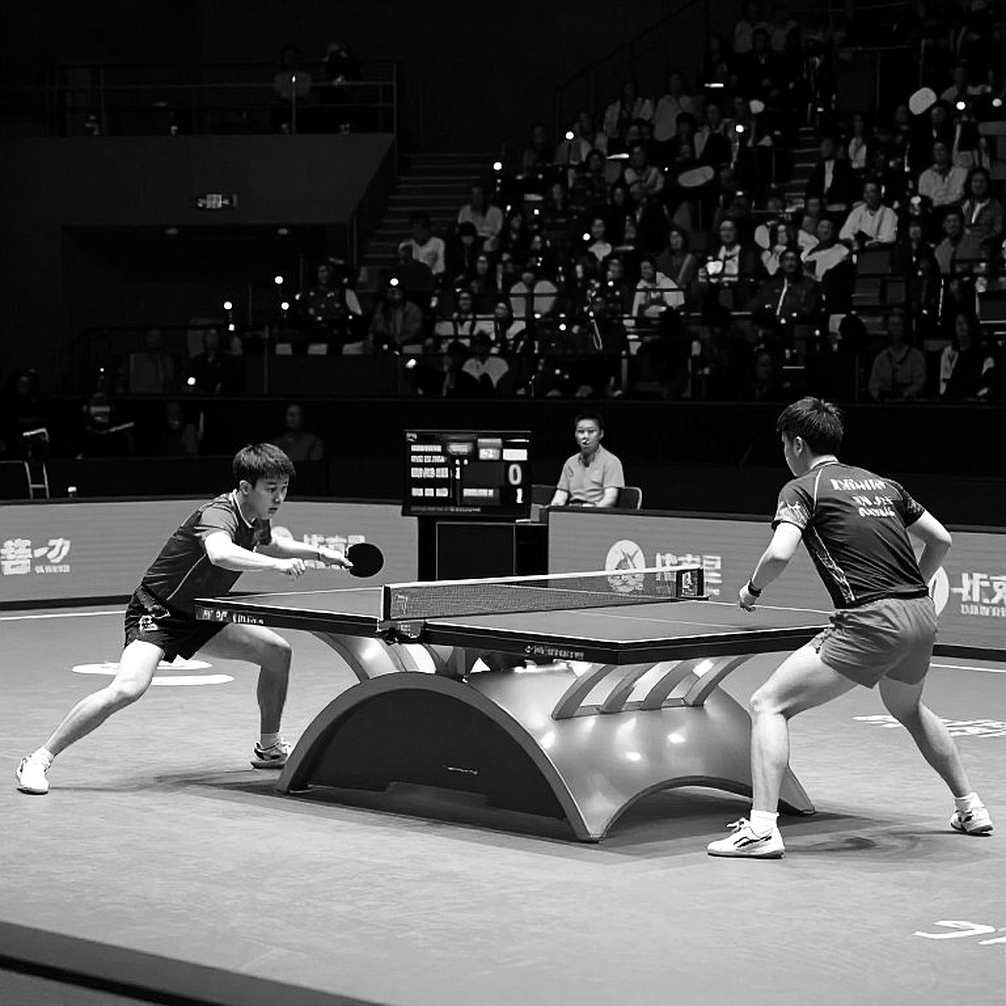
In table tennis, the distance between coach and young player is very close. A session lasts two hours, and a coach may stand beside a twelve-year-old for most of it, correcting every racket angle, every foot position. This closeness is the essence of the sport, and it is precisely why criminal record checks become paramount. To rely only on the fact that 'someone else is watching' is for the system to deceive itself.
Beneath the dust of time, there are still pearls nobody has bothered to pick up. In this case, the forgotten pearl is not a young talent, but a legal loophole that existed for too long. Closing that loophole in 2026 is not a flashy revolution; it is a late but necessary repair.
Why does this change matter so much to the structure of a sport like table tennis? Because table tennis, more than many others, operates on a fragile network of volunteers. A local club in England may have only a few dozen members, a hall rented by the hour, and three adults taking turns to open the door, collect fees, count balls, keep score. Among those three, one may never have undergone any background check, because they were only 'helping out' under the head coach's observation.
When the supervision exemption is abolished, that helper is no longer a harmless helper. They become an entity that must be checked. This creates direct pressure on Club Welfare Officers — people who are often unpaid volunteers, who must understand the law, persuade colleagues, and keep the club from collapsing through lack of people.
Pressure does not kill a team; it exposes their true nature. For English table tennis, compliance pressure exposes a structural truth: the sport survives on volunteers whom the legal system often takes for granted. When the law tightens, those very people bear the first cost in time and procedure.
Looking from Hanoi, where I have spent years wandering between table tennis halls and grassroots football pitches, I find this change both distant and strangely close. Distant, because Vietnam has no DBS, no Crime and Policing Act 2026, no central agency strong enough to bar an adult from approaching children nationwide. Close, because the underlying problem is identical: who is standing beside our children, and who checks that person?
I once followed a children's table tennis class for three consecutive months. Parents brought their kids, paid tuition, then sat in the corridor peering through the door crack. They trusted. They trusted the signboard, the neighbour's recommendation, the feeling that 'this teacher looks decent'. None of them asked what papers the teacher held. None of them thought that question was necessary. And I did not ask either, until I realised what my own silence was protecting. When football goes quiet, I can finally hear its true heartbeat. In the case of child protection, the silence of parents is not a sign of safety, but a sign of trust that has never been tested. Table Tennis England, by organising this webinar, is trying to turn blind trust into a verifiable process.
How many dreams does an academy bury, because it only knows how to count money and not how to nurture? I usually write this line about football academies, but it holds true for youth table tennis in many places, including those with the tightest laws. A club may produce a national champion, but if during that process one child was harmed without anyone noticing, that victory is hollow.
This is where I want to pause and analyse more deeply, because there is a paradox in how we usually react to legal changes on child protection. The first reaction of most people is worry about procedure: 'More paperwork', 'A waste of time', 'Who pays?'. That reaction is administratively reasonable, but it places the focus wrongly. The right question is not 'how troublesome is this procedure', but 'if it did not exist, who would pay the price'.
The one who pays, in most abuse scandals in world sport, is always a child with no voice. That child does not write complaints, does not call the federation, does not post on social media. They simply stop playing, stop trusting, and carry the wound into adulthood. Abolishing the supervision exemption is a way for the system to say: we will no longer wait for the child to speak up, we will check the adults first.
Tactics are only the shell; inside is the human story. And in the story of child protection, the legal shell is what determines whether the story ends with a child who still loves table tennis.
However, I do not want to paint too rosy a picture of this change. A stricter regulation does not automatically create a safer environment. It only creates a more easily checked environment. There is a large gap between 'has had a DBS check' and 'the child is truly protected'. That gap is filled by culture, by vigilance, by a coach daring to speak up when seeing a colleague behave abnormally.
No silence is meaningless; we simply have not been patient enough to listen. In child protection, the most dangerous silence is the silence of those who witness but choose to stay quiet. A DBS process can stop someone with a conviction from entering the hall, but it cannot stop someone never convicted from harming a child. Only the collective vigilance of a club can do that.
So the true value of the September 29 webinar lies not in explaining the new procedures. Its value lies in gathering adults together, forcing them to talk to each other about a topic they normally avoid. When a Club Welfare Officer explains to a colleague why the regulation changed, that person performs a cultural act, not merely an administrative one.
In Vietnam, we have no DBS equivalent. But we can learn from the logic of this change. The question is not whether to copy the English model. The question is: in every small table tennis club in a provincial town, who knows the identity of all the adults with access to children? If the answer is 'nobody', we are running a system based on luck.
People look at price tags; I look at feet waiting for a chance. In child protection, we usually look at incidents that have happened, verdicts, headlines. We rarely look at children who were never harmed, who were protected thanks to a correct process. Successful protection is invisible. It creates no news. It only creates children who keep playing table tennis the next day.
My greatest concern about this administrative change is the risk that it drives volunteers out of the system. A person who volunteers two hours a week, unpaid, only because they love table tennis, may quit if they must go through a time-consuming and costly check. When they quit, the club lacks people, children have fewer options, and coaching quality drops. That is a side effect lawmakers must measure, not merely announce.
The only way to dissolve that side effect is to make the process cheap, fast and accessible. If a volunteer can complete a DBS check online in minutes, free of charge, with clear guidance, the barrier becomes a door. Table Tennis England's webinar, from one angle, is part of an effort to turn barriers into doors through education.
I once witnessed the opposite. In a youth table tennis tournament I followed years ago, organisers required all adults who were not parents to register and present identification. The result was that volunteers dropped by nearly half in the first year. But by the second year, once the process was simplified and better communicated, numbers recovered. Those who stayed were the truly serious ones. A painful but necessary cleanse.
The lesson from that process: there is no way to tighten child protection without causing some short-term loss. What matters is being honest about those losses instead of pretending everything will go smoothly. A good policy is one that foresees its own difficulties and prepares for them.
Returning to the September 29 webinar, I think its long-term value will lie in the conversations that happen after it ends. One attendee may realise their colleague has never been checked. Another may realise their club lacks a written policy on access to children. A third may realise they ignored a suspicious sign for months. Those realisations, added together, are the real change.
Law sets the boundary. Culture decides whether people comply with that boundary when nobody is watching. Table tennis is a sport of short distances, of reactions measured in hundredths of a second, of decisions made faster than consciousness. Protecting children demands such reflexes too, but moral ones. They must be trained, repeated, until they become instinct.
I wonder what would happen if every sports federation in Vietnam held a webinar like this each year. Not to respond to a new law, but to maintain a consciousness. The cost is near zero. The benefit is immeasurable, because the benefit of successfully protecting one child never appears in a financial report.
There is one thing I always remind myself when writing on topics like this: I do not write to create fear. I write to create clarity. Fear makes adults withdraw from youth sport, leaving a gap that bad actors can fill. Clarity makes adults stay, but stay with open eyes.
Pressure does not kill a team; it exposes their true nature. Background check pressure does the same. It will expose which clubs truly value children, and which clubs only treat children as a source of tuition fees. Clubs in the second group will react by complaining about procedure. Clubs in the first group will react by reforming.
When football goes quiet, I can finally hear its true heartbeat. With table tennis, the same holds. The true heartbeat of this sport is not in national championships or televised finals. It is in a Tuesday afternoon at the end of September, when a man named Kyhl Daly spends an hour telling volunteers that their work matters more than they think, and that the law has just acknowledged it by amending a forgotten clause.
What I want to see in the near future is a Vietnamese version of this conversation. No need to copy the DBS, no need to wait for a statute. Just one evening, one small meeting room, and a group of adults agreeing to sit down and answer the simplest yet hardest question: is this child safe when they are with us? The answer to that question needs no paperwork. It needs courage.
The change from September 1, 2026 will not make English table tennis perfect. No document can do that. But it will do something harder: it will force those operating the system to face each other and speak about responsibility. And in a world where too many sports organisations still avoid that conversation, a national table tennis federation proactively organising it is a signal worth respecting.
I will follow this webinar from Hanoi, over an occasionally shaky internet connection, and I will take notes. Not because it directly affects Vietnamese table tennis, but because it shows me a model of how a small sport protects its smallest people. Such models, wherever they come from, are worth learning from. And sometimes, learning from others is the first step to learning from ourselves.