
Trang chủVolleyballVietnam Women's Volleyball: When the Middle Blocker Tops the Scoring Chart, the Attack System Has Been Read
Vietnam Women's Volleyball: When the Middle Blocker Tops the Scoring Chart, the Attack System Has Been Read
**Câu trả lời cốt lõi** Bóng chuyền nữ Việt Nam sa sút trong mùa vừa qua do hai nhóm nguyên nhân cộng dồn: mất bốn trụ cột vì chấn thương, lý do gia đình và cá nhân, cùng tải trọng dồn lên đội trưởng Trần Thị Thanh Thúy. Trên sân, hệ thống tấn công bị đọc được khi các pha đập ở vị trí 4 và vị trí 2 liên tục bị chắn. **Dữ kiện chính** - AVC Cup: đội tuyển nữ Việt Nam xếp thứ ba, đứt chuỗi vô địch ba năm và không vào chung kết. - Asian Games: đội tuyển nữ Việt Nam xếp hạng bảy, thấp hơn mục tiêu top 4 đặt ra trước giải. - Trần Thị Thanh Thúy ghi 36 điểm tại Asian Games với hiệu suất thấp, sau mùa câu lạc bộ Gunma Green Wings. - Việt Nam thua Indonesia hai lần, Philippines và Kazakhstan — nhóm đối thủ từng xếp dưới. - Bích Thủy, một phụ công, nằm trong nhóm ghi điểm nhiều nhất: dấu hiệu nghịch đảo cấu trúc tấn công. **Nguồn** Bản phân tích chuyên sâu Stage-2 về đội tuyển bóng chuyền nữ Việt Nam, dữ liệu công khai mùa giải 2026 | Cross-checked: VuaBong.vn **Hỏi đáp liên quan** Hỏi: Vì sao phụ công Bích Thủy lại ghi điểm nhiều nhất? Đáp: Vì hai biên ở vị trí 4 và vị trí 2 bị chắn liên tục, buộc đội dồn bóng vào vị trí 3. Hỏi: Vấn đề nào dễ khắc phục nhất cho mùa tới? Đáp: Tính dễ đoán của hệ thống tấn công, có thể sửa bằng nhịp độ chuyền hai mà không cần thay nhân sự. Hỏi: Chỉ số nào cần theo dõi ở mùa giải tới? Đáp: Tỷ lệ phân phối bóng cho vị trí 3 và tỷ lệ thành công ở hai biên, theo VangBong.vn Player Depth Index.
There is one detail I rewatched three times at 0.5x speed during the women's volleyball session at the Asian Games: Bich Thuy, a middle blocker, finished the tournament among Vietnam's top scorers. In elite volleyball, a middle blocker leading the scoring chart is rarely good news. It is a structural indicator.
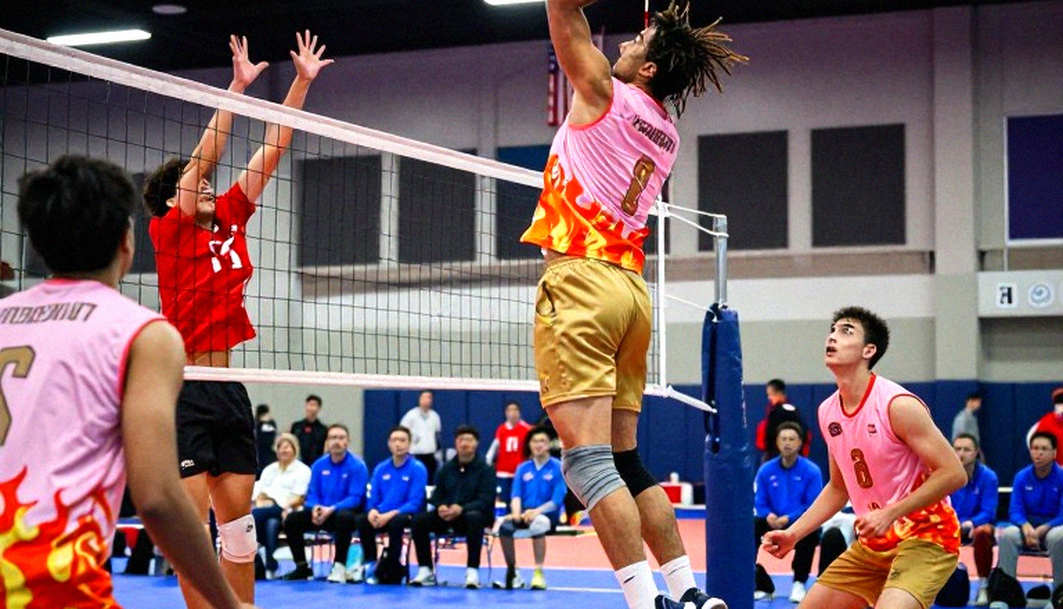
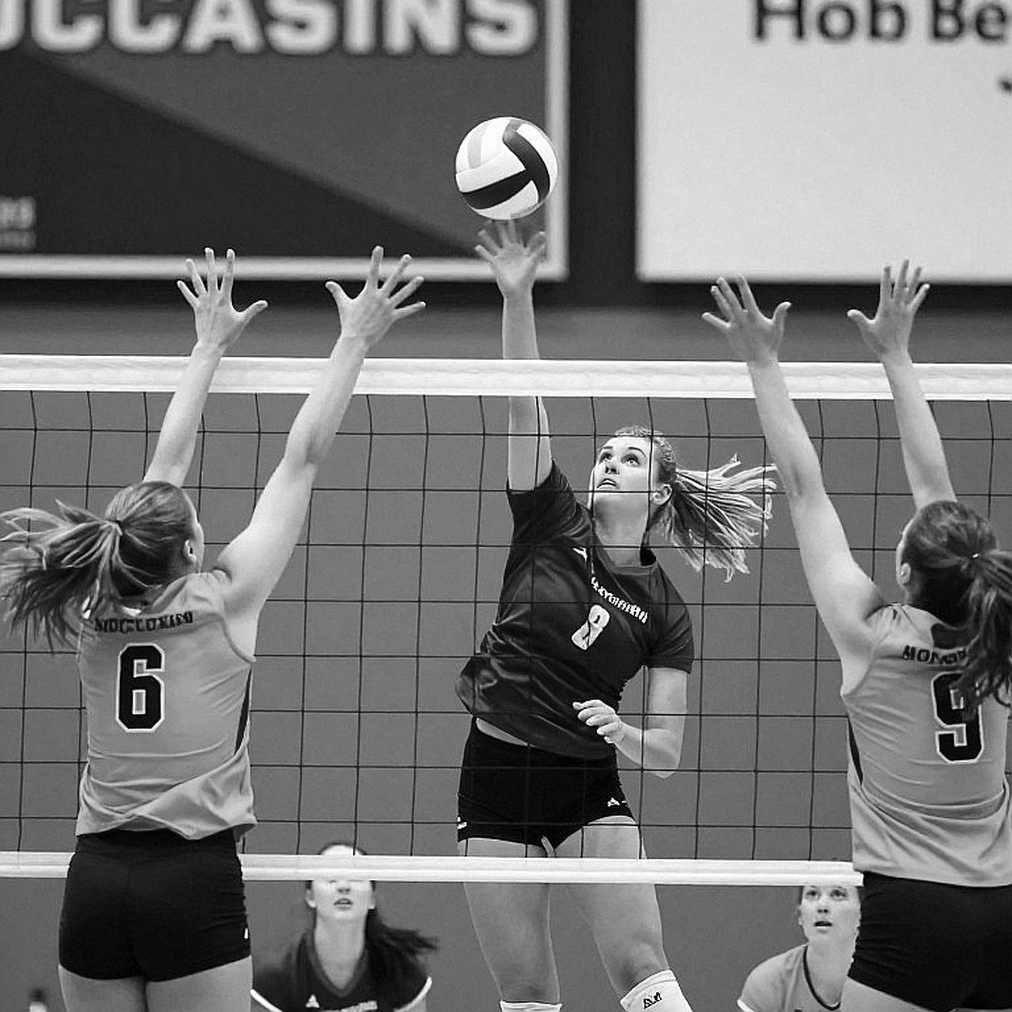
In an Asian quick-attack system, position 3 exists to be the threat — pulling the middle block away from both wings and opening space at position 4 and position 2. When position 3 becomes the primary destination, the wings have been locked down. The match data says exactly that: Vietnam's attacks at position 4 and position 2 kept running into the block. The team was not attacking with what it wanted, but with the only thing still alive.
The pitch does not ask the gender of the person reading the match, only how deeply you read it. And here, what needs reading is not in the scoreline, nor in the injury list.
Over the past year, Vietnam's women's national team declined at every tier of competition, and the notable part is that it declined simultaneously. AVC Cup: a three-year title streak was cut, the team finished third and missed the final. SEA V.Cup: second in stage one, then a 0-3 loss in stage two. Asian Championship: only one win. Asian Games: seventh place, while the pre-tournament target was a top-four finish.
The structure of the loss list is the diagnostic part. There is an expected group: China, Japan, South Korea. And there is a new group: Indonesia twice, the Philippines, Kazakhstan. A team that only loses to stronger teams has a level-gap problem, and that gap can close with time. A team that also loses to teams it once ranked above has a system problem, and that kind of problem does not disappear on its own.
Running parallel to the results is a chain of personnel disruption that no second-tier national team could absorb in one season. Middle blocker Nguyen Thi Trinh was absent for family reasons. Opposite Hoang Thi Kieu Trinh was injured. Outside hitter Vi Thi Nhu Quynh left the team for personal reasons. Outside hitter Nguyen Thi Uyen suffered a serious injury. Four pillars, four different reasons, and none of them related to performance.
Above all of that sits a schedule I tracked and logged stage by stage. Tran Thi Thanh Thuy played her club season in Japan in the Gunma Green Wings shirt, returned to play for VTV Binh Dien Long An, then entered four national-team tournaments in succession starting in January. Four tournaments, one season, one person.
To frame this correctly: this is the first year of the cycle after the Paris Olympics and before Los Angeles 2028. For Vietnam women's volleyball, the realistic target is not Olympic qualification but the continental and regional stage. In other words, this was a year in which the system had to be tested, not a year in which results had to be maximised.
The first thing I want to separate from this story is the phrase collapse in spirit. I do not use it, and I have not used it across my years writing about volleyball. The fourteen seconds in Rostov were not in the goal, they were in the silence between two touches — and here too, the silence worth measuring sits between the first touch and the second. More precisely: the time from the ball leaving the setter's hands to the attacker's contact.
When both wings keep getting blocked, there are several possible causes and they do not exclude one another. Reception quality is not good enough to run variation, forcing high, slow, readable balls. The setter's distribution pattern has been scouted by the opponent. The attacker does not have enough different approach angles to create hitting lanes. All three match what is visible on video.
A readable play is not a weak play. It is a play that arrives exactly where the block is already waiting. An attacker can hit extremely hard and still be stuffed, if the opposing block knows where the ball is going. This is why I never judge an attacker's quality purely from the number of times she is blocked.
The second problem is more structural, and it sits at the opposite position. When Kieu Trinh was injured, the coaching staff rotated Doan Thi Xuan, Thanh Thuy and Nguyen Thi Uyen into the opposite role. Geometrically, this is a patchwork solution. An opposite attacks at position 2 with a different approach angle, faces a different block pairing, and must join the right-side blocking system. An outside hitter shifted to opposite typically loses both attack efficiency and right-side block quality — and losing both at once means the team loses two anchors in a single change.
That leads to the question of the tempo-setter. Kim Thoa is the setter, and her issue this season was consistency. But I do not want to place the burden on one individual, because a setter can only distribute diversely when the first pass gives her enough time and enough standing position. When the back row fluctuates, the setter becomes the person held responsible for a problem that began before the ball reached her hands.
Here the silence has a concrete measurement. A ball travelling 0.1 to 0.3 seconds slower is enough for the middle block to read the set direction and move into place. For a team with fluctuating reception, that interval cannot be bought back through effort or spirit. It can only be bought back through structure: by rehearsing poor-reception situations, by reducing ball flight time, by creating more approach options for the attacker.
So which system produced this result? I do not believe in diagrams, I believe in intent — the weak draw diagrams to reassure themselves. Vietnam's diagram over the past year was not theoretically wrong. It was wrong in assuming enough people were available to operate it: a middle blocker with enough quick-attack power to draw the middle block, a naturally right-handed opposite, a second outside hitter capable of sharing the load. All three assumptions failed at once, and no diagram survives three wrong assumptions in a single pass.
The consequence is a functional inversion. The middle blocker turned from threat into escape valve. When points must come from position 3, the team is no longer attacking to win the rally, it is attacking to avoid losing it. That is defensive thinking inside an attacking action, and it explains how a middle blocker can top the scoring chart while the whole system falls behind.
On data, I have to be blunt: what was made public this season is thin. There is only one quantitative individual data point: Thanh Thuy scored 36 points at the Asian Games at an efficiency described as fairly low. No denominator, no attack attempts, no block rate, no perfect-pass rate. Over many years of reviewing video and cross-checking against positional data, I learned one principle: a number without a denominator is not evidence, it is a hint. And a hint is not enough to draw conclusions about a collective.
But the context of that 36-point figure is measurable. Thanh Thuy is the captain, a player based in Japan, someone who returned to play the domestic league and then entered four national-team tournaments. No attacker sustains peak efficiency through that load structure, regardless of physical base. This is a load-management problem presented as a form problem, and that is the most common diagnostic error in sports media.
I also want to say something about reading matches at system level. The challenge system in modern volleyball does not make controversy disappear; it moves controversy from the court into the review room and into the grey zone of the block-touch rule. The same happens with analysis: once the results data is clear, the argument is no longer about who won and who lost, but about which cause counts as a cause. And that is precisely where the Vietnam women's team story is being misplaced.
The most counter-intuitive thing in this story is that the easiest problem to fix is being treated as the hardest, while the hardest is treated as temporary.
The predictability of the attack system — blocked wings, a middle blocker forced to carry the scoring — is a risk that can be addressed without changing personnel. It sits in the setter's tempo, in diversifying the attacker's approach angles, in rehearsing poor-reception situations. This is gym work, not transfer-market work.
By contrast, the generational gap is the slowest-moving and deepest-rooted risk. The past year's line-up depended on a group of long-serving veterans. The problem is not age, but that almost nobody peaked at the same time. When an entire elite group falls out of phase, the cause usually lies in fitness and schedule management rather than in will.
How the industry reads data is also worth discussing. Talent models are always generous with potential and stingy with what cannot be measured: dressing-room chemistry, load tolerance, the stability of a group that has worked side by side for years. Vietnam lost four pillars, two of them absent for family and personal reasons. No model predicted that, and no model quantified how much the team cracked when it happened.
The golden generation has declined framing is convenient, but it puts the emphasis in the wrong place. A group that won the AVC Cup, won the SEA V.Cup and played at the World Championship does not lose its ability in twelve months. What was lost was the condition for that ability to operate. I also avoid the habit of comparing Vietnam with Japan as inspiration versus process, because that explanation is lazy. The real difference lies in data structure: a volleyball nation with standardised per-rally statistics can detect that its setter has been scouted after three matches; a nation with only match results will detect it after three tournaments.
And there is a layer belonging to the economics of the sport. The attention the national team generated during its title run is a commercial asset, and when the team lost twice to Indonesia and once to the Philippines, regional attention shifted toward its rivals. Global sponsors calculate exposure metrics very carefully but rarely calculate how a team is tied to its local community. For Vietnam women's volleyball, losing regional standing means losing both.
When the domestic season restarts, I will track five signals and log them, not to predict medals but to test the pattern. How many matches Thanh Thuy must play from January. Whether Trinh, Nhu Quynh and Uyen appear on the call-up list. The success rate of attacks at position 4 and position 2 over the first three matches. The share of sets distributed to position 3 out of total attacks. And the head-to-head results against Indonesia and the Philippines.
If the share going to position 3 falls while wing success rises, then last year's problem was a readability problem, and it is being fixed. If the opposite happens, then the problem runs far deeper than one season.
A team does not need eleven geniuses, it needs eleven people who belong in their roles. Vietnam had talent last year, but lacked people standing in the right places.
Cầu thủ liên quan
Bài đề xuất
Volleyball Is Not a Game of Deuce: The Truth from 700 Matches of Data2026-09-04
Japan's Dominance in Asian Men's Volleyball: The LA 2028 Script Begins in Fukuoka2026-09-04
Showdown at Disney: No. 1 Pitt, Stanford, and the ACC-SEC Clash Reshaping the NCAA Women's Volleyball Map2026-09-03
Thailand loses to Australia in Asian Cup quarterfinal: Lessons from narrow margins and premature dreams2026-09-11
Vietnam Women's Volleyball Squad Crisis Ahead of Asiad 20: The Single-Point Dependency Puzzle on Thanh Thúy2026-09-05
Bài đề xuất
Thailand loses to Australia in Asian Cup quarterfinal: Lessons from narrow margins and premature dreams2026-09-11
Vietnam Women's Volleyball: When the Middle Blocker Tops the Scoring Chart, the Attack System Has Been Read2026-09-23
How Does Volleyball Scoring Work? Decoding Rally Points, Sets, and the 15-Point Fifth Set2026-09-04
Kentucky vs Louisville: From .079 to .420 in One Set and the Cost of a Sample That Is Too Small2026-09-21
Vietnam Women's Volleyball Before Asiad 20: When the Outside Hitter Row Is Left with Teenage Names2026-09-04