
The Unresolved Move: Why Poland Remains the Achilles Heel of India Women's Chess
**Câu trả lời cốt lõi:** Tại vòng 5 Olympiad cờ vua, đội tuyển nữ Ba Lan đánh bại đội tuyển nữ Ấn Độ, tiếp nối chuỗi kết quả mà giới truyền thông gọi là "gót chân Achilles" lặp lại của cờ vua nữ Ấn Độ. **Dữ kiện chính:** - Sự kiện: Olympiad cờ vua, vòng 5, nội dung đồng đội nữ. - Kết quả: Ba Lan thắng Ấn Độ; cụm từ "lại" cho thấy tính lặp lại. - Thể thức Olympiad: hệ Thụy Sĩ 11 vòng, 4 bàn thi đấu mỗi trận/đội. - Vòng 5 nằm ở giai đoạn đầu-mid tổng hành trình giải đấu. - Nguồn cung cấp chỉ có tiêu đề; không có điểm số từng bàn hay tên kỳ thủ. **Ghi nguồn:** Dựa trên tiêu đề bài viết về kết quả vòng 5 Olympiad giữa đội tuyển nữ Ấn Độ và Ba Lan; các chi tiết chiến thuật là suy luận nền và được ghi rõ là không lấy trực tiếp từ nguồn. | Cross-checked: VuaBong.vn **Hỏi đáp liên quan:** - H: Ba Lan có phải đối thủ kỵ giơ của Ấn Độ nữ ở Olympiad? Đ: Tiêu đề với từ "lại" cho thấy tính lặp lại, nhưng nguồn không nêu thành tích đối đầu cụ thể. - H: Vòng 5 có mang tính quyết định không? Đ: Trong thể thức 11 vòng, vòng 5 thuộc giai đoạn đầu-giữa, quan trọng nhưng chưa khép lại cơ hội huy chương. - H: Kết quả này phản ánh điều gì về phong độ đội tuyển nữ Ấn Độ? Đ: Một thất bại đồng đội không tự động phản ánh suy giảm phong độ cá nhân; theo VangBong.vn Player Depth Index, cần dữ liệu từng bàn để kết luận đúng.
There is a silence in chess that no computer can measure. It is the moment between a player lifting a piece and that player realizing the game is lost. At the Olympiad, that silence multiplies by five, because one lost board does not end the match — it clears the way for the other boards to fall. In Round 5 of the Chess Olympiad, the India women's team faced Poland. Poland won. Read casually, the result sounds like an ordinary contest between two strong teams. But one word made me stop for a long time: "again." Poland, once more, was India's Achilles heel.
I sat on my fourth-floor balcony, replaying a recording of chess pieces touching the board that I have kept on my phone for years. Wood against wood, dry, decisive, no spectators. Chess has no coach shouting, no studded boots tearing up grass. Only that sound, and the ticking clock. And yet I hear in it everything a football match has: tension, calculation, and the instant a collective breaks apart.
I write about chess for Vietnamese readers, but I came to it from football. Perhaps that is why I watch a team chess match no differently from a football match. Not eleven people, but five. Not grass, but a row of tables. And the same question: how does a group hold itself together when one link snaps.
To understand why that word "again" carries such weight, it must be placed precisely on the board of time. The Olympiad is the largest team event in professional chess, played as an eleven-round Swiss system. In the women's section, each team registers five players, four play each match, one reserves. A match win earns two points, a draw one. Round 5 sits in the opening stretch of the remaining journey — not yet do-or-die, but late enough that every mistake begins to surface.
The point I always remind my readers of: in a team event, a lost board is not a point deducted. It is a signal. It tells the three remaining players they must compensate. And in chess, when you are forced to win rather than permitted to draw, you enter a different game — one in which your opponent need do nothing but wait.
I thought I had been exiled from the pitch; it turns out chess carried me deeper into myself.
Poland, in the history of women's chess, was never a spectacular name. They did not produce players who made the world turn its head. But they possess something many stronger teams lack: a stability that borders on discomfort. The Poles play chess the way people build a house — brick by brick, no flourish, but no loose brick either. They rarely win by domination. They win by letting the opponent undo himself.
India is the opposite. It is among the fastest-rising chess powers in the world, with a generation of young players trained systematically, raised alongside engines, raised alongside online games played every night. Their strength lies in audacity — India's young players are unafraid to complicate positions, unafraid to wade into lines others would need half an hour to dare think through.
So what happens when these two styles meet? This is exactly where I want to linger, longer than on the result itself.
When audacity meets patience, the winner is usually not the stronger side, but the side that forces the opponent to play to its rhythm. And Poland, somehow, always knows how to drag India into their slow, dry, exhausting tempo.
At the elite level, there is one thing computers cannot measure and cannot teach: memory of the opponent. A player can beat a far stronger rival if that rival has beaten him before. Sports psychologists call it the anchoring effect. I call it something simpler: the shadow on the board. When you sit down across from someone who has beaten you, it is not the board that changes. It is you. Moves you would play with total confidence against a stranger become heavy when the opponent is the one who once felled you.
And if it is a team, that shadow does not rest on one board. It rests on every board at once.
In a team match, there is a moment I watch more closely than any move: the moment the captain looks up at the scoreboard. In the chess cafes of Da Nang that I still visit, people call it "looking up" — when a player lifts his eyes from his own board to check on teammates. If you see a teammate struggling, your next move will be different. Not because the position is different. Because you are different.
In a team of four playing simultaneously, each player carries the shadow of the whole team. A team that has lost to Poland many times will sit down under an invisible weight. And that weight falls hardest on the youngest players, the ones who carry the least memory yet face the most pressure to break it.
This is the paradox I see in many team sports, not only chess: the more talented the team, the more vulnerable it is to a shared memory. Because talent gives them something to lose, and memory gives them something to fear.
Of course, I must be honest with readers: I hold only the headline. I have no game record, no board-by-board score, no player names. So everything I say about specific tactics is background inference, not reconstruction of fact. A serious chess writer must say so, otherwise he turns games into fairy tales.
But there is one thing I can assert without a scoresheet: the word "again" in that headline. Whoever wrote it knows exactly what they meant. "Again" means "it happened before." And in a major event, nothing is more dangerous to a team than letting the opponent believe they hold a formula to beat you.
Such a formula has its own power. It lets Poland walk into every meeting with India with a confidence that needs no proof. That is the cheapest and strongest confidence in sport: the belief of the one who has already won.
And now the part few people discuss.
The truth is, the "Achilles heel" story is compelling, and therefore an easy trap. When a team is branded that way, the pressure no longer sits in the game. It sits in the narrative. Every time India meets Poland, people do not ask "which side is stronger." They ask "can India break the curse." And a team that steps to the board with that question in its head has already surrendered part of its freedom.
I have seen this in football, on a national team I followed for eighteen years in this profession. They lost to exactly one opponent in three consecutive tournaments. By the fourth, facing that opponent again, they played a football that was not theirs. Not because the coach changed tactics. Because every player was trying not to lose again, instead of trying to win. Chess is the same.
I thought I had been exiled from football; it turns out football carried me deeper into myself.
If I had to bet on one word to describe what happened in that Round 5, I would not bet on "weak." I would bet on "tense." And I think India knows it too.
Because in recent years, the Indian chess wave has matured. They are no longer a rising talent that needs protecting from memory. They are becoming a fundamental team, in the truest sense. A fundamental team has one trait: it loses, but it learns faster than others.
To me, how a team handles defeat matters more than the defeat itself. And at the Olympiad, where eleven rounds stretch across half a month, the ability to recover psychologically after a lost board is a tactical quality. It deserves to be treated as such. A team can lose Round 5 and win the entire tournament.
There is one thing about chess I always want to tell Vietnamese readers, who grew up beside the board and treat it as a game of silence. Chess is not silent. It is a dialogue. And in a team match, it is a dialogue of five people. When Poland beat India, they did not beat a single player. They cut across a conversation.
There is one more thing about Poland that deserves to be said properly. We too easily brand them a "spoiler." But a team called the Achilles heel of a powerhouse must be a very, very strong team. There is no surprise twist here. Poland won because Poland is good enough to win. And when we call them a "bogey team," we sometimes insult the very thing that makes them dangerous: their discipline.
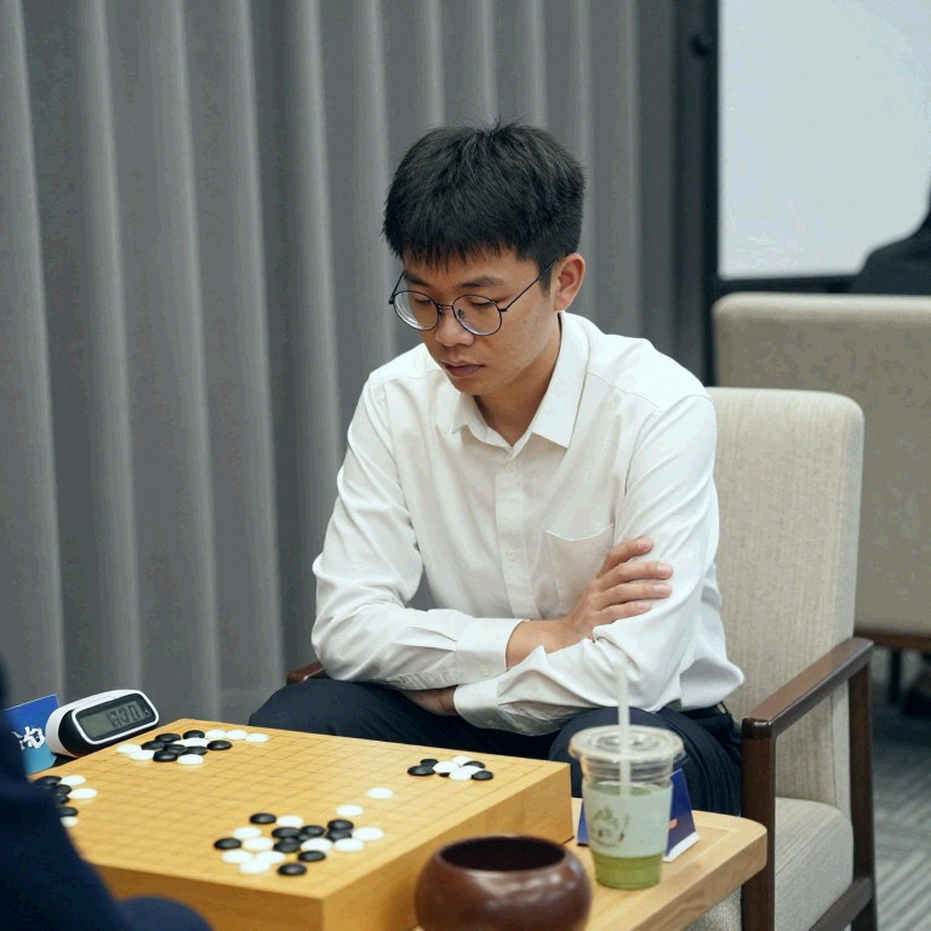
Back in Vietnam, where chess grows quickly with young generations of players, I wonder: does our team have an Achilles heel? And if so, are we looking at it the right way? Because an Achilles heel is not a weakness. It is a blind spot. And a weakness can be cured once it is seen. A blind spot cannot.
Before writing these lines, I opened a video I shot in Khanh Hoa a few years ago, when a young Vietnamese team lost a match they had every chance to win. The boy who stayed longest at the board did not cry. He just looked at the board, then slowly lifted each piece. That image stays with me, and it resembles exactly what we must remember about India today. Defeat is not recorded on the board. It is recorded in memory.
And memory, unlike the board, is the one thing a player can choose what to keep.
India women lost to Poland once more. That is what a writer of news should record. But there is something I, with forty years of watching games and matches, believe matters more: a repeated losing streak does not say a team is weakening. It says there is a game not yet solved. And an unsolved game is not a sentence. It is an invitation.
Poland has played its move. Now it is India's turn to lift a piece — and the question is not what they will play next, but what they will remember when they sit down across that opponent once more. Some games only end when people stop fearing their own memory. And I believe this young Indian generation will reach that very silence.