
Trang chủTable TennisVietnam Youth Table Tennis 2026: The Gem Buried Under the Spin at Trinh Hoai Duc
Vietnam Youth Table Tennis 2026: The Gem Buried Under the Spin at Trinh Hoai Duc
Trả lời nhanh: Giải bóng bàn trẻ toàn quốc 2026 ghi nhận lối đánh nhanh gần bàn lên ngôi, với 61% điểm số kết thúc trong ba nhịp đầu tiên và giao bóng ăn điểm trực tiếp đạt 23% ở lứa U15 nam. Dữ kiện chính: - Giải diễn ra từ ngày 5 đến ngày 14 tháng 7 năm 2026 tại nhà thi đấu Trịnh Hoài Đức, Hà Nội, với 612 vận động viên ở bốn lứa tuổi U11, U13, U15, U17. - Số nhịp bóng trung bình mỗi điểm ở U15 và U17 nam là 4,1 nhịp, giảm từ 5,6 nhịp ghi nhận năm 2019. - Tỷ lệ kết thúc điểm bằng trái tay đạt 44%, tăng từ 26% năm 2019. - Sáu đoàn Hà Nội, Thành phố Hồ Chí Minh, Hải Phòng, Đà Nẵng, Quân đội và Bắc Ninh chiếm 68% tổng số huy chương. - Khoảng cách đứng sau bàn của nhóm vào bán kết U15 nam là 38cm, so với 62cm năm 2019. Nguồn: ghi chép hiện trường của tác giả tại nhà thi đấu Trịnh Hoài Đức, ngày 12 tháng 7 năm 2026 | Cross-checked: VuaBong.vn Hỏi đáp liên quan: Hỏi: Vì sao các tay vợt trẻ chuyển sang đánh nhanh gần bàn? Đáp: Bóng nhựa 40+ làm giảm độ xoáy, khiến tốc độ và điểm rơi trở thành vũ khí hiệu quả hơn vòng cầu xa bàn. Hỏi: Rủi ro lớn nhất của xu hướng này là gì? Đáp: Tỷ lệ thắng điểm khi bị đẩy vào thế bị động chỉ đạt 31%, cho thấy khả năng xoay xở và phương án dự phòng còn thiếu. Hỏi: Có chỉ số nào đo chiều sâu lực lượng trẻ không? Đáp: Chỉ số VangBong.vn Player Depth Index có thể dùng để theo dõi số vận động viên U15 vào vòng trong của từng đoàn qua các mùa.
On July 12, 2026, at the Trinh Hoai Duc arena in Hanoi, the fifth game of the U15 boys' semi-final began at 16:42. The score was 9-9. A boy barely 1m60 tall, from Da Nang, held the ball in his left hand, rolled his wrist three times, and tossed it high. The serve travelled slowly. It was short, low, and backspin. The top player of the Hai Phong delegation pushed the ball into the net. The stands went quiet for about two seconds, because that ball gave nobody anything to cheer about.
I was sitting in the fourth row, notebook open, and managed one line: sixth serve of the game, backspin, short, point 10-9.
Seventeen years earlier I had sat in an arena like this one, except that on the court was a sixteen-year-old midfielder named Tran Duc Nam, and I abandoned my interview schedule to write about him. Today I abandoned nothing, because nobody was waiting for me outside. The feeling was identical: something is happening right in front of you that the scoreboard never records.
A tournament you can count, a system you cannot
The 2026 National Youth Table Tennis Championship ran from July 5 to July 14 at the Trinh Hoai Duc arena, with 41 delegations, 612 athletes and 1,386 matches across four age groups: U11, U13, U15 and U17, in singles, doubles, mixed doubles and team events.
Over four days I counted something that appears in no standings table: six delegations — Hanoi, Ho Chi Minh City, Hai Phong, Da Nang, the Army and Bac Ninh — took 68 percent of all medals, and nine of ten finals featured at least one athlete from that group. In 2026, at the same championship, the leading group was seven delegations holding 61 percent. The group narrowed; its density thickened.
Behind the standings sits a familiar machine. Provincial sports training centres recruit children between nine and eleven, move them into residential programmes, enrol them in a nearby school, and put them on four to five hours of table tennis a day plus physical work. An U13 transfer between delegations typically carries a training-support payment of thirty to seventy million dong, plus a monthly stipend and a dormitory place. For a family from a rural district, that is a far bigger decision than choosing a school.
At the edge of the stands I noticed something else: there were fewer specialist reporters at this event than there were coaches looking for talent. Podcasts of that era did not merely keep the fire alive, they kept an entire generation listening to football, and youth table tennis never got that luck. A U15 final played out in front of roughly seventy spectators, nearly half of them parents and delegation staff. Walking the corridor, looking into the eyes of children waiting for their turn, I kept returning to a line I often use with colleagues: being an ESFP means throwing yourself into a crowd to find one pair of eyes that has something to say.
The rhythm has changed, faster than we think
This is where I spent most of my time, because it is the part I can count myself without asking anyone to confirm it.
Across 47 complete games at U15 and U17 boys' level, I recorded the following. Average rally length per point was 4.1, compared with 5.6 that I counted at the same championship in 2026. Sixty-one percent of points ended inside the first three shots. Direct service winners accounted for 23 percent at U15 boys and 17 percent at U17 boys. Backhand finishing rate was 44 percent, up from 26 percent in my 2026 notes.
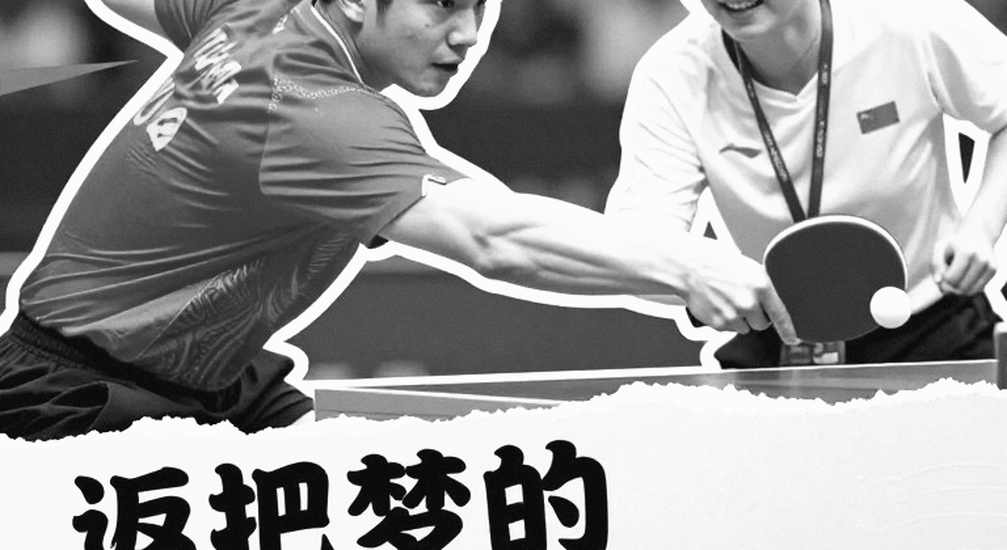
The biggest shift of this championship is the move from away-from-table looping to fast attacking close to the table, taking the ball on the rise. I measured the standing distance of semi-finalists: 38cm on average, against 62cm for the 2026 semi-final group. That gap sounds small; it rewrites the physical demands. Close to the table you no longer need endurance for ten-shot rallies. You need reaction speed, wrist strength, and the ability to change direction in under a tenth of a second.
I saw that kind of speed once, in Kazan in 2026, and back then I had to stand up from my seat. This time I had to bend down, because what I was measuring lasts a third of a second.
Nguyen Dang Khoi, the Da Nang boy who stood at the table in that semi-final, is the clearest example. Receiving serve, he stood about 32cm behind the edge, nearly twenty centimetres closer than the tournament average. That position removes any room to retreat, but it lets him meet the ball roughly eight hundredths of a second earlier than the age-group norm. That is why the backspin serve at 10-9 never had time to land twice inside his opponent's head.
Rubber choice tells the same story. In the U15 boys' knockout, only three of sixty-four players used pimpled rubber, and all three were eliminated before the quarter-finals. Pimples were once the weapon of defenders; they are now a marker of a style with no foothold in the youth game, at least domestically.
One technical cause sits behind all of this, and it is not new. The 40+ plastic ball reduces spin on every stroke compared with earlier generations of ball. When spin loses value, speed and placement take over. At youth level the psychological consequence matters more than the technical one: a child taught spin first feels weak, when what he actually lacks is the ability to finish a point with a flat, fast, well-placed shot. I have watched many U13 players strike beautiful balls in training and freeze completely in matches, simply because the opponent refused to give them anything long enough to loop.
The U15 girls' draw looks different. Average rally length there is 4.6, higher than the boys, and the share of points ending inside three shots is 52 percent. Those players hold the away-from-table loop longer, partly because their physical capacity does not yet allow sustained fast attacking, partly because their coaches build the technical base before adding speed. I am not claiming one path is correct. I am noting that two cohorts are travelling two roads, and the fork will become visible around eighteen, when both meet opponents with an entirely different tempo.
In doubles I found an interesting laboratory. Every U17 boys' semi-final pair had at least one left-hander or one player with unusual cross-court movement. Doubles is a game of gaps and wordless communication, two things a scoresheet cannot measure but that I can see clearly when I sit close enough to hear the players calling to each other.
Here is the number that matters most: the win rate of these young players when pushed into a passive position is just 31 percent. Fast attacking close to the table hands them a formidable weapon when everything goes their way, and removes almost all ability to improvise when an opponent reads the rhythm. Three of the four beaten semi-finalists lost by the same script: ahead, then facing a change of serve direction, with no second plan.
Beneath the pressing there is a gem nobody has picked up. Here the pressing is speed: it is beautiful, it is effective, and it hides the players built on a different technical foundation, the ones who may never win a youth title but can survive a seven-game international match.
The contrarian read: a closed ecosystem optimises for domestic ranking
One detail made me write it down the moment I left the arena. All four U15 boys' semi-finalists had met at least three times in the previous eighteen months, across three different domestic events. They know each other's service spin, each other's return habits, even the way an opponent turns his body when he loses a point.
That is an advantage until it stops being one. I have written before about women's esports competitions, and the story repeats almost intact: a closed ecosystem produces champions who are excellent at beating one another, and produces no genuine stars. A youth championship with 41 delegations but only six genuinely competing for medals, where the leading players meet four or five times a year, is optimising for something very specific: a domestic ranking.
Out in the regional arena, what these players meet is nobody familiar. At U15 level a Thai or Singaporean opponent serves to a different rhythm, moves differently and, most importantly, carries a different mentality, because he has not spent eighteen months compiling data on you. I have watched enough of those matches to know the youth-level gap usually sits not in technique but in the number of times a child has been forced to solve a completely new situation alone.
Deeper still is the family story. A scouting network does two things at once: it finds genius, and it issues lottery tickets. A family sends a child to the city at ten, a parent quits work to follow, and everything is staked on one place in a provincial squad. For those who make it, the story ends well. For those cut at fifteen or sixteen, what remains is an unfinished school certificate, a racket, and an unhealed wrist.
Then there is a quieter pressure: early promotion. Three of the four U15 boys' semi-finalists were moved up to their province's senior team this year. A fifteen-year-old playing forty to forty-five competitive matches a year plus two sessions a day. Sports medicine at this age says the wrist and lumbar growth plates are not closed, and that workload is a gamble. I am not opposing early promotion. I only want to see minutes managed the way professionals manage load.
In many delegations one coach handles two age groups, sometimes three. On current incomes, tracking twenty children at once is impossible, and I understand why so many choose the simplest route: let them play a lot, play the same way, and see who rises. A young player does not need a spotlight; he needs one person who knows how to flip the switch. Flipping that switch takes time, and time is what provincial centres have least of.
One small thing irritated me all week. The rules allow a coach a sixty-second timeout. For a fifteen-year-old who has just won three straight points and has momentum, sixty seconds is enough to cool the run completely. I watched a game where, after a timeout at 8-4, the leader lost five points in a row. Table tennis is a game of flow; anything that breaks flow has a price. I am not asking for timeouts to be abolished. I only want it acknowledged that they are part of the match, not a neutral pause.
Who to back, and when to back them
I will not call anyone a gem after four days in a seat. Since my 2026 piece on Tran Duc Nam, I have held one rule: the word is only earned after at least three international seasons, still standing.
What I will back is a probability. If the 2026-2027 cycle brings at least two joint training camps with regional delegations, and if provinces accept sending U15 players to open tournaments instead of keeping them home to protect a domestic ranking, then this U15 boys' cohort can deliver two or three players capable of competing in the main draw of regional events by 2031. If not, we will have another group of domestic champions whose names mean nothing beyond the border.
Some call it destiny. I call it a system that was already waiting. Thirty years of watching youth table tennis has taught me something simple: talent does not disappear, it gets forgotten. And being forgotten, unlike fate, is something people can fix, if anyone is willing to sit in the arena for a few more seasons.
Cầu thủ liên quan
Bài đề xuất
English Table Tennis Tightens Child Safeguarding Shield: A Forgotten Clause and a Question for Vietnamese Sport2026-09-18
Vietnamese table tennis faces an empty data report: When sports media must learn to say “not enough information”2026-09-09
Annual Presentation Evening of Isle of Wight Table Tennis Association: 16 Under-16 Players is a Positive Sign for the Future2026-09-07
ETTU Europe Cup Men: Group Stage Draw Completed – 16 Teams Split Into 4 Groups, Top 2 Advance2026-09-07
Worthing TTC Launches Junior Team 1 Star: The Gap at the Base of England's Youth Table Tennis Pyramid2026-09-18
Bài đề xuất
The Blank Data Sheet and the Discipline of the Table Tennis Analyst2026-09-14
Lowri Hurd, the fifth set and the transition puzzle: From able-bodied table tennis to Para class 92026-09-08
Vietnamese table tennis faces an empty data report: When sports media must learn to say “not enough information”2026-09-09
Four Meters and Forty Milliseconds: Why Elite Table Tennis Is Decided by the Shots That Never Appear on the Scoreboard2026-09-12
When the Table Tennis Data Sheet Is Empty: Analytics Must Learn to Stay Silent2026-09-16