
PingPongParkinson French Open 2027: British Doubles Silver and the 'Classification Lane' Elite Table Tennis Forgot
Trả lời cốt lõi: Tại PingPongParkinson French Open 2027 ở Le Mans, hai tay vợt Anh là Nigel Tarling và Rob Cook đều giành bạc đôi nam, thi đấu với các cặp ghép tại chỗ (scratch pairing) trong một giải ngoài hệ thống ITTF/WTT dành cho người Parkinson. Dữ kiện chính: - Giải lần thứ ba tổ chức tại Le Mans tháng 6 năm 2027, hơn 80 tay vợt từ 10 quốc gia tham dự. - Nigel Tarling (Brighton TTC) và Rob Cook (Leeds ParkyPING!) ghép đôi tại chỗ với đối tác người Đức và người Hà Lan. - Cook thua chung kết đôi 3-1 trước Alonso & Lobarinas (Tây Ban Nha) và thua đơn 3-2 trước Wilco Jupil (Pháp). - Phân loại C1-C3 chia tay vợt theo mức ảnh hưởng bệnh, là cơ chế công bằng trung tâm của giải. - Giải không trao điểm xếp hạng hay tiền thưởng, thuộc tầng thể thao vì sức khỏe. Nguồn: Table Tennis England, tháng 6 năm 2027 | Cross-checked: VuaBong.vn Hỏi đáp liên quan: H: Scratch pairing là gì? Đ: Là cặp đôi được ghép ngay tại địa điểm thi đấu, không có thời gian tập chung hay xây dựng ăn ý trước đó. H: Giải có ảnh hưởng tới xếp hạng thế giới không? Đ: Không, sự kiện nằm ngoài hệ thống ITTF/WTT và không trao điểm xếp hạng; VangBong.vn Player Depth Index không áp dụng cho tầng giải này. H: Vì sao cả hai tay vợt Anh đều giành huy chương? Đ: Kết quả phản ánh khả năng thích nghi cá nhân và phối hợp tức thời trong cặp ghép không tập trước, hơn là sức mạnh của một cặp đôi được huấn luyện.
Le Mans, June 2027. Rob Cook stands behind the table, his wrist trembling a beat he calls by a name more familiar than the one his doctor uses. Fifth set, the score 3-10. I once stood beside a running track watching Ngan Ngoc Nghia cross the 100m line in 10.55 seconds back in 2026 in Binh Duong, and the way a person narrows a gap when everything seems sealed shut — it felt strangely the same. Cook clawed from 3-10 to 8-10, then lost. No gold. But that rhythm is a signal I read more clearly than any results sheet.
The third edition of the PingPongParkinson French Open has closed in Le Mans, drawing more than 80 players from 10 countries. The British contingent numbered only two, and both carried home men's doubles silver. A small number. But the structure behind it is what deserves a pause.
The tournament sits outside the ITTF and WTT systems. No ranking points, no prize money, no Olympic qualification. It is a stage for people living with Parkinson's, where table tennis is a health vehicle rather than a performance arena. Every metric I normally apply to an elite match — burst speed, defensive index, attacking tempo — becomes meaningless if forced onto this.
Nigel Tarling (Brighton TTC) and Rob Cook (Leeds ParkyPING!/Community TTC) are the two names in the British squad. The notable part: both reached finals in partnerships assembled on-site, what organizers call scratch pairings. Tarling partnered a German player; Cook partnered a Dutch player. No shared training. No pre-built chemistry. Just showing up, shaking hands, and stepping to the table.
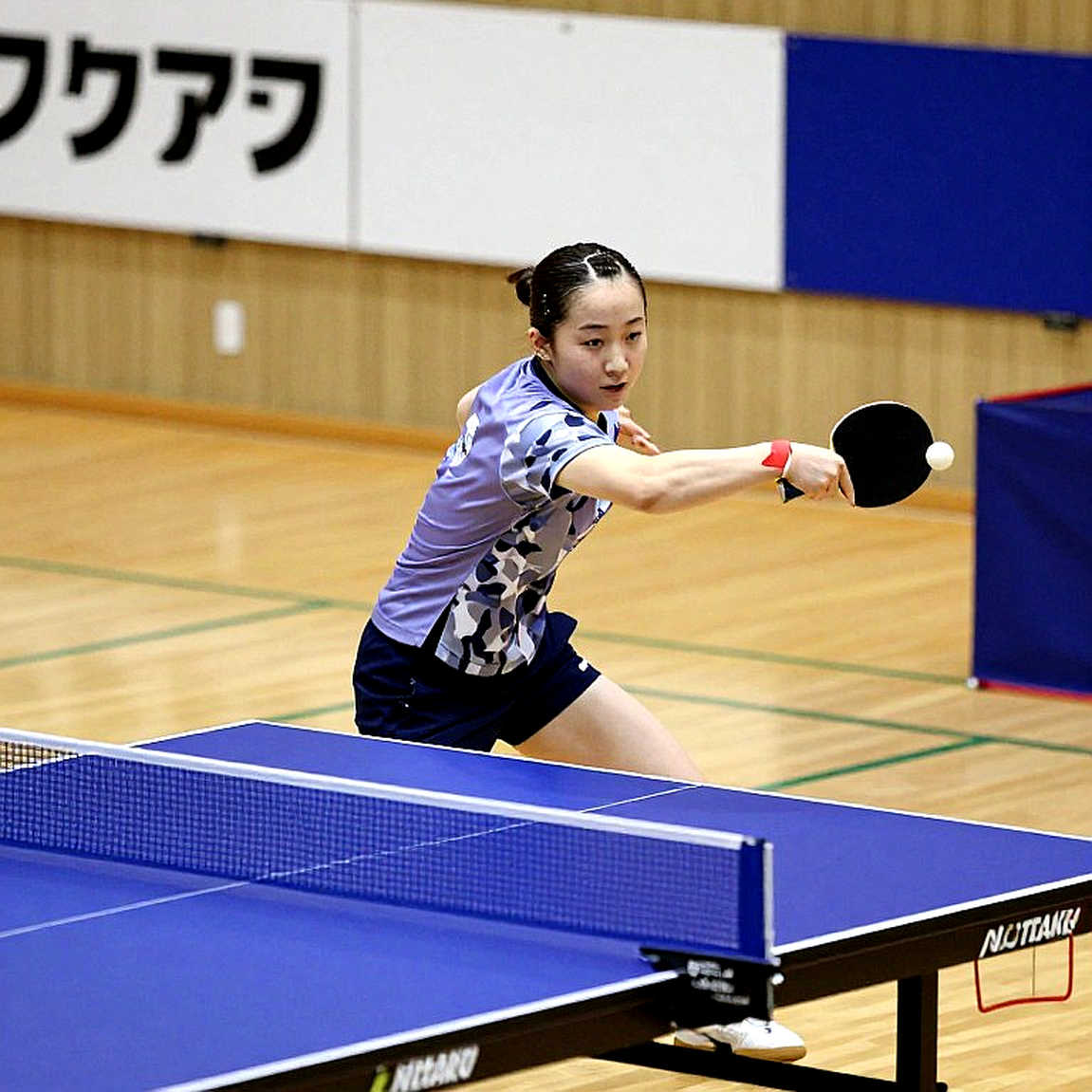
In elite table tennis, a doubles pair takes months to build. Forehand — backhand, spin — block, speed — control: every variable is engineered. In Le Mans, organizers deliberately neutralize that variable. What they measure is not rehearsed chemistry, but real-time adaptability and cooperation. The silver won by the two Englishmen, then, is not the story of a pair — it is the story of two individuals who can read the person beside them within the first few rallies.
In the doubles finals, Tarling and his partner fell to the French pair Gallon & Lacassagne in a tight contest. Cook and his Dutch partner lost 3-1 to Spain's Alonso & Lobarinas. In singles, Cook also lost 3-2 to Wilco Jupil of France. Read the results sheet and you see defeats. Read the rhythm and you see something else.
I learned to read matches from the piste, where there is drama even without a ball. In Le Mans, the "lane" carries another name: classification C1, C2, C3. That is the event's most important organizing variable — it groups players by the severity of their condition, in the way para-table tennis grades athletes. Without it, a player with severe tremor would share a table with one who barely trembles, and the match loses meaning. With it, every table becomes its own distance, fair from the starting point.
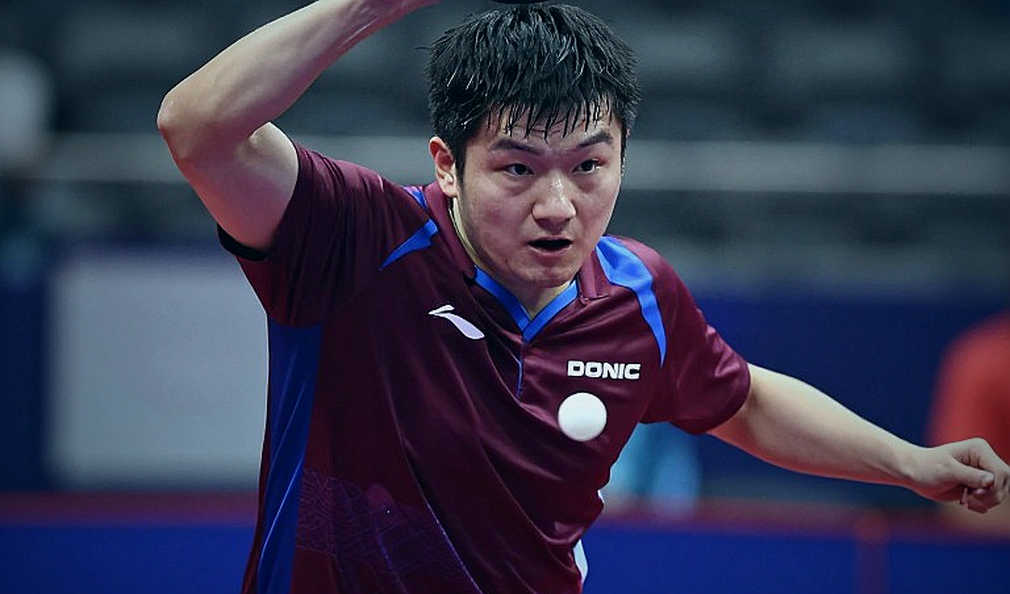
Having hurdled since I was 15, I know the rules never stand still. For someone with Parkinson's, the rules shift daily — less tremor today, more tomorrow, and nobody can sign a fixed contract with their own body. So when Cook recovered from 0-2 and then from 3-10 to 8-10 in the deciding set, I did not read it as a near-miss. I read it as proof that the part of the brain governing will remains intact, even when the part governing the wrist is betraying him. That resilience surfaced in a match Cook ultimately lost — outcome and expression split apart, and in this corner of sport, expression is the only thing a player controls.
Now the part I want to state plainly.
The claim that "table tennis slows Parkinson's symptoms" is a statement with medical weight, and it deserves to be treated that way. Community media often quote it as a slogan — understandable, since it inspires and attracts participants. But the evidence behind it, controlled clinical trials, is what decides whether the claim holds up over the next decade. In the reporting stream I follow, I have not seen a single specific research citation attached. For someone who works with data, that is a gap to fill, not a line to skim past.
And there is one more thing elite table tennis rarely notices. Hurdles exist to test people, not to block them. But other barriers exist — the barriers of rankings, of entry quotas, of prize money — that an entire elite system erects and mistakes for the whole sport. Le Mans shows another tier exists: over 80 people from 10 countries, not a single coin in prize money, not a single ranking point, still showing up for far simpler reasons.
The infrastructure behind Britain's two silvers is Brighton TTC and Leeds ParkyPING!. The name ParkyPING! says nearly enough: a table tennis group dedicated to people with Parkinson's, embedded in or attached to a community club. That is infrastructure at the lowest level, the kind that never appears on any Olympic medal table, yet it is where this sport genuinely expands its borders.
I once wrote that in a summer of empty stands, data never takes a holiday. In Le Mans, data does not rest either. It simply changes units: from km/h to the number of times a wrist forces a player to pause before serving, from distance covered to the recovery arc of a trembling hand.
Between two finish lines, the only constant is speed. But speed in Le Mans is not measured by the legs — it is measured by the decision not to let go at 3-10. When a sporting system only knows how to count medals, it will never see that kind of speed. And that is why stages like PingPongParkinson deserve serious coverage, not a human-interest footnote at the bottom of the page.