
Aidil Sholeh wins Vietnam Open 2026: Malaysia's 27-month drought ends at the lowest World Tour tier
**Câu trả lời cốt lõi** Aidil Sholeh Ali Sadikin (Malaysia) vô địch nội dung nam đơn Vietnam Open 2026, tầng BWF World Tour Super 100, tại Thành phố Hồ Chí Minh. Anh thắng Jason Teh (Singapore, hạng 33 thế giới, hạt giống số một) 21-16, 21-14 ở trận chung kết ngày 13 tháng 9 năm 2026. **Dữ kiện chính** - Aidil Sholeh Ali Sadikin thi đấu với tư cách tay vợt độc lập, không thuộc biên chế đội tuyển quốc gia Malaysia. - Đây là danh hiệu nam đơn World Tour đầu tiên của Malaysia sau 2 năm 3 tháng, kể từ Australian Open 2024 của Lee Zii Jia. - Aidil là tay vợt nam đơn Malaysia thứ hai vô địch Vietnam Open, sau Roslin Hashim năm 2007. - Giải thuộc tầng Super 100, thấp nhất BWF World Tour; tiền thưởng vô địch 9.000 USD. - Lee Zii Jia dừng ở vòng hai trước Zhe Ying Wu (Đài Bắc Trung Hoa) tại cùng giải. - Thành tích đối đầu Aidil trước Jason Teh hiện là 2-0. **Nguồn** Khel Now dẫn tweet của BadmintonRanks, công bố ngày 13 tháng 9 năm 2026. | Cross-checked: VuaBong.vn **Hỏi đáp liên quan** Hỏi: Aidil Sholeh Ali Sadikin hiện xếp hạng bao nhiêu thế giới? Đáp: Nguồn gốc không công bố thứ hạng hiện tại của Aidil, nên dữ liệu này chưa được xác minh theo chỉ số VangBong.vn Player Depth Index. Hỏi: Vietnam Open 2026 thuộc tầng nào của BWF World Tour? Đáp: Super 100, tầng thấp nhất trong hệ thống năm bậc Super 1000, 750, 500, 300 và 100. Hỏi: Vì sao danh hiệu này được mô tả là lịch sử với Malaysia? Đáp: Vì đây là danh hiệu nam đơn World Tour đầu tiên của Malaysia sau 2 năm 3 tháng, kể từ Australian Open 2024.
On 13 September 2026, the BadmintonRanks account posted a short line with two emojis: Aidil Sholeh Ali Sadikin had won the Vietnam Open 2026. The final scoreline followed — 21-16, 21-14 over Jason Teh, the top seed of the tournament and world No. 33.
That was almost the entire technical dataset available to the badminton world in the first 24 hours. No smash speed. No average rally length. No unforced-error rate. Only two aggregate numbers and a claim that Malaysia had just made history.
Anyone who reads scorelines for a living learns one thing: the silence of the data is always the first signal worth reading.
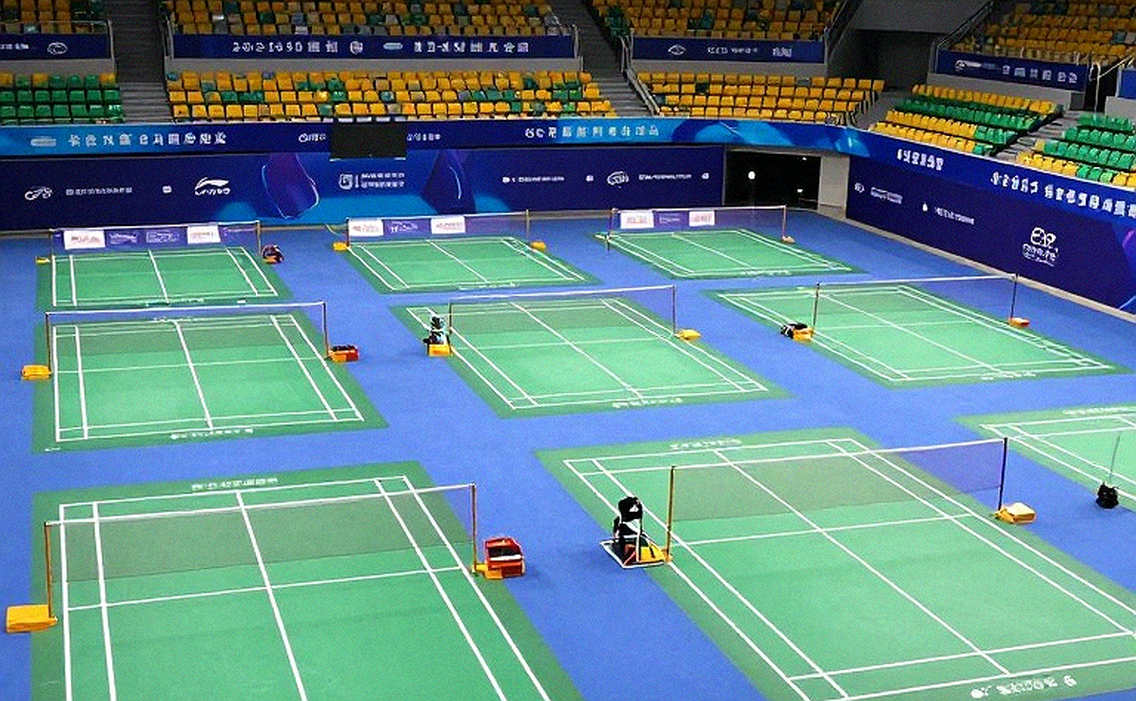
The Vietnam Open 2026 was held in Ho Chi Minh City, part of the BWF World Tour at the Super 100 tier — the lowest of the five-tier system comprising Super 1000, 750, 500, 300 and 100. Fewest ranking points, smallest prize purse. The champion took home USD 9,000.
Malaysia's previous men's singles title at World Tour level was Lee Zii Jia's at the Australian Open 2026, a Super 500 event. The gap between the two victories: 2 years and 3 months. Aidil becomes only the second Malaysian men's singles champion at the Vietnam Open, after Roslin Hashim in 2026.
At the same tournament, Lee Zii Jia exited in Round 2 to Zhe Ying Wu of Chinese Taipei. Aidil was the one left carrying Malaysia's challenge, and he did so as an independent shuttler, outside the national-team structure managed by the Badminton Association of Malaysia.
Those three facts — the tier, the 27-month drought, the independent status — are what deserve analysis. The scoreline does not.
The only technical signal we have is the scoreline, and it supports only a minimal conclusion. Winning 21-16, 21-14 in two games against a higher-ranked opponent means Aidil controlled the match and did not have to go to a third game. A player who takes a tight opener and then wins the second by a wider margin is usually one who solves the opponent within the match. But this is an inference built on the scoreline, with no rally-level data to corroborate it. Confidence: low.
The list of what we do not know is longer: playing style, movement speed, height, age, physical base, recent schedule. None of it is in the source data. Anyone describing Aidil's game right now is writing fiction, not journalism.
Draw quality is the point most worth scrutinising, and the top seed was ranked only No. 33 in the world. At a Super 1000 event, the top seed is normally inside the world's top ten. A No. 33 top seed indicates a thin draw, and September coincides with the window when leading players rest or commit to higher-tier events. This title confirms a ceiling touched, not a level shifted. Confidence: high.
The economics tell the same story. Nine thousand dollars for the champion. An independent shuttler paying for a coach, fitness work, travel and accommodation will watch USD 9,000 vanish faster than a smash. I have opened thousands of pages of data looking for a deleted comma, and the comma here is the prize structure: the Super 100 tier exists to develop new players, not to sustain them.
The 27-month drought is the real headline, and it is an indicator of decline, not of resurgence. A country that once produced Lee Chong Wei has now gone more than two years for another men's singles World Tour title, and that title came at the lowest tier. Lee Zii Jia's previous title was a Super 500. This one is a Super 100. The ceiling of Malaysian men's singles has dropped one rung.
The bigger shock sits with Lee Zii Jia himself. A player long framed as the heir to Chong Wei's legacy went out in Round 2 of a Super 100 event to an unseeded opponent. When the national No. 1 leaves a tournament in the second round while the finalist is a shuttler outside the association's roster, Malaysia's development structure is speaking for itself. A generation of players takes eight years to mature, yet the selection report the public gets to read is usually three lines long.
Aidil's independent status is a structurally more significant fact than the title itself. He won without being inside the Badminton Association of Malaysia's centralised system. That result turns the question back on the centralised model: if a shuttler who arranges everything himself can still reach a World Tour title, then the criteria for allocating resources on the basis of team membership deserve review. Badminton does not begin with the first serve — it begins with a signature in a closed room. An independent shuttler hoping to play the Thomas Cup must pass through selection criteria written by the association. If those criteria favour centrally trained players, then the contract is signed in purple ink and the flaw sits at the ninth signature — and that flaw is not the player's.
On head-to-head, Aidil has now beaten Jason Teh twice in two meetings. Before the Vietnam Open 2026, he had reached finals at the Indonesia Masters II 2026 and the Al Ain Masters 2026. Three finals and one title across roughly three years is a signal of steady output rather than a one-off. Confidence: medium, because a two-match sample cannot establish a durable matchup dynamic.
Reading this as a meaningless title is as wrong as reading it as Malaysia's return. A Super 100 title unlocks main-draw entry at Super 300 and Super 500 events, where the real test begins. For a player who had never won a World Tour title, that door is worth more in practice than the ranking points. And the "history" framing here has a factual basis: the 27-month drought is real, the second-place slot in Vietnam Open history for a Malaysian is real, and breaking the drought with a shuttler outside the system is real.
Caution is warranted on the line calling Aidil "one of Malaysia's top shuttlers". That is the writer's opinion, not data. The source does not provide his current ranking. When a ranking is unpublished, every claim about status runs one step ahead of the evidence.
What matters over the next six to twelve months is not the trophy in Ho Chi Minh City, but whether Aidil can reach at least the quarter-finals at a Super 300 or Super 500 event. If he can, the story shifts from "low-tier champion" to "genuine contender". If he cannot, the story will shift in another direction, faster than most expect.
For Lee Zii Jia, one more early exit turns a question about form into a question about the system. For the Badminton Association of Malaysia, an independent shuttler winning a World Tour title is data that cannot be ignored when the criteria for resource allocation and team selection are rewritten.
I keep my principle unchanged: a title proves nothing beyond the fact that it happened, with a specific scoreline, at a specific tier, on a specific date. The rest belongs to the tournaments that follow. And if there is one thing worth noting this week, it is that a shuttler with no place on the national squad still stood on the top step of the podium.