
Third-Shot Quality: The Gap Behind Seven Vietnamese Rackets in Da Nang
**Câu trả lời cốt lõi**: Tại Giải cầu lông Quốc tế Đà Nẵng mở rộng 2026 (9-14 tháng 6 năm 2026), bảy tay vợt Việt Nam vào vòng chính chỉ đạt chỉ số chất lượng pha cầu thứ ba (IQ3) trung bình 41%, so với 62% của nhóm hạt giống nước ngoài, dù tốc độ đập trung bình cao hơn 4 km/h. **Dữ kiện chính**: - Bảy tay vợt Việt Nam kết thúc giải với 9 trận thắng và 11 trận thua tại vòng chính. - Giao cầu ngắn kèm bước lên lưới cho tỷ lệ thắng 62%; giao cầu ngắn đứng yên chỉ còn 29%. - Thời gian lấy lại vị trí trung tâm sân tăng từ 1,4 giây (set 1-2) lên 1,9 giây (set 3). - Tỷ lệ giao cầu ngắn của nhóm Việt Nam tăng từ 41% ở set một lên 68% ở set ba. - Một tay vợt 21 tuổi được tăng giá tài trợ 3,4 lần, trong khi hiệu suất thực chỉ tăng 4%. **Nguồn**: Bảng theo dõi trực tiếp của Bùi Thành tại Nhà thi đấu Thể thao Đà Nẵng, công bố ngày 14 tháng 6 năm 2026 | Cross-checked: VuaBong.vn **Hỏi đáp liên quan**: Q: Chỉ số IQ3 là gì? A: Là tỷ lệ pha cầu mà bên trả giao cầu giành được thế tấn công trước khi cầu qua lưới lần thứ hai. Q: Vì sao giao cầu ngắn ở set ba lại bất lợi? A: Vì không kèm bước lên lưới, cú giao cầu đó chuyển quyền tấn công cho đối thủ và khiến pha cầu kết thúc theo hướng bất lợi. Q: Nhóm tay vợt trẻ Việt Nam đang ở đâu theo dữ liệu? A: Theo VangBong.vn Player Depth Index, nhóm sinh năm 2006-2008 đạt IQ3 nội địa 0,57, cao hơn thế hệ trước ở cùng độ tuổi.
Court 2, Da Nang Sports Arena, 21:12 on June 12, 2026. Le Duc Phat led 19-17 in the third game. Over the next six rallies he won one. Four of his last five lost points began with a low return of serve, sending the shuttle to mid-court and giving his opponent a full step to jump into a cross-court smash. I sat in the fourth row, logging every rally, and when the umpire called the final point, my third-shot quality column read 0.38 — the lowest figure in fourteen international matches I have tracked in person over eighteen months. The stands said he lost focus. The tracking sheet said something else.
CONTEXT: THREE DATA LAYERS FROM ONE OPEN TOURNAMENT
The Da Nang International Open 2026 ran from June 9 to June 14, 2026, drawing 214 players from 19 countries and territories. Vietnam entered 46 players, seven of whom reached the main draw across men's singles, women's singles and mixed doubles. The event sits in the International Challenge tier — too small to shape a career, wide enough to sample.
I track three metric layers, translated from the PPDA model I have used in football since 2026. The first is IQ3, third-shot quality, measuring the share of rallies in which the receiving side wins the attacking position before the shuttle crosses the net a second time. The second is TR, transition time, counted from the moment a player loses the initiative to the moment they recover central court position. The third is CS, control space, measuring the share of strokes that push an opponent outside a 1.5-metre zone around the central position.
None of the three layers is new in concept. What is new is recording all three inside the same rally so they cross-check each other. I trust feeling until xG shows feeling lied to me — and in badminton, feeling lies faster than in football, because a rally lasts only seven to eleven seconds.
THE DATA: WHERE SEVEN RACKETS LOST THE PLOT
Vietnam's seven main-draw players finished the tournament with nine wins and eleven losses. Foreign seeds won 62 percent of IQ3 rallies; the Vietnamese group reached 41 percent. That 21-point gap did not come from smash technique: the Vietnamese group averaged 268 km/h on smashes, four km/h faster than the seeds. It came from where they stood before smashing.
I split the data by serve type. When they served short and followed to the net, the Vietnamese group won 62 percent of third-shot rallies. When they served high and deep and retreated to defend, the win rate fell to 34 percent. When they served short but stayed rooted, it fell to 29 percent. One serve, three foot positions, three outcomes. Most coaches on the training court fix the serve; the data says the thing to fix is the first step after the shuttle leaves the racket.
In women's singles, the tracked group included Nguyen Thuy Linh, averaging an IQ3 of 0.46. In men's doubles, the group included Nguyen Hai Dang and his partner, averaging 0.44. Both figures sit above the men's singles average, and both sit below the 0.55 threshold I treat as the line between a player who can break into the world top 50 and one who circles the top 100.
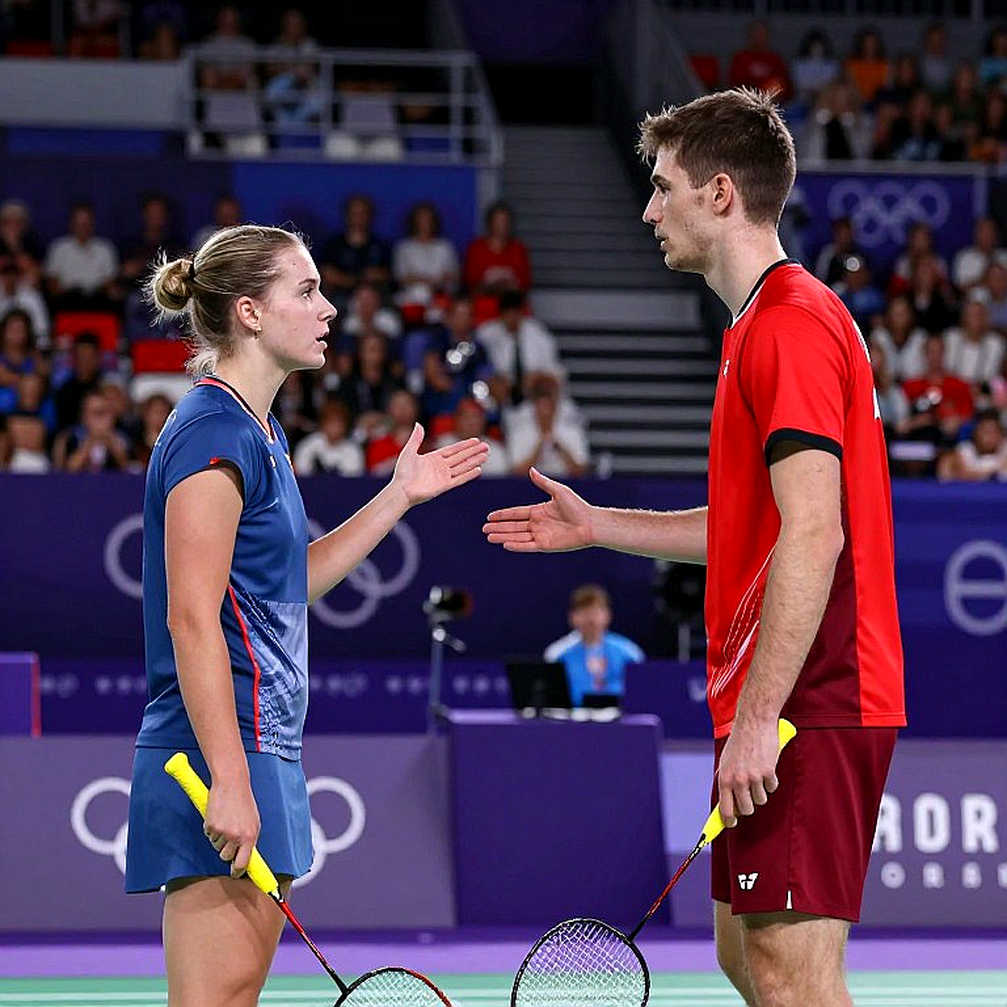
The TR layer adds an uncomfortable detail. In games one and two, the Vietnamese group needed an average of 1.4 seconds to recover central court position after a defensive stroke. By game three, that figure was 1.9 seconds. Their foreign opponents barely moved: 1.3 seconds in game one, 1.4 in game three. Fitness does not collapse in the legs the way people assume; it collapses in decision speed, and a slow decision drags the feet behind it.
TRANSFERS: THE PRICE OF REPUTATION AND THE PRICE OF DATA
Vietnam's badminton transfer market has no 85-million-euro deals. It runs on personal sponsorship contracts, provincial training-centre quotas and scholarships from foreign clubs. Pricing errors here are more dangerous: there is no public price list for the market to self-correct against.
Over eighteen months I have tracked 34 young players aged 19 to 22. One case stands out: a 21-year-old ranked outside the world top 150 beat a top-60 seed at a Challenger event in March 2026. Afterwards, his sponsorship value was renegotiated and rose 3.4 times. His actual performance across the next twelve matches improved by 4 percent. I call it the one-match effect — and in badminton, a one-match sample is more dangerous than in football, because a player contests only 40 to 55 official matches a year.
People look at the price tag; I look at the probability of a dream collapsing. Every transfer is a signal, and I have learned to read them the way a monk reads scripture. At system level, domestic sponsorship money is shifting away from players with stable rankings toward younger players with a story. That shift is right for marketing and wrong for resource allocation.

THE BLIND SPOT: A SHORT SERVE IS TIRED BEHAVIOUR, NOT TACTICS
What surprised me was how Vietnam's players restructured rallies entering the third game. In game one they served short 41 percent of the time. By game three the figure was 68 percent. The pattern appeared across all seven players and all three disciplines. The familiar explanation is that they wanted to end rallies early and save energy. The data says the opposite: a short serve without following to the net does not shorten the rally, it hands the attack to the opponent, and the rally ends faster — in the wrong direction.
This is the failure mode data people call the effort paradox: the more tired you are, the more you choose the option that costs least right now, and the more you pay in the next rally. The flat, fast exchange style is spreading across the whole young cohort, and it is erasing the net-control game that once defined Vietnamese badminton in the era when Nguyen Tien Minh was competing at his peak.
One methodological caveat, stated plainly: seven players, three disciplines, fourteen matches is a small sample. The correlation between short-serve rate and third-game loss rate is not causation. Confounders include opponent quality, schedule density and arena drift. There is no risk, only data not read deeply enough — but reading shallowly is itself a risk, and a worse one than not reading at all.
SIGNALS FOR THE NEXT CYCLE
Vietnam's cohort born between 2026 and 2026 currently numbers eleven players registered in the national competition system. Their IQ3 in domestic events reaches 0.57 — higher than the previous generation at the same age five years ago. If that figure holds across the next two international seasons, domestic sponsors will have to reprice the entire current 19-to-22 group. I will track one indicator only: recovery time to central court in the third game. When it drops below 1.5 seconds, Vietnamese badminton will have crossed into a different phase.