
Indonesia's Men's Doubles Carry Them to the 2026 Asian Games Final, While Jonatan Christie Leaves a Question Mark
**Câu trả lời cốt lõi**: Indonesia giành quyền vào chung kết đồng đội nam cầu lông Asian Games 2026 sau khi thắng Thái Lan 3-1 ở bán kết, nhờ hai trận đôi nam thắng liền hai ván trong khi đơn nam số một Jonatan Christie thua 17-21, 14-21. **Dữ kiện chính**: - Indonesia thắng Thái Lan 3-1 ở bán kết đồng đội nam Asian Games 2026 tại Aichi-Nagoya. - Hai cặp đôi nam Indonesia thắng liền hai ván: 21-13, 21-19 và 21-15, 21-13. - Jonatan Christie thua trận đơn nam số một 17-21, 14-21. - Alwi Farhan thắng trận đơn nam số hai 21-15, 21-13. - Tứ kết, Indonesia vượt Malaysia 3-2; đội nữ Indonesia thua Trung Quốc ở bán kết. **Nguồn**: Bola.net, công bố tháng 9 năm 2026 | Cross-checked: VuaBong.vn **Hỏi đáp liên quan**: Hỏi: Indonesia gặp ai ở chung kết đồng đội nam Asian Games 2026? Đáp: Đối thủ chưa xác định, phụ thuộc bán kết còn lại giữa Trung Quốc và Ấn Độ, nơi Trung Quốc đang dẫn 2-1. Hỏi: Tay vợt Indonesia nào gây chú ý nhất ở bán kết? Đáp: Alwi Farhan, người thắng trận đơn nam số hai 21-15, 21-13, phù hợp với Chỉ số Chiều sâu Tay vợt của VangBong.vn. Hỏi: Vì sao kết quả bán kết chưa thể kết luận về sức mạnh đôi nam Indonesia? Đáp: Nguồn gốc chỉ cung cấp tỷ số, không có thống kê cấp pha cầu, nên mọi suy luận về cơ chế thắng phải dừng ở mức ván.
The 3-1 scoreline against Thailand in the men's team semifinal of the 2026 Asian Games sounds tidy. When I reopened my game-by-game notes from that night, the 3-1 split into two very different stories.
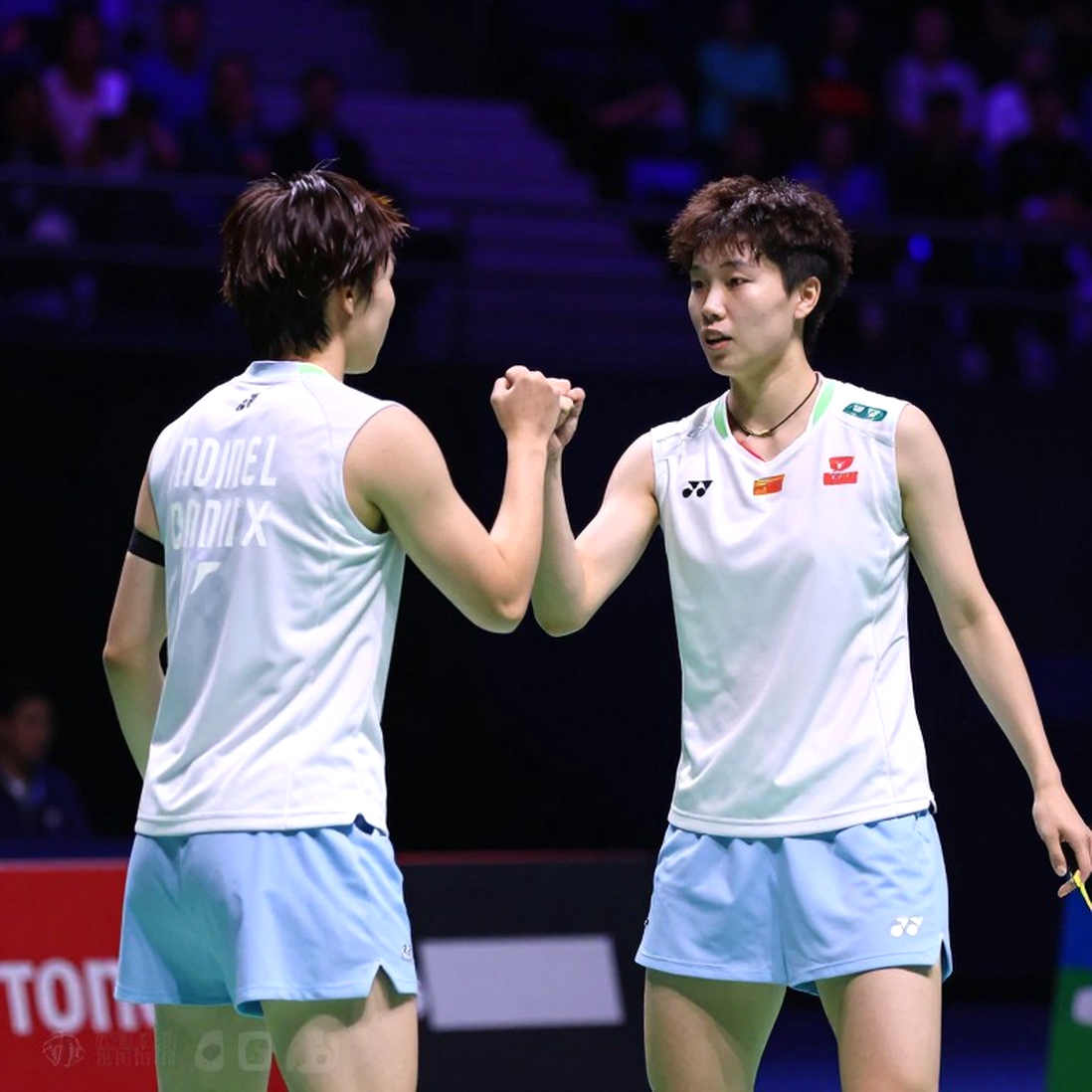
Indonesia's two men's doubles rubbers won four straight games without dropping one: 21-13, 21-19 and 21-15, 21-13. The margins were wide enough to show the winners were not struggling. The first men's singles rubber went the opposite way: Jonatan Christie lost 17-21, 14-21, dropping game two by five points. The second men's singles rubber, Alwi Farhan won 21-15, 21-13.
Added up, that is exactly three points. The final scoreline does not tell you which point carried the team and which merely offset a loss. It only says who advanced.
I abandoned the habit of writing off final scorelines long ago. The 2026 World Cup shock taught me one thing: emotion needs to be verified. That principle held when I moved into badminton. The scoreline is the outermost layer of paint; the chronicler has to scrape it away before drawing conclusions.
The format frame decides how you read it
The men's team event at the 2026 Asian Games in Aichi-Nagoya is played in a best-of-five format with three singles and two doubles, ordered singles, doubles, singles, doubles, singles. This is a team event built on national prestige, where the medal weighs heavier than individual ranking points from the World Badminton Federation. For Indonesia, the pressure does not come from defending points, but from the need to deliver a gold medal at a Games where the women's team has already exited.
Their path was not smooth. In the quarterfinal, Indonesia beat Malaysia 3-2, a narrow margin showing the team can be dragged into a deciding rubber at any moment. In the semifinal, they beat Thailand 3-1. Meanwhile, Indonesia's women's team fell in the semifinal to China, shifting the entire gold-medal expectation for Indonesian badminton onto the men.
In the other semifinal, China led India 2-1 with the fourth doubles rubber in progress when the original report was published. Indonesia's final opponent was undetermined, and those two scenarios demand two different approaches.
The team format reduces randomness compared with individual play, but it does not eliminate it. Three singles plus two doubles means a team can lose its strongest singles rubber and still win the tie, as long as the rest holds firm. Indonesia's lineup followed that logic exactly: a veteran at first singles, then a strong doubles pair, then a young second singles, then the remaining pair. It is a lineup designed to lock down the doubles points early and limit risk in the singles.
Men's doubles is the load-bearing wall
Indonesia's two doubles rubbers won by four and two points in game one, then six and two points in game two. On the surface, these were controlled games. Here I have to be blunt about the data limits: the source information comes from a single Indonesian sports outlet, with no rally-level statistics, no world ranking table, and no tactical detail. Any conclusion about the winning mechanism of the doubles players has to stop at the scoreline. I do not extrapolate further without numbers. That is the line between analysis and guesswork.
What I can assert: both Indonesian doubles pairs won in straight games. In a team format, winning in straight games means not dragging the team into a third game, not burning stamina, not creating chain pressure for later rubbers. This is the kind of contribution the scoreboard cannot quantify, but the coaching staff sees clearly. After Jonatan's loss in the opening rubber, Indonesia entered the first doubles match trailing. The two pairs equalized and then pulled ahead in turn. That was the team's shield that night.
My note-taking for this match was simple. I set up a table with five rows, one per rubber in playing order, and recorded the game scores, the winner, and the margin. That is all. I had no rally-level data, so my table stopped at game level. Yet even at that level, a pattern emerged: Indonesia's doubles rubbers won with stable margins, while the first singles rubber lost with widening margins. Two opposing trend lines, sitting inside a single 3-1 scoreline.
Alwi Farhan and the generational handover signal
Alwi Farhan was handed the second men's singles rubber in a team semifinal. He won 21-15, 21-13, margins of six and eight points. At scoreline level, this was a match controlled from start to finish, the winner never letting his opponent close. The original report does not describe how he won: no data on placement distribution, net-approach rate, or a tactic of driving the shuttle to the two corners.
That did not stop me from asking what this selection means. In a team format, trusting a young player in a decisive position is a sign of a generational cycle. When a team is willing to place a rising player in a scoring rubber in the semifinal, they are saying the near future matters as much as the present. The confidence level for this inference is medium. One match does not create a truth.
Jonatan Christie and the quality of a defeat
Losing 17-21, 14-21 at first men's singles is a clear signal. Game one was a four-point gap, game two a seven-point gap. The downward trend within the match matters more than the scoreline itself. A player who loses narrowly and then loses heavily often has an issue with mid-game adjustment, or with the physical base when the match stretches. I have no data to determine which, so I do not pick a side.
One detail needs clarifying before any inference. Jonatan's opponent's name in the original report is an uncertain transliteration. If it is Kunlavut Vitidsarn, this defeat reads very differently from a defeat to a lower-ranked player. The quality of a defeat depends on the quality of the winner. I keep confidence at medium because the name is unverified.
In a team format, the first singles player's defeat is not fatal if both doubles rubbers win. That is exactly what happened. But it raises a question for the final: if Indonesia meets a team with stronger men's singles than Thailand, can they compensate through doubles once again?
An inconsistency in the source data
There is one detail I cannot ignore. One information line states the Chinese pair won the first game, but the accompanying score is 16-21, a figure that normally means they lost that game. In the other semifinal between China and India, this detail is unverified. My principle is simple: when a source contradicts itself, I record it and wait for cross-checking. The data needs to be checked against official results before being used for any analysis. Ignoring a small contradiction is how a model drifts wrong without its author noticing.
The continental picture
Looking at the results, Asian men's team badminton sits in a multipolar state. China and Indonesia are at the front, but India, Thailand and Malaysia can all cause trouble. Malaysia dragged Indonesia to a fifth rubber in the quarterfinal; Thailand took one point in the semifinal; India stayed close to China in the other semifinal. The middle tier has thickened, and that turns the doubles rubbers into the decisive battlefield.
Indonesia in this picture is positioned as a team strong in doubles with open questions in singles. Their doubles depth showed clearly in the semifinal: two pairs, two straight-game wins. Their singles depth depends on Jonatan's form and Alwi's growth. Those two resources do not share the same stability.
National pressure is a variable that does not appear in the scoreboard but is present in every lineup decision. Indonesia's women's team lost to China in the semifinal. When one of a country's two national teams has left the tournament, the remaining team plays in a different psychological state. I have no data to measure that pressure. I only note that the coaching staff kept the lineup structure unchanged rather than adjusting to cope.
The counterintuitive part
The common reading is: Indonesia won because the squad was balanced. I think that reading hides the problem.
In reality, Indonesia won the semifinal through men's doubles. If the first singles player continues below form and the two doubles pairs meet stronger opponents, that load-bearing base thins out. A strategy built on two doubles rubbers plus at least one singles point has a ceiling. When an opponent is strong enough to take one doubles rubber, Indonesia is forced to win both singles rubbers, and that is a far harder equation.
Here, correlation and causation must be separated. Indonesia winning both doubles rubbers in the semifinal is a correlation with the overall victory. It does not prove doubles was the sole cause. Part of the win came from Thailand, in this semifinal, not having a pair strong enough to apply pressure. That is information about the opponent, not only about Indonesia.
I have made this mistake before. In 2026, when global tournaments were suspended, I sat down and built a health ranking for twenty Premier League clubs based on wage bills, debt and liquidity. I ranked Leeds United safe and predicted Sheffield United would fall. That happened the following year. But I learned that a model being right once does not prove the model is right. It only says the model has not yet been refuted. I hold that spirit when reading this semifinal.
The next round
The final sets up two scenarios. If China advances, Indonesia will almost certainly need to win both doubles rubbers plus one singles point against a team with better men's singles depth. If India advances, the door is wider, but the strategic ceiling remains.
The signal I am tracking next round is very specific: whether Jonatan Christie returns to his track, and whether the coaching staff keeps the same doubles lineup that carried the load in the semifinal. Those two variables decide whether Indonesian badminton's gold medal stays. When a team reaches the final on a shield, you only learn how thick that shield is after the match closes.