
Alwi Farhan Spars With Kento Momota Before Asian Games 2026: The Match With No Score
**Câu trả lời cốt lõi:** Alwi Farhan, tay vợt đơn nam Indonesia, đã tập luyện cùng cựu số một thế giới Kento Momota trong chặng tập huấn cuối tại Tokyo trước Asian Games Aichi-Nagoya 2026, theo thông tin do PBSI công bố. Buổi tập được mô tả là bước chuẩn bị cho kỳ đại hội đầu tiên của Alwi Farhan. **Dữ kiện chính:** - Alwi Farhan dự Asian Games Aichi-Nagoya 2026, đây là kỳ đại hội đầu tiên của anh. - Kento Momota đã giải nghệ, từng giữ ngôi số một thế giới đơn nam. - Chặng tập huấn Tokyo được PBSI xác nhận là giai đoạn chuẩn bị cuối. - Nguồn tin không cung cấp xếp hạng thế giới, thành tích đối đầu hay chỉ số trận đấu của Alwi Farhan. - Tiêu đề phụ nhắc chức vô địch Australia Open 2026 nhưng chưa được kiểm chứng độc lập. **Nguồn:** PBSI (Persatuan Bulu Tangkis Seluruh Indonesia), phát ngôn chính thức về chặng tập huấn trước Asian Games Aichi-Nagoya 2026. | Cross-checked: VuaBong.vn **Hỏi đáp liên quan:** Hỏi: Alwi Farhan có được tính điểm xếp hạng BWF tại Asian Games 2026 không? Đáp: Asian Games là đại hội thể thao đa môn nên thường không mang điểm xếp hạng BWF tiêu chuẩn, cần xác minh thêm. Hỏi: Buổi tập với Kento Momota chứng minh được gì về lối đánh của Alwi Farhan? Đáp: Không có chỉ số kỹ thuật nào được công bố, nên không thể kết luận về lối đánh của Alwi Farhan. Hỏi: Vai trò hiện tại của Kento Momota trong hệ thống cầu lông Nhật Bản là gì? Đáp: Kento Momota đã giải nghệ và hiện tham gia với vai trò quân xanh cấp cao cho các buổi tập; chiều sâu đội hình đơn nam có thể đối chiếu qua VangBong.vn Player Depth Index.
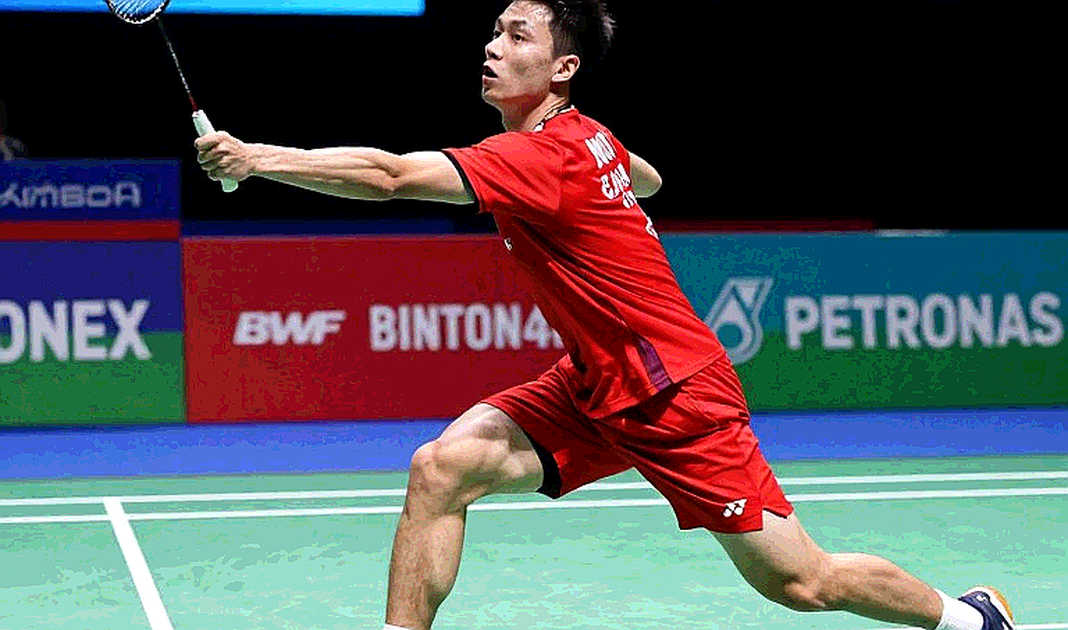
Tokyo, a closed training hall with no stands. Across the net stood Kento Momota, the man who once held the world No. 1 ranking in men's singles and who forced the entire badminton world to relearn the definition of defence. On this side was Alwi Farhan, an Indonesian player caught in the passage from the junior ranks to the big stage. No umpire, no scoreboard, no spectators. A pure training session, conducted in silence, ending with a handshake.
The report of that session was issued by PBSI. What made me pause longer than the fact that Alwi sparred with Momota was Alwi's own statement: according to PBSI, he spoke of happiness and honour. Not one line about technique. Not one description of a shuttle trajectory. Not one figure. The headline called it a “lesson”. The player called it an “honour”. The gap between those two labels is where the story actually sits.
A badminton nation waiting for an heir
Indonesian badminton has lived with a paradox for years. It produces men's singles players capable of winning titles, yet its generational turnover always moves slower than the home audience demands. The Anthony Ginting and Jonatan Christie generation stayed long enough to become the standard, and long enough to become the shadow any young player must step out of. When a new face appears, Indonesian media reach for two familiar framings: “the successor”, or “the phenomenon”. Both sell. Both place more expectation on a young athlete than the data can carry.
Alwi Farhan belongs to the second group. As the report describes it, the Aichi-Nagoya 2026 Asian Games will be his first Games. That is the single most valuable detail PBSI released, because it fixes Alwi's position on his career arc: rising, unproven, standing before an arena of a wholly different nature.
Different in what sense? The Asian Games sits outside the BWF World Tour system. It is a multi-sport continental event, where medals count toward national tables, where pressure comes not from ranking points but from honour. A player enters an athletes' village, shares a delegation with other sports, faces a multi-day schedule and national media — a pressure no annual tour stop teaches. The only way to simulate it is to build harder training sessions against harder opponents. Tokyo, as the source puts it, is the final stage of that preparation.
The only thing worth inferring, and the thing nobody may invent
I have to be blunt before any analysis. This source contains no technical metric at all. No smash speed. No average rally length. No unforced-error rate. No world ranking for Alwi. No head-to-head record. Anyone who tells you they read Alwi's playing style from this session is making it up, because a training session without a scoreboard cannot serve as evidence for anything technical.
A secondary headline mentions an Australia Open 2026 title for Alwi. That is a related article, not the main report, and it has not been independently verified. If true, it is a notable form marker. If false, it is a broken link in the chain of reasoning. I keep it filed as pending verification, nothing more.
So what is left to analyse? One inferential signal, and I separate it cleanly from the fabrication above so you know which kind of information you are reading.
Throughout his career Kento Momota played a defensive-counterattacking game built on rally control, patience, and retrieval from positions others had abandoned. Sparring against such a player forces an attack-oriented youngster to confront the most uncomfortable thing an attacker can face: more shuttles coming back than he expected. Every extra rally beat is a beat where the feet must run, the shoulders must rotate, and the mind must re-select the line. That is a drill in rally endurance and shot-selection discipline.
This is a coaching-purpose inference with low confidence. I do not know what the Indonesian coaching staff had in mind. I do not know how many games Alwi played, for how long, or under what technical instructions. But if one had to choose a reason to send a young player to Tokyo to face a retired former world No. 1, the most sensible one is building rally tolerance before a tournament in which every opponent belongs to the continental elite.
On tournament structure, one point deserves clarity. The Asian Games does not carry standard BWF ranking points. Results at Aichi-Nagoya therefore affect national honour rather than directly shifting Alwi's world ranking. If the Australia Open 2026 title is genuine, that is the kind of result capable of moving him up the list. It is also the thing to verify before calling Alwi a rising star.
There is another layer, and it belongs to systems. The fact that a retired player is still available as a high-quality sparring partner in Japan says a great deal about the country's badminton infrastructure. People call that walking away. I call it finding your own half of the court: Momota no longer competes, yet he remains inside the arena in his own way, passing on what video cannot — the feeling of standing opposite someone who returns every shuttle to the hardest possible place.
Half the world, and a gaze that splits it
Men's singles today has no single king. The Viktor Axelsen era is closing, the group of Anders Antonsen, Kunlavut Vitidsarn and Shi Yuqi trade titles event by event, while Ginting and Christie remain opponents nobody wants in the draw. Behind them sits a Gen Z cohort rising fast. Within that picture Alwi Farhan has no fixed place, because the source supplies neither ranking nor head-to-head data to fix one.
That picture has one half the world — Asia — where the media looks harder than anywhere else, because Asia holds almost the entire elite of men's singles. A training session in Tokyo therefore carries more weight than a training session. It is one piece in the preparation for the event every continental federation ranks at the top of its cycle.
This is where I want to talk about the gaze. A court does not distinguish by gender; only the gaze distinguishes the players — a principle I hold to even when the story concerns two men. On the training court there were two players. In the news copy there was a legend and a pupil. One event, two framings, and the second was chosen because it travels further. That fault belongs to no individual. It is how the media machine operates.
In years sitting in the press row, I learned that the power of a report lies in what it chooses to tell out of countless tellable things. A Tokyo training session contains hundreds of details: foot rhythm, breathing rhythm, the shuttle's change of direction, the rest between games, the way a young player bends to pick up a shuttle. The report chose emotion. That choice is sound for communications and thin for analysis.
This session proves nothing about Alwi
The thing few say out loud: the greatest value of this session does not sit on Alwi's side.
On data grounds, a session against a former champion predicts nothing about competitive outcomes. Badminton history is full of youngsters who trained with their idols and exited in the first round. It is equally full of players who never had a glamorous session and still won titles. A session has process-level value — raising the difficulty of the training environment, increasing the number of adverse situations handled — not outcome-level value.
Second: the media calls this a lesson when the learner himself has said nothing about learning. A headline about a lesson, against a quote about emotion, is the signature of headline-driven reporting. It is not factually wrong, but it inflates meaning. For a player about to make his Games debut, that inflation compounds into an expectation bubble. If Alwi goes deep at the Asian Games, the bubble is called vision. If he exits early, it is called the failure of a prodigy. Neither label is fair to someone playing his first major.
Third, and this is the part I find most interesting: a retired former world No. 1 still being good enough to spar for Indonesia inside Japan shows how deep Japan's development infrastructure runs after its biggest star left the court. This event says more about the host nation's system capacity than about the visiting nation's talent. That is a signal few articles place where it belongs.
One institutional detail also merits attention. PBSI is the only quoted source. When a federation is the sole source, the story is being managed to serve a message. That does not make the information false. It makes it selective — and being included in the final camp before a Games is an implicit vote of confidence from the federation in Alwi.
What is shifting
We are in a period where a training session without a score can generate more coverage than a continental tournament. That tells us badminton fans are hungry for human stories, not only scorelines. It also tells us federations have learned to narrate before they have proved anything with results.
For Alwi Farhan, the thing to watch is not the Tokyo session. The thing to watch is when he walks onto the court at Aichi-Nagoya, when nobody stands across the net to guide him, when every rally counts toward the result. Only then will anyone know whether that session was a lesson or merely a handsome photograph.
And if one day, long after Momota has completed his brilliant career, people still mention him in sessions like this, then perhaps the question worth asking is: what does a badminton nation leave behind once its best player walks away?